Moldes Menduiña's entry into research occurred at the end of her degree, when she discovered a way of working that sparked her curiosity and ultimately defined her professional career. Initially, she was not sure about dedicating herself to research, but Professor Juan Carlos Parajó Liñares encouraged her to consider this professional path, placing a trust in her that helped her take the step.
One of the challenges in her early years was building a career in Chemical Engineering from an initial background in Food Technology. Today, as a professor, she believes her experience can serve as a reference for those starting a thesis in an area different from their degree, stating that "Changing fields doesn't have to be a limitation; it can even be an advantage."
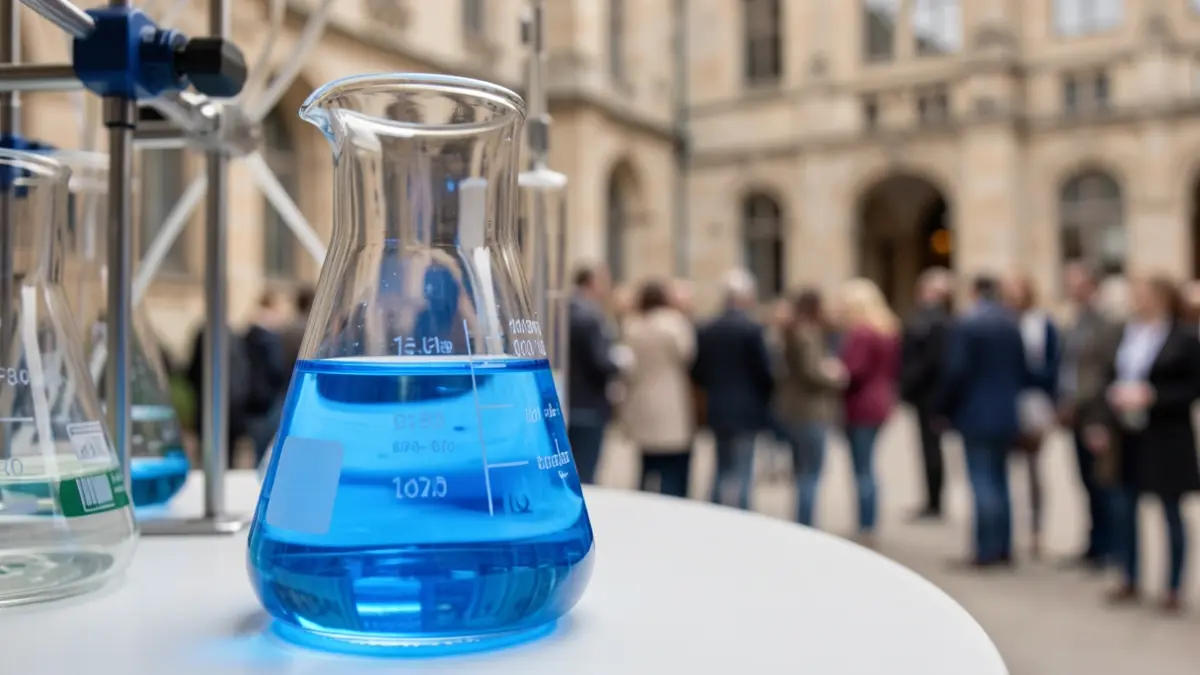
Ana Moldes co-directs, along with professor José Manuel Cruz, the research group EQ10. This group works on two main lines: the production of biosurfactants from industrial streams and by-products, and the obtaining of new antibiotics based on gramicidin analogues. They combine biotechnology, environmental engineering, and sustainability to develop more biocompatible formulations for cosmetic, pharmaceutical, and agrochemical applications.
Her research stays abroad have also marked her career, including an experience almost thirty years ago at a reference center of the United States Department of Agriculture (USDA), which allowed her to confirm that Spanish research was on par with that developed in prestigious international centers.
Regarding time for research, Moldes believes that curiosity and enthusiasm are part of scientific work, although she acknowledges the difficulty of disconnecting. She highlights the importance of organizing time flexibly and having the support of her team, husband, and family. She states she has not felt that being a woman limited her professional opportunities in Chemical Engineering, although she recognizes that others may have had different experiences.
Her main concern about the future of the research profession centers on the accumulation of responsibilities, which can detract from pure research. "We should recover the roots of what it means to research," she maintains, advocating for time to think, experiment, and revise hypotheses with scientific rigor. She recommends that those considering a scientific career "get to know the profession well before deciding and have curiosity, a desire to learn, and a willingness to step out of their comfort zone," as well as "the importance of teamwork."