
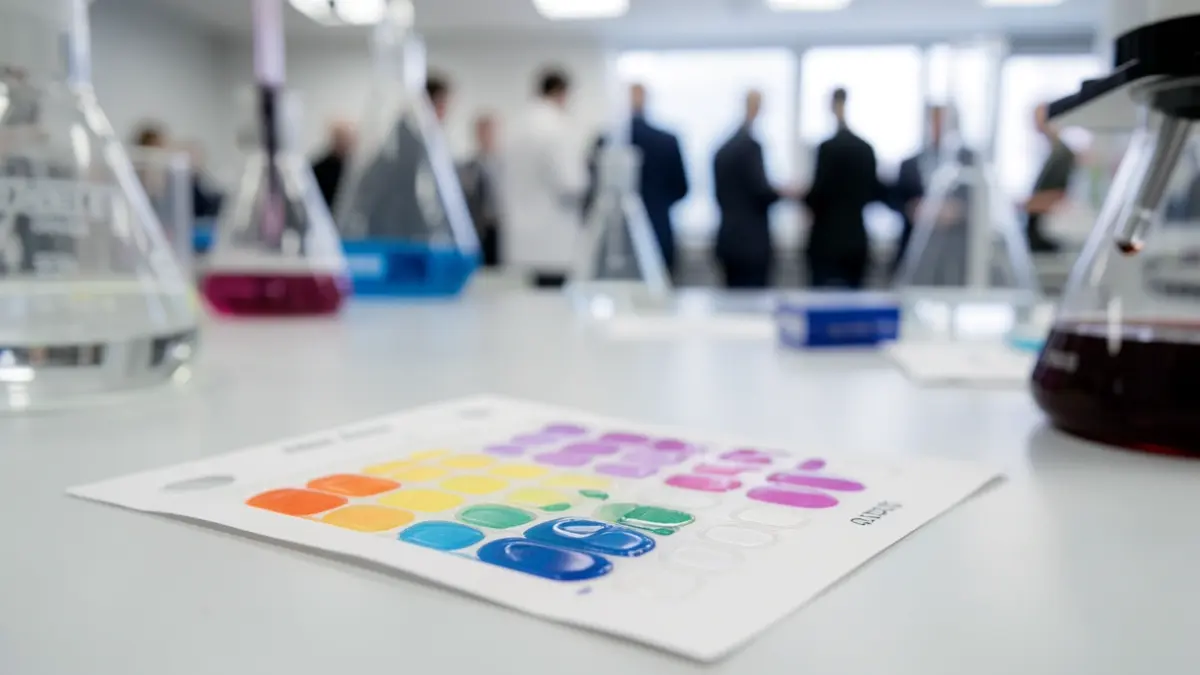
This device offers a low-cost, portable system that provides a result visible to the naked eye in about 10 minutes. This opens the door for preliminary on-site analysis without the need for laboratory equipment, representing a significant practical advancement in detecting agents used in chemical submission assaults.
Sexual assaults involving drug-facilitation are a serious public health and forensic issue. Scopolamine, commonly known as 'burundanga', is one such drug, particularly dangerous due to its potent amnesic, sedative, and hallucinogenic effects. Its lack of color, odor, and taste makes it undetectable once ingested. Despite its toxicological significance, methods for rapid on-site detection are still limited, relying on instrumental analytical techniques that require laboratory conditions and extensive sample preparation, making them unsuitable for quick field analysis.
The self-propelled microfluidic device, using a paper substrate, causes a color change in the reaction. "The device needs to be immersed in the sample for a few seconds, and within about 10 minutes, the result is visible to the naked eye, without any other detectors," explained Isabel Poves, lead author of the study. Poves believes that "thanks to this device, these types of submission assaults can be prevented, as it is more important to try to prevent them than to detect them after they have occurred."
This technology, developed by the team led by Ikerbasque professor Lourdes Basabe Desmonts, miniaturizes laboratory processes, eliminating the need for sample manipulation. The article published in the scientific journal Talanta advances the development of a microfluidic platform capable of detecting multiple pharmaceuticals through a single colorimetric reaction. The project aims to detect as many drugs as possible within the same device.
The team recently developed another device to detect benzodiazepines in beverages. The researchers emphasize that significant laboratory work remains, and in the future, these analyses could be quantified using smartphone applications.