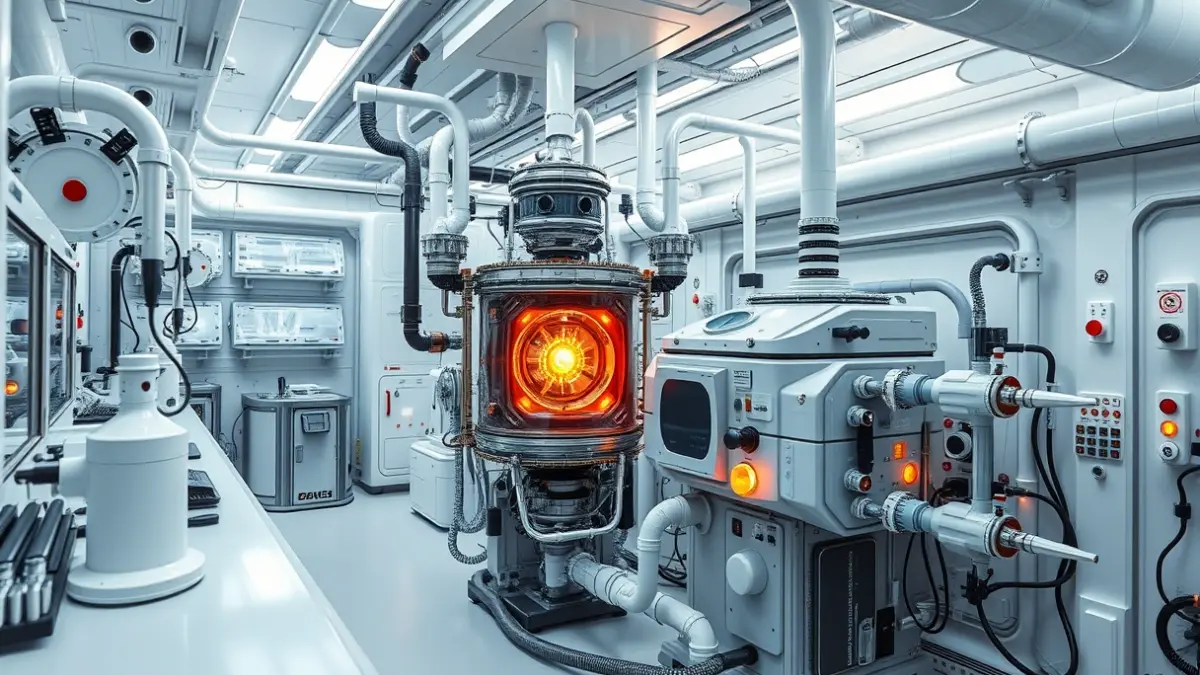
This international project aims to test and integrate technologies that allow for the recycling of human waste, such as CO2 and urine, to transform them into oxygen, water, and food. The initiative is inspired by the premise of films like The Martian, where survival depends on ingenuity and the ability to generate resources in a hostile environment.
“"Basically, it's what Matt Damon did in the movie, in 'The Martian', but in reality."
The closed ecological system being developed seeks to ensure that waste generated by the crew can be used to sustain life, a crucial concept for long-distance and long-duration missions. Unlike current missions, such as those to the International Space Station or Artemis, where oxygen is transported and CO2 is released, MELiSSA technology advocates for complete resource reuse.
The research, which has been under development for thirty years, focuses on the use of plants and cyanobacteria like spirulina, capable of capturing CO2, producing oxygen, and serving as a food source. This approach is fundamental for independence from Earth on two or three-year journeys, especially to destinations like Mars, where autonomy is vital.
Safety is a priority in any space design, and all materials must undergo strict controls to ensure that space conditions do not alter any element. An experiment to determine how spirulina grows under radiation and microgravity conditions is planned for 2027 at the International Space Station, resulting from a collaboration with Sener Aeroespacial from Cerdanyola and the National Microelectronics Center.
Beyond space applications, MELiSSA technology also seeks terrestrial uses. Applications are already being explored for CO2 management in industries or to improve building efficiency. A practical example is found at ESA's headquarters in Paris, where urine is converted into nitrates to fertilize plants and grass, opening the door to more sustainable systems on our planet.