
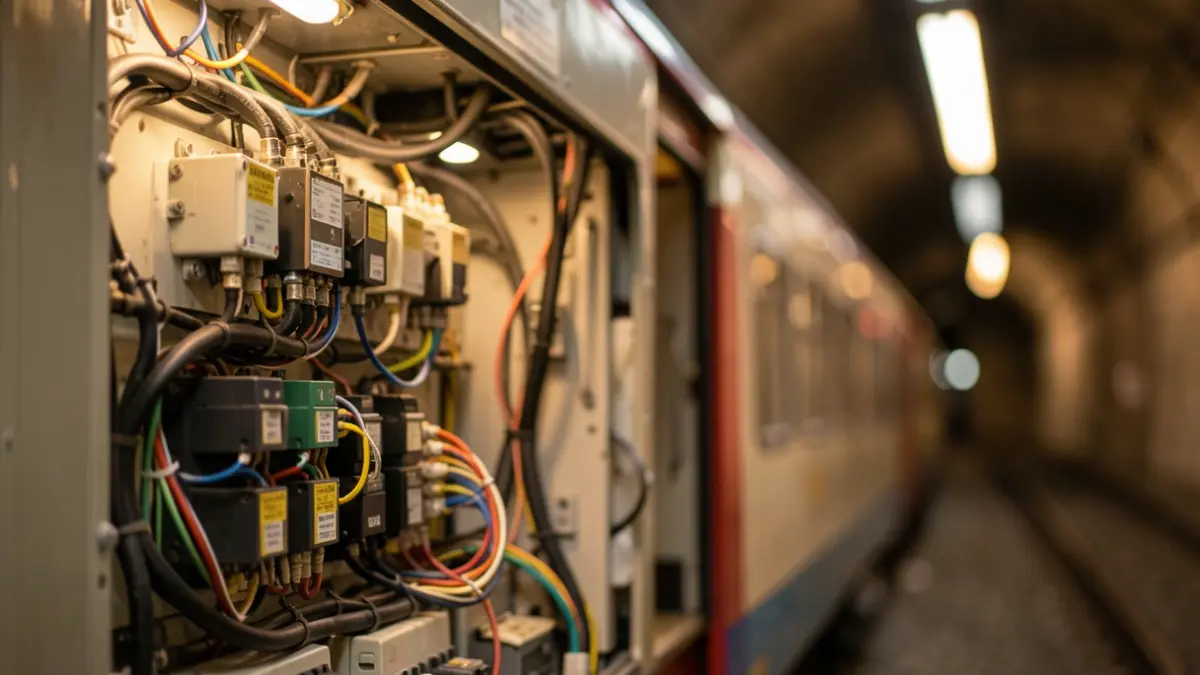
This digital transformation strategy, presented at the Tomorrow Mobility World Congress, seeks to improve service quality by connecting millions of data points generated by the network. TMB is monitoring both trains and infrastructure to ensure optimal availability and passenger comfort.
The Barcelona Metro network, comprising 8 lines, 165 stations, and 125 kilometers, generates a massive volume of daily information from sensors and technological systems installed on trains and infrastructure.
One of the key tools is the 'diagnostic train', equipped with cameras and sensors that analyze infrastructure elements like tracks and catenary. These trains, already in service on lines 1 and 5, monitor parameters such as track gauge, alignment, cant, train acceleration, and rail temperature, as well as supervising the interaction between the catenary and the pantograph.
Additionally, TMB will equip trains with camera systems to inspect tunnel conditions in real-time, generating a 3D point cloud that allows for precise measurement of the tunnel's geometric profile relative to the train, ensuring operational safety. Technological arches will also be installed in automated line tunnels to inspect train components as they pass, detecting anomalies.
All this data is structured for Condition-Based Maintenance (CBM), enabling predictive maintenance actions for trains, infrastructure, and signaling systems. The ultimate goal is to achieve predictive maturity across these areas.
This digitalization aligns with four strategic pillars: ensuring maximum operational safety, providing maximum service availability and passenger flow, minimizing urban impact to enhance user comfort, and extending asset lifespan through efficient maintenance.