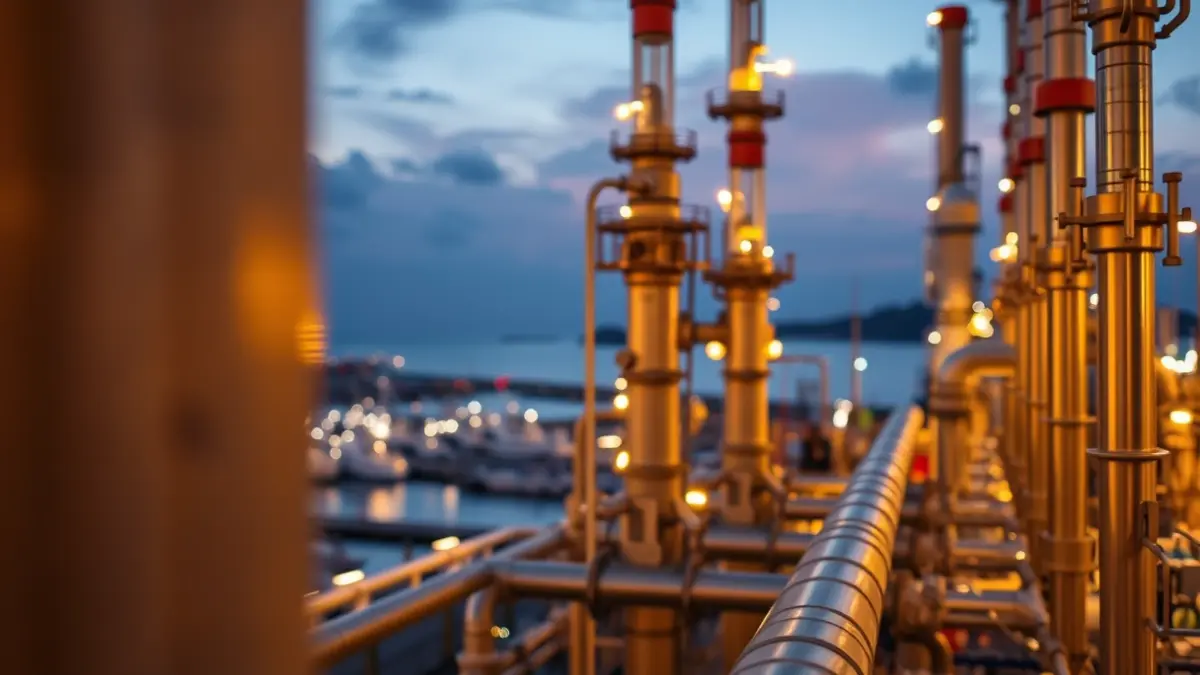
The Repsol industrial complex in Tarragona is operating at its maximum capacity, aiming to increase the supply of essential fuels for the European Union. This situation arises in a context of urgent fuel needs, especially after the closure of the Strait of Hormuz, which has highlighted the importance of strategic infrastructures like this one.
During March, the Tarragona plant distilled 776,000 tons of crude oil, resulting in the production of 101,000 cubic meters of gasoline, 136,000 cubic meters of kerosene, and 557,000 cubic meters of diesel. These figures underscore the crucial role of the complex, which accounts for 25% of Repsol's distillation capacity, contributing approximately 23% of the group's total gasoline volume and nearly 40% of its aviation kerosene.
Aviation kerosene is particularly strategic for the European Union, which imports one-third of its consumption. In Spain, the situation is more favorable, as about 80% of the consumed kerosene is produced locally, according to data from the Spanish Fuel Industry Association (ACIE). The main current concern is not the lack of crude oil, but the production of its derivatives, such as kerosene, as refineries have been more affected than oil fields.
“"We are analyzing and implementing a series of measures in production and logistics management across our five refineries in Spain, to increase the manufacturing of products like diesel and kerosene, and guarantee supply in the Spanish market over the coming months. We are taking all measures within our reach given the uncertainties of the current geopolitical context."
Spain's advantageous position in refining capacity contrasts with that of countries like Italy or Germany, which have reduced their refining capacity by 20% in recent years, outsourcing production to refineries in China or the Persian Gulf. Among the measures adopted by Repsol to maintain production, the scheduled shutdown of the naphtha cracker at the Tarragona complex, initially planned for mid-April, has been postponed until 2027.
The supply of raw materials is secured, having overcome the meteorological episode that prevented crude oil unloading at the Port of Tarragona between late January and mid-February, which forced the refinery to halt operations for almost a week. Crude oil processed in Tarragona during March primarily originated from the United States, Libya, Nigeria, and Brazil.