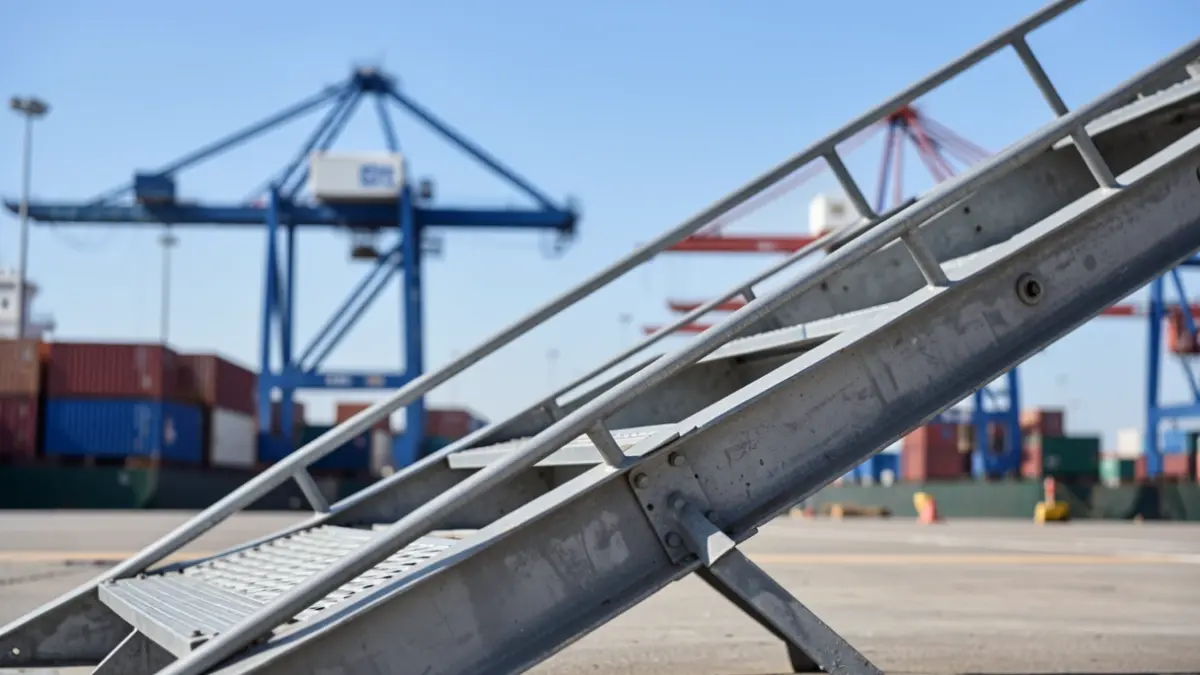
The event, titled 'Business duality, a tool for the logistical transformation of port infrastructures', has highlighted how global geopolitical disruptions are accelerating the need to promote dual technologies in Europe. These technologies, useful for both civil and defense purposes, will drive economic activity, innovation, and infrastructure development. The Port of Tarragona has been highlighted as a key strategic hub for developing new port and railway infrastructures prepared for these dual uses.
Representatives from Puertos del Estado, the Generalitat de Catalunya, chambers of commerce, universities, and businesses participated in the event. The president of Port Tarragona, Santiago J. Castellà, emphasized that dual technologies build a stronger Europe and defended the continent's defense capabilities in the face of a "predatory and wild" world. Castellà defined dual transformation as a "new line of work" to enhance the port's competitiveness, preparing infrastructure for potential continental mobility scenarios and increasing freight transport by rail.
The head of the territorial services of Economy and Business of the Generalitat de Catalunya in Tarragona, Mar Giné, pointed out that dual technologies are key to "strategic autonomy" and that Catalonia wants to be part of the response to this new scenario. She called on all sectors to "get to work" to seize the opportunity and leverage the territory's strengths.
The event included presentations on the current landscape and dual transformation cases. Álvaro Rodríguez Dapena, Deputy Director of Strategy and Business Development at Puertos del Estado, explained how global uncertainty has shifted maritime transport towards "sincromodal" logistics, characterized by flexibility and data management. He stressed the need to rethink infrastructure from a security and defense perspective, especially since the war in Ukraine, preparing EU countries "multimodally" for any scenario. Puertos del Estado is working on dual transformation to enhance security and develop new port infrastructure.
Miquel Àngel Fuster, secretary of the Col·legi d’Economistes de Catalunya – Tarragona, outlined a global paradigm shift caused by climate change, the proliferation of weaponry, AI, and confrontations between major powers. He stated that value chains are no longer secure and advocated for reconfiguring public spending towards productive sectors to increase strategic autonomy and strengthen ports to gain "security in a turbulent environment".
The Leitat Technological Center presented options for dual transformation. Eric Ferrando, Defense Manager at Leitat, explained the process for becoming a defense supplier and the new European funding framework. Dirk Saseta, Business Development Director at Leitat, detailed how the center applies dual transformation in health, digitalization, sustainability, and chemistry to help clients innovate and seize new economic opportunities.
A round table discussed the duality in Catalonia with the participation of General César de Cea, military commander of Barcelona and Tarragona; David Garriga (CEO of SIRT); María Lorenzo (Telefónica); Santiago Ballesté (AEROS); and Santiago J. Castellà (Port Tarragona). The panelists agreed on the need for defense to collaborate with private companies and highlighted that many technological innovations originate from the civil sector. Dual transformation was presented as an economic and social opportunity for competitiveness, innovation, and quality job creation.