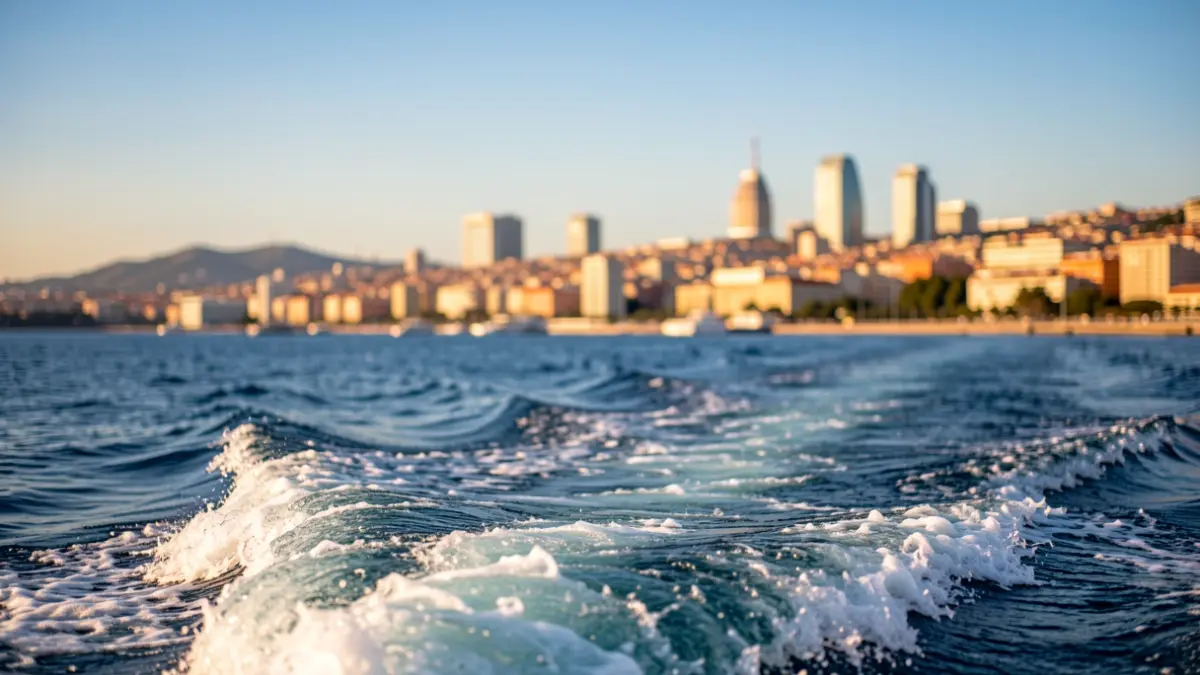
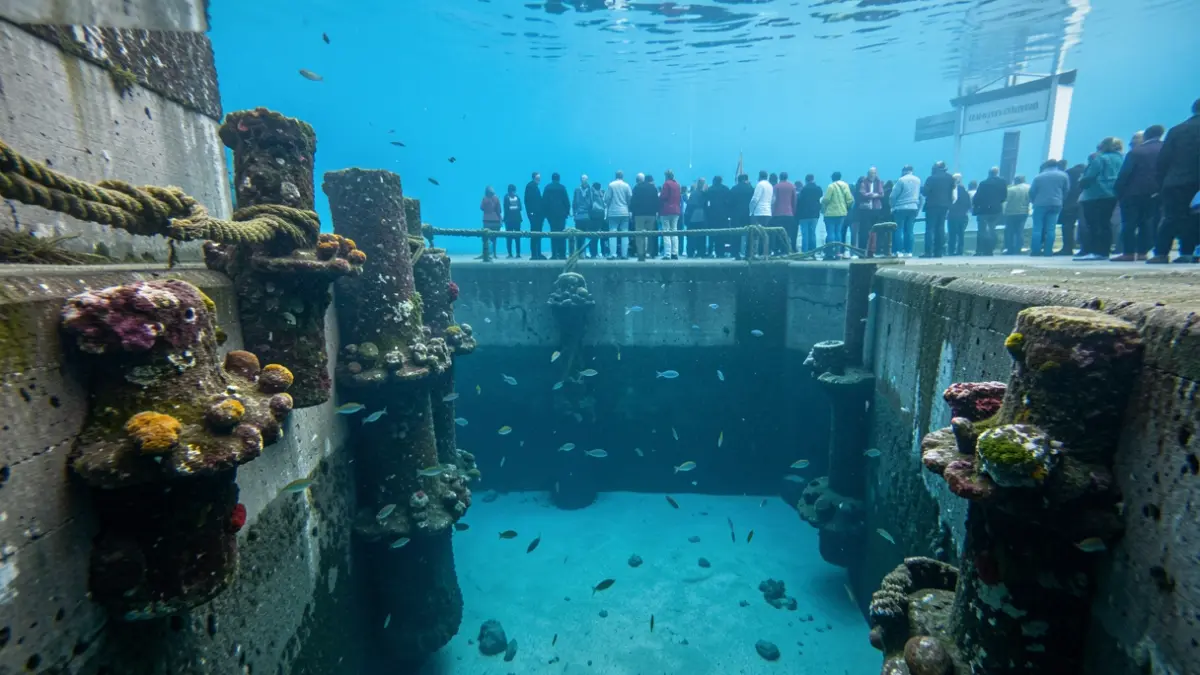
The northern entrance breakwater of the Port of Barcelona has served as the backdrop for a pioneering initiative aimed at regenerating marine life. Under a strong sun, the first large-scale installations of structures designed to enhance the ecosystem in a port environment, often considered hostile, were presented. This initiative, named RegenPorts, is driven by the Fundació BCN Port in collaboration with Ocean Ecostructures, responsible for designing the vertical panels being placed on the inner walls of the quay, at depths ranging from two to nine meters.
The plan is to install approximately fifty structures along the nearly 400 linear meters of the north entrance. By the end of June, this number could rise to 150, including pilot tests already distributed across various areas of the port. Miquel de la Mano, technical director of the Fundació BCN Port, highlighted that this project marks a turning point after nearly three years of work and pilot tests in locations such as the Moll de Pescadors and Maremàgnum. The north entrance was chosen due to its constant water movement and favorable conditions for the recovery of the marine ecosystem affected by port activities.
De la Mano emphasized the regeneration potential, estimating five to seven hectares of non-productive spaces that can now generate value, an area equivalent to five or seven times the size of Camp Nou. The goal is to scale the initiative to other ports. Meanwhile, Dafne José Fernández, head of RegenPorts, detailed that these are the first commercialized structures, funded by companies receiving tax benefits for corporate social responsibility. She stressed that port infrastructure can extend beyond logistics to address biodiversity loss.
Albert Martínez, a blue economy consultant at the Fundació BCN Port, mentioned an agreement with Ciments Molins to place panels on their small breakwater at the same entrance. The aim is for these actions to function as ecological corridors. Ignasi Ferrer, CEO and founder of Ocean Ecostructures, explained that his Barcelona-based start-up focuses on the renaturalization of marine infrastructure, creating unique structures that blend with the natural environment and transform the port into a proactive space.
The presentation was attended by the president of the Port of Barcelona, José Alberto Carbonell, and the commissioner for Economic Promotion of the City Council, Nadia Quevedo. Carbonell highlighted the responsibility and opportunity of leading such initiatives, inviting other ports to follow suit and making tangible a new understanding of the port as a regenerator of the marine environment. Quevedo underscored how these projects reinforce the municipal commitment to the blue economy, demonstrating the compatibility of sustainability and competitiveness.