The Biomedical Research Institute of Barcelona (IRB Barcelona), located at the Barcelona Science Park of the University of Barcelona (PCB-UB), has led, together with researchers from the University of Cambridge, UT Southwestern Medical Center, and the Howard Hughes Medical Institute, the creation of a new computational tool. Published in Nature Communications, OpenCGChromatin allows for the simulation of chromatin organization—the structure that compacts DNA within the cell nucleus—with high molecular detail.
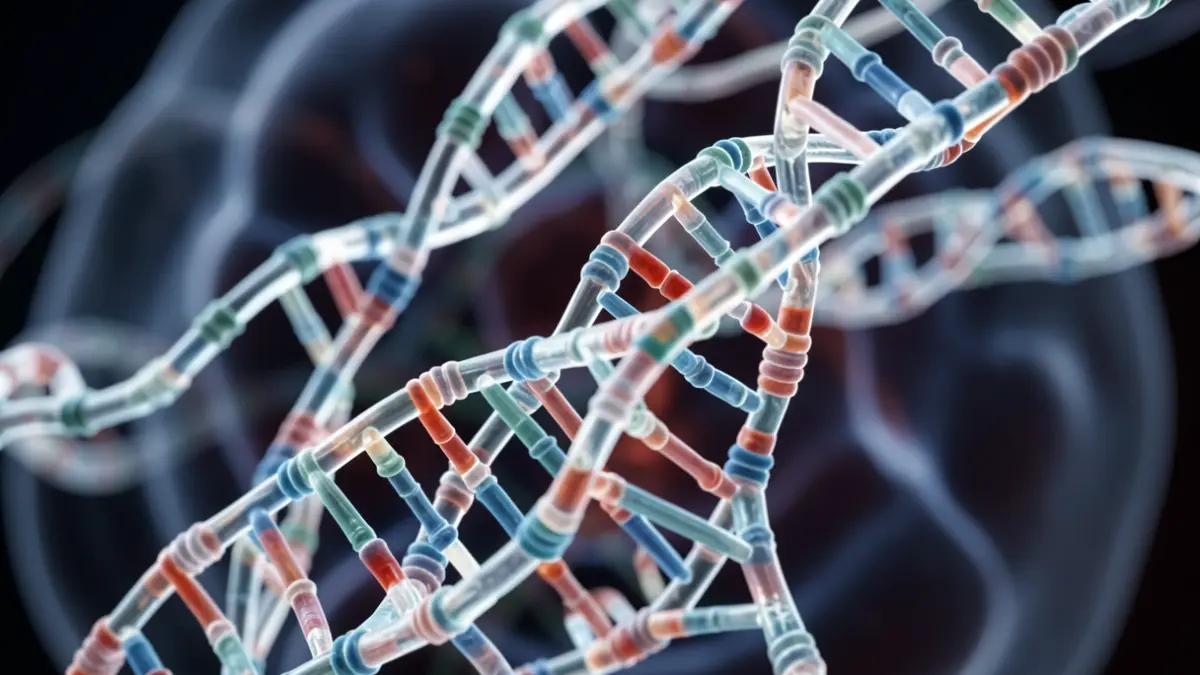
Chromatin is formed when DNA wraps around proteins called histones, creating nucleosomes that then aggregate. This organization is crucial for gene reading and DNA repair. Studying its changes and molecular interactions has been an experimental challenge, but OpenCGChromatin offers a solution through simulations.
Dr. Modesto Orozco, head of the Molecular Modelling and Bioinformatics lab at IRB Barcelona and co-director of the study, explains that the tool allows relating individual molecular interactions to the behavior of larger chromatin fragments, understanding how small molecular changes affect DNA packaging. Professor Rosana Collepardo-Guevara from the University of Cambridge, also a co-director, highlights that the inspiration came from the experimental work of Professor Michael Rosen's group.
This tool combines a detailed representation of DNA and proteins with high computational efficiency. It enables the study of chromatin systems up to ten times larger than previous models could handle, including hundreds of nucleosomes. The simulations validate experimental observations and reveal movements of flexible histone regions that are difficult to resolve experimentally.
Kieran Russell, the study's first author, has elevated chromatin modeling to a new level, allowing simulations of systems at a scale and molecular detail previously out of reach. OpenCGChromatin connects chemical composition with genome organization across different scales, opening up new computational questions. According to David Farré-Gil, also an author, the simulations help understand how changes in nucleosome distance or chemical modifications affect chromatin behavior.
OpenCGChromatin is distributed as open-source software, providing other research teams with a powerful tool to study the physical principles governing genome organization.