EU Funds GENCODE Biological Resource with €19 Million
The biological data resource, key to European economic security, receives a significant boost for its continuity.
By Núria Font Casas
••4 min read
AI
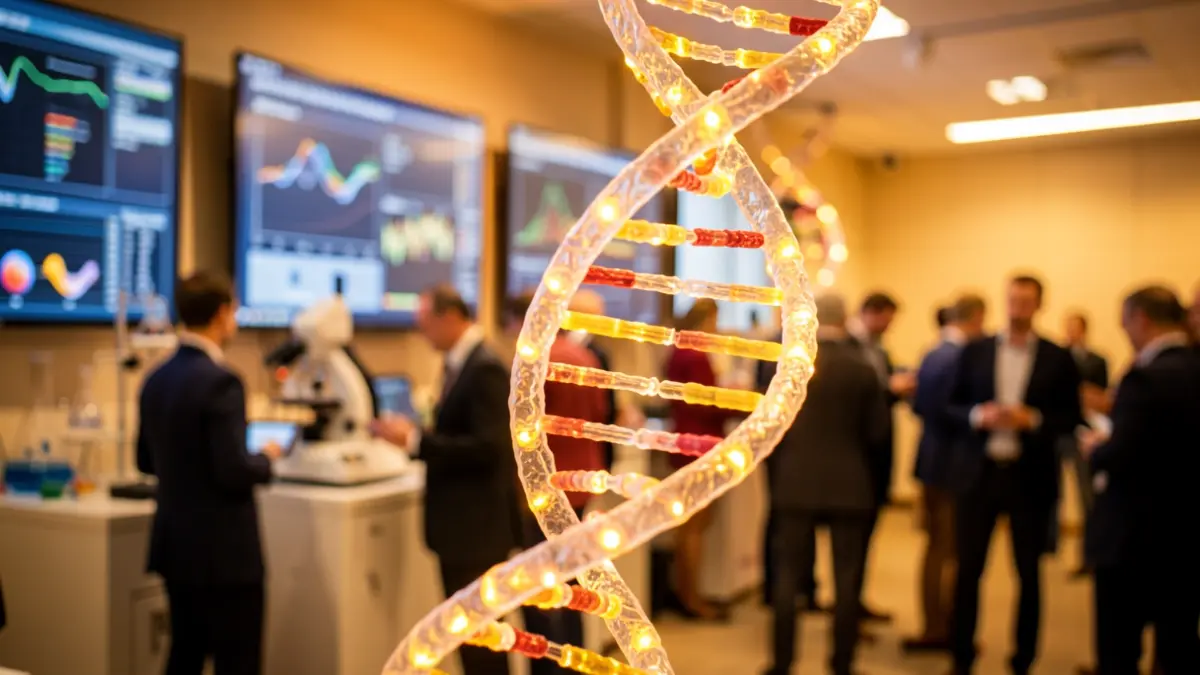
DNA double helix structure with glowing nodes and scientific equipment in the background.
The European Commission has announced a €19 million funding for GENCODE, one of the most important and widely used data and knowledge repositories in biology, cited as critical infrastructure for EU economic security.
GENCODE is the reference map of human and mouse genes used by researchers worldwide across academia and the biotechnology and pharmaceutical industries. Out of 52 officially recognised global core biodata resources, it is the only project hosted in Spain, sharing responsibility with the UK and the United States.
Mainly funded by the US National Institutes of Health since 2003, Europe's backing ensures GENCODE's future no longer rests on a single funder. The European Commission's announcement recognises the catalogue's importance in pushing the boundaries of science, advancing artificial intelligence and personalised medicine. The five-year funding will support long-term planning, technical maintenance, and service continuity of the biodata resource.
Conceived by Roderic Guigó in 2003, GENCODE is now run by EMBL’s European Bioinformatics Institute (EMBL-EBI) in the UK, in partnership with the CRG in Barcelona. The broader international consortium includes research groups from MIT, Yale, Stanford, the University of California, and the University of Michigan.
“
"AI tools are revolutionising biology, but their predictions are only as reliable as the reference they are built on and tested against. For more than two decades, GENCODE has been the reference for the map of human genes. By sustaining it, the Commission is making sure that the next wave of AI-driven innovation in biomedicine rests on knowledge that is accurate, open and continually improved. It also primes us to being at the forefront of a technology movement that will completely transform medicine."
The Commission cites GENCODE as critical infrastructure for EU economic security, strategic interests, competitiveness, and for addressing societal challenges such as global health, biodiversity, and climate change. The life sciences sector serviced by infrastructures like GENCODE is collectively worth an estimated €1.5 trillion to Europe.
GENCODE is one of the data resources managed by the CRG on which the global scientific community depends. The institute also co-coordinates the European Genome-phenome Archive (EGA) with EMBL-EBI since 2013 and leads the Biodiversity Cell Atlas.
“
"This investment recognises more than two decades of work at the CRG and consolidates Barcelona as one of the places where the world’s most important biological data is looked after. It’s also critical for Europe’s sovereignty. We will continue our stewardship and serve the global scientific community."
Unlike science projects like CERN, biology relies on many different types of globally distributed, virtually connected databases. These biodata resources are invisible yet vital infrastructures for high scientific quality and research integrity.
The European Commission's announcement is part of a wider €65 million package to support life science infrastructures, including funding for UniProt (€30 million) and Europe PMC (€8 million).
The investment responds to concerns raised by the Global Biodata Coalition (GBC), which has warned that biodata resources are struggling to secure the necessary funding for their long-term sustainability, jeopardising their ability to curate, store, and maintain open data.
Roderic Guigó, one of the Spanish scientists who took part in the Human Genome Project, conceived GENCODE as an arm of ENCODE in 2003. The project, funded by the NIH, has enabled precise mapping of human and mouse genes, transforming science and medicine, including tools like CRISPR-Cas9, genetic diagnoses, and advanced therapies.
Thanks to GENCODE, researchers have a detailed map of the start and end of each gene, enabling the development of messenger RNA-based therapies and CAR-T cell therapies. The genetic database has also accelerated the development of personalised cancer therapies.
GENCODE data is also used in artificial intelligence, as seen with Google DeepMind's AlphaGenome, which used GENCODE as a reference map to predict how DNA changes affect gene expression.
The catalogue has been cited in at least 21,000 scientific publications and has driven fundamental questions about the definition of a gene, showing that a large part of the human genome is transcribed into RNA.