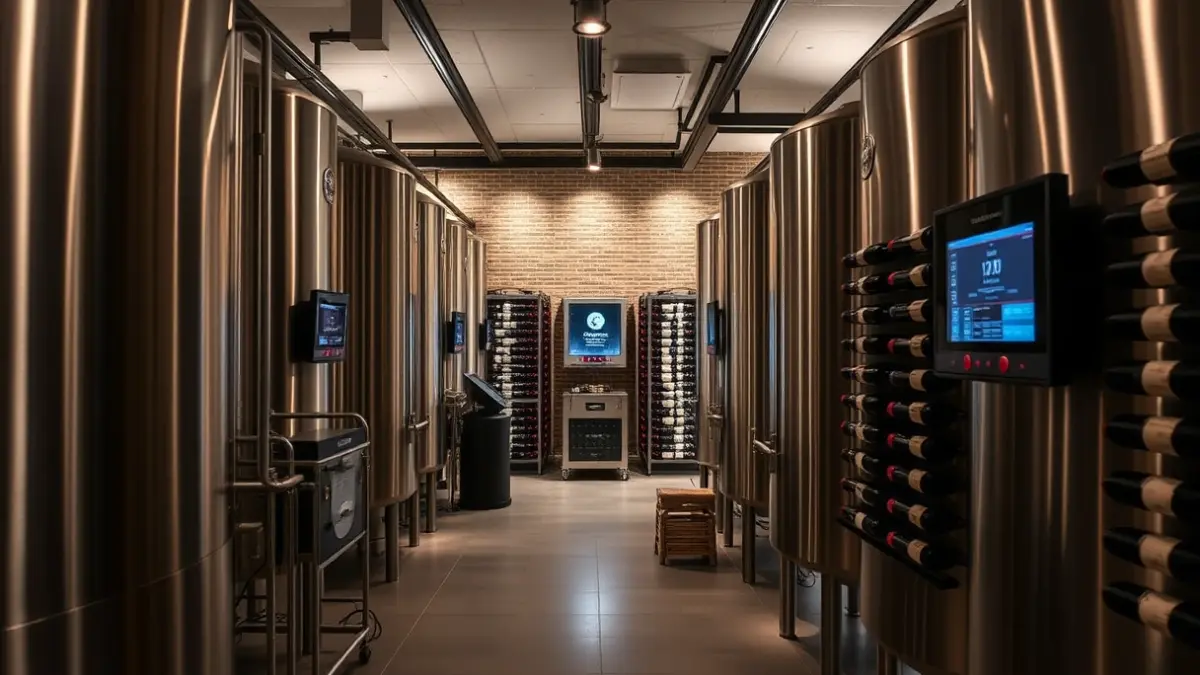
The project, named Enolab.cat, will be established in the former Falbar textile factory, acquired by the city council four years ago. This initiative seeks to modernize the Catalan wine sector through digitalization, sustainability, and advanced research. The center will feature a fully sensorized experimental winery, a multidisciplinary laboratory, and an advanced digital platform based on data and artificial intelligence, all within an infrastructure spanning over 1,000 m².
The announcement of this significant investment was made by the Minister of Research and Universities during the inauguration of the 31st Wine Fair. The new winery will focus on the digitalization of enological processes to optimize wine extraction, fermentation, and aging. Additionally, active efforts will be made to reduce the environmental footprint of wineries, efficiently manage resources, and valorize by-products through circular economy strategies.
“"This alliance demonstrates how the country's major scientific infrastructures can generate direct impact on traditional sectors and transform them into engines of innovation."
The infrastructure, exceeding 1,000 m², will include an experimental production room, chemical and microbiological laboratories, aging spaces, and advanced monitoring and data analysis systems. The Minister highlighted the digital dimension of the project, a result of collaboration with the Barcelona Supercomputing Center, which will allow for the management of large volumes of winery data and the application of artificial intelligence to develop predictive models.
This facility is considered a pioneer in enological research in Catalonia and aims to transform the Priorat region into a hub for talent attraction and agri-food innovation linked to the wine sector. The goal is to generate qualified employment and enhance opportunities in rural areas. From Falset, the mayor emphasized the importance of research in facing future challenges such as climate change and new market trends.
The general director of IRTA added that the project's differential value lies in its ability to connect the winery, laboratory, and data within a single infrastructure, generating transferable knowledge for the entire Catalan wine sector. Catalonia, with twelve designations of origin, over 750 wineries, and an annual turnover exceeding 1.2 billion euros, is positioned as one of Southern Europe's leading wine regions, but until now lacked an infrastructure integrating research, production, and data management in one space.