The transition towards electric mobility in Catalonia continues at a strong pace. During the first quarter of 2026, 72.2% of passenger car sales were for partially or fully electric vehicles, a ten-point increase compared to the same period in 2025. Non-plug-in hybrids remain the most popular, but purely electric and plug-in hybrid vehicles also show steady growth, accounting for almost a quarter of the market.
According to data from the employers' association Faconauto, registrations of electrified vehicles reached 33,364 units between January and April this year, a 30% increase compared to the previous year. In contrast, registrations of combustion engine vehicles fell by 15%, to 12,805 units.
Pure electric vehicles now represent 13% of the market, a three-point increase in one year. Plug-in hybrids have grown to 11.6%, while non-plug-in hybrids dominate with 47.7%. Diesel vehicles continue their decline, with only 2.2% of sales, and gasoline vehicles also recede to 21.4%.
By province, Lleida leads the growth in electrified vehicles with 29% of new registrations in early 2026, followed by Tarragona (27%), Barcelona (24%), and Girona (22%). These figures place Catalonia slightly above the Spanish average in electromobility.
Jaume Roura, president of Fecavem, positively assesses this trend, although he notes that Europe acted "hastily" in the transformation, lacking "education" and a more extensive deployment of charging points. The European Commission has relaxed emissions targets, allowing the sale of combustion engine vehicles beyond 2035 with 90% emission reductions.
Despite the rise of vehicles with alternative engines, Catalonia's vehicle fleet remains predominantly combustion-based. At the end of 2025, 44% of vehicles had the C sticker, 23.3% the B label, and 24% no sticker. Eco and Zero vehicles represent 6.3% and 2.4% respectively.
Price continues to be a key factor. The MOVES III program has been replaced by the Auto+ program, which includes direct invoice discounts and aid of up to 4,500 euros, with additional incentives for vehicles manufactured in Europe. Tax incentives for income tax also remain in place.
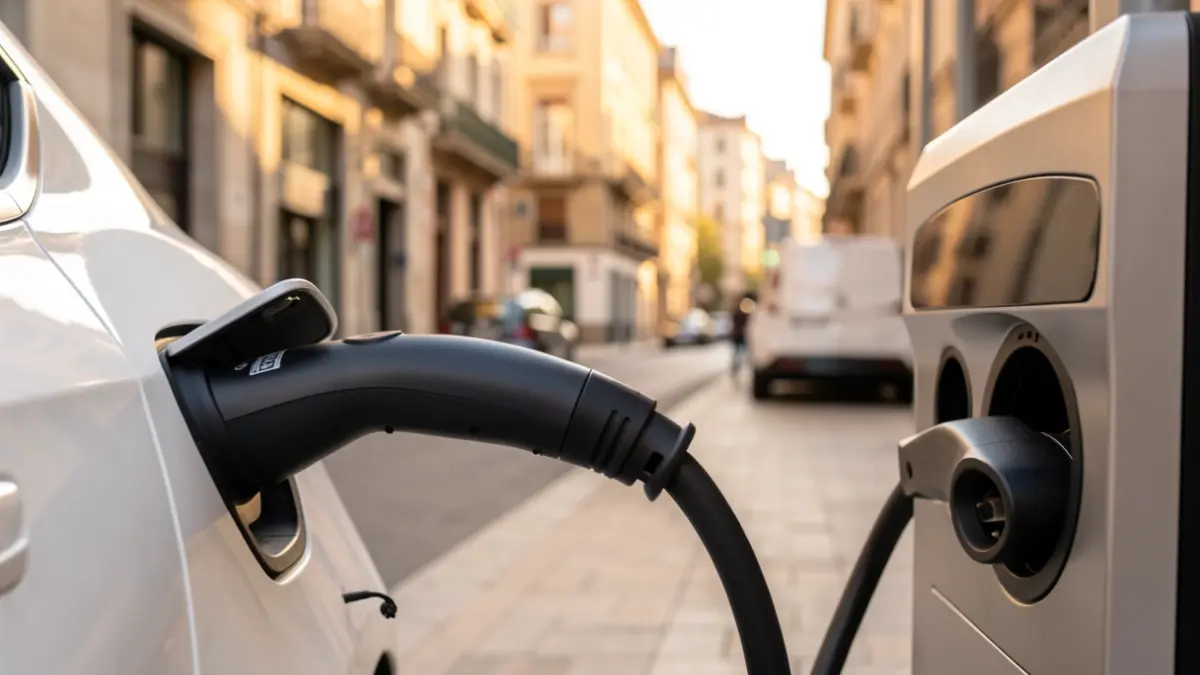
Catalonia leads Spain in public charging points with nearly 12,000 units, although most are slow-charging and some present "anomalies" in their operation. Daniel Pérez, president of l'Energètica, believes that "there are more cars needed than chargers" and that the visibility and reliability of these points need improvement.