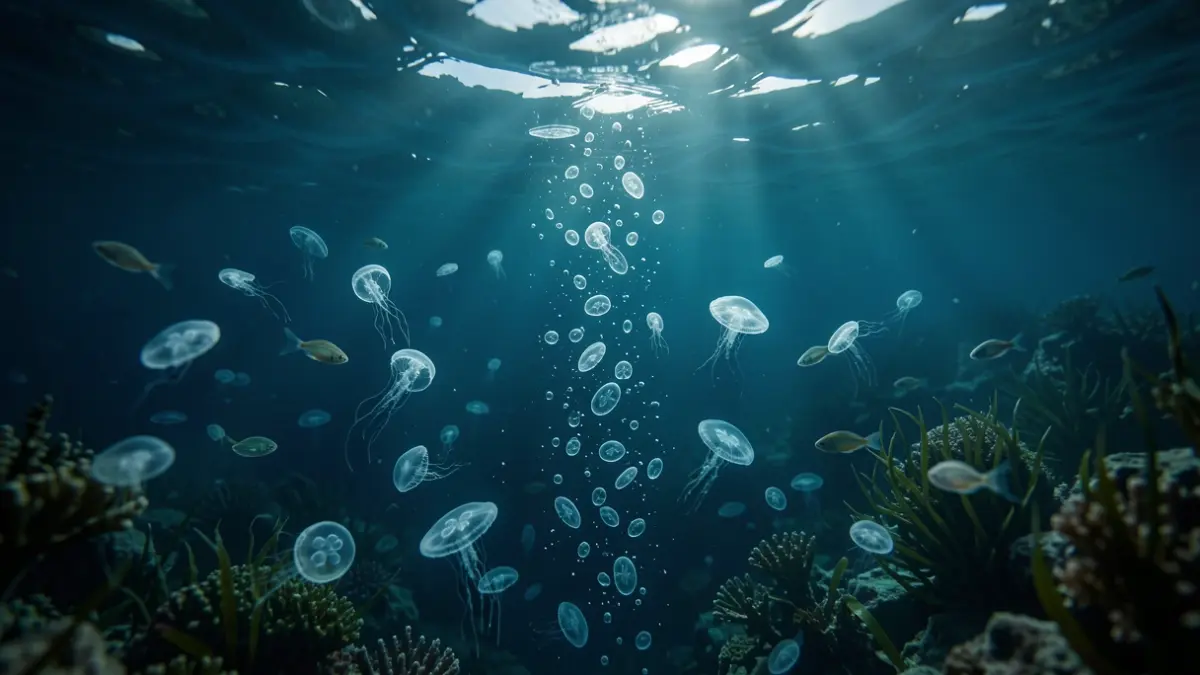
The IMPULSO project, developed by the ULPGC, will analyze the relationship between lunar phases and open-sea plankton variability, a key phenomenon for understanding marine ecosystem functioning and its contribution to climate change mitigation.
This initiative has been selected in the call for applied R&D projects promoted by the Ministry of Universities, Science, Innovation and Culture (CUCIC), through the Canary Agency for Research, Innovation and Information Society (ACIISI).
Despite the rapid evolution of plankton, there is a scarcity of high-resolution temporal data to measure its variability. The IMPULSO project aims to delve into previous evidence suggesting that various marine organisms adapt their cycles to the Moon's.
The research is part of the priority area of Blue Economy Industry, aligning with the Canary Islands' Strategy for Smart and Sustainable Specialization (extended RIS3).
The proposal achieved a high score of 79.81 points in the evaluation and will receive funding of €357,035.46 for its experimental development.
The project is among the 17 projects funded in the latest regional call for applied R&D, with a budget of over €2.5 million and co-financing from the European Union through the European Regional Development Fund (ERDF).