The University of La Laguna (ULL) participated last week in the final meeting of the European project MathIA, held at the University of Madeira. This project, coordinated by the University of Murcia, aims to develop an Artificial Intelligence (AI) model to assist educators in enhancing the mathematical skills of adolescent students, promoting equality and inclusion.
The ULL team, led by África Borges del Rosal, presented the teacher training courses developed by the Canarian institution. Each course, lasting 15 hours, is designed to help educators responsibly integrate AI into their teaching practices. The first course, 'Digitalization and Artificial Intelligence,' introduces the technology and its applications, addressing ethical and privacy issues. The second, 'Digitalization and Artificial Intelligence–Institutes,' focuses specifically on mathematics education, including personalized learning and the use of neural networks.
The training proposal is free, reusable, and transferable, and will soon be available on an Open Ware Course (OCW) platform. ULL's contribution involved identifying training needs, designing the courses, and developing multimedia materials, with an interdisciplinary team of 14 members from fields such as mathematics, psychology, engineering, computer science, and education.
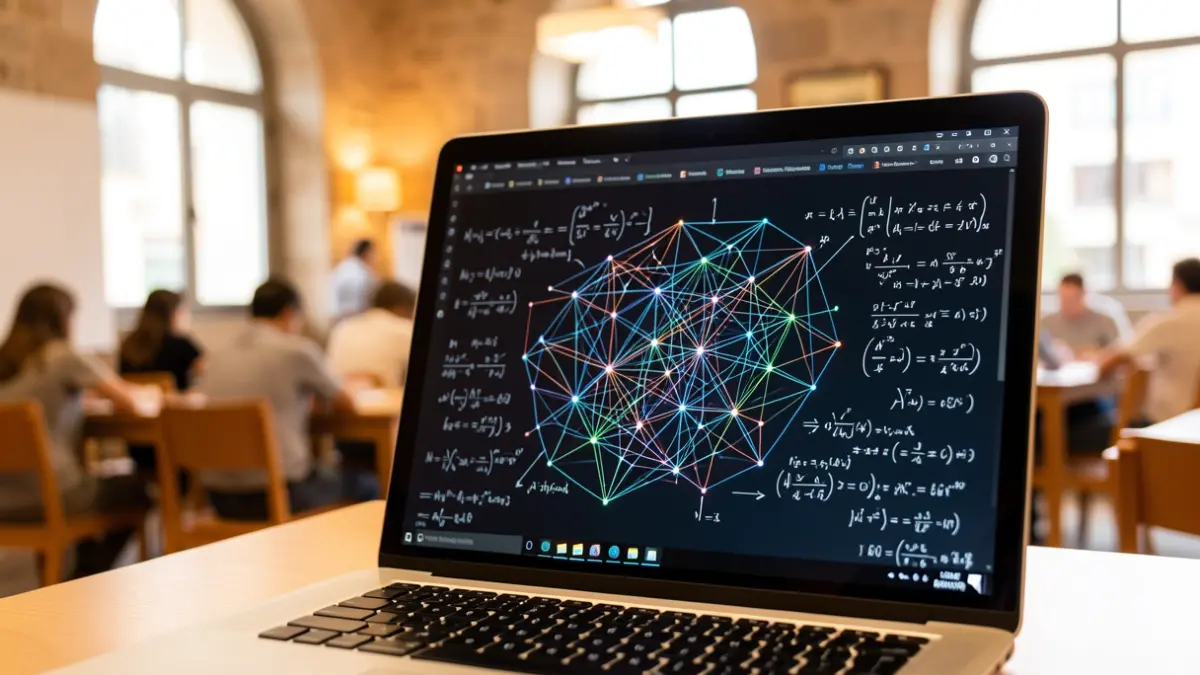
The MathIA project has also developed an AI model currently in the testing phase, aimed at assessing student competencies and tailoring educational responses. This model has been developed with the participation of universities, educational centers, teachers, and students. The project is funded by 400,000 euros from the European Union through the Erasmus+ program.
The balance presented in Madeira included 61 educational resources distributed across five areas: technological training for mathematics, mathematical innovation, high abilities, equality, and attention to diversity. These materials aim to provide educators with support for more inclusive teaching and to cater to different learning profiles.