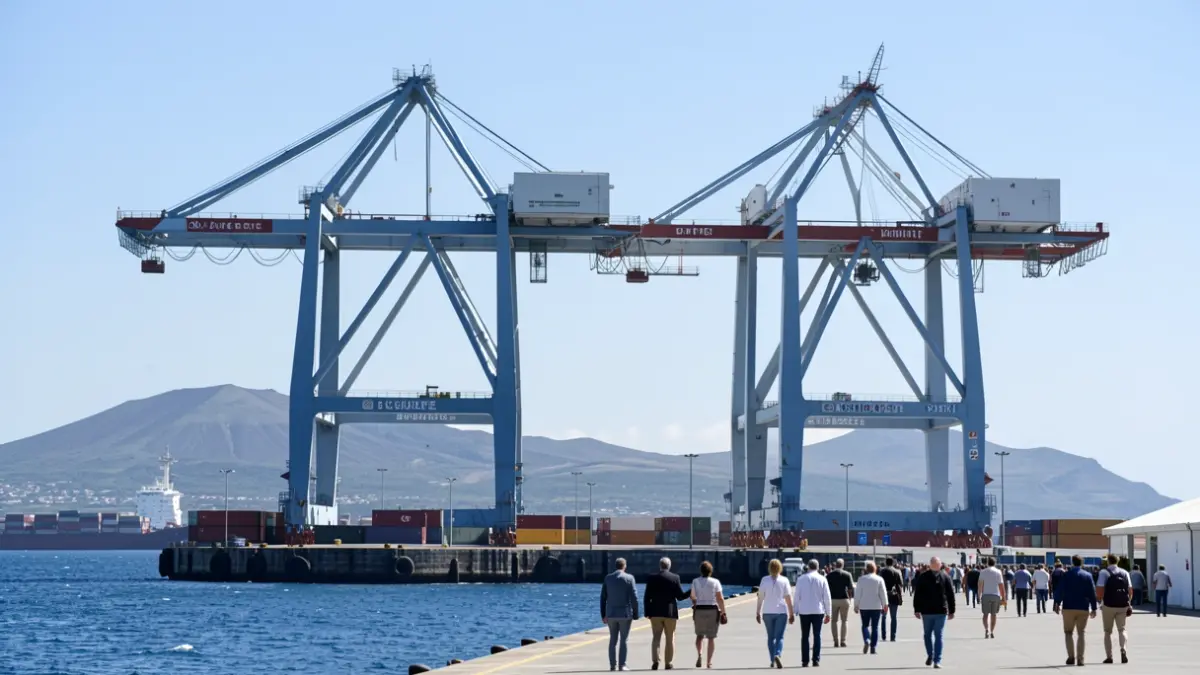
Two imposing cranes, each weighing 1,800 tons, have recently arrived at the Port of Santa Cruz de Tenerife. After their transport from Tarragona, these new acquisitions await suitable maritime conditions for unloading and commissioning. This technically complex maneuver represents a significant advancement for the container terminal managed by Boluda Maritime Terminals Tenerife.
These cranes are not mere additions; they symbolize the terminal's greatest technological leap since the company took over its management. They are part of an ambitious investment plan exceeding 40 million euros, aimed at modernizing the facilities following the renewal of the concession for another twenty-five years.
“"We had planned to unload them on Saturday, but the swell forced us to postpone the operation for safety reasons."
Once operational, the Port of Santa Cruz de Tenerife will boast the most modern and powerful machinery in its history. Standing 60 meters high, capable of handling vessels up to 22 containers wide, moving 71 tons in Twin Lift mode, and lifting 88 tons under hook, these cranes will enable the port to accommodate vessel calls that were previously unviable or uncompetitive.
“"Now we have the capacity to meet demand we couldn't before; this is top-of-the-line."
The arrival of these two cranes completes the first phase of the investment program, which already included the deployment of four hybrid RTG cranes and other specialized machinery. With this new equipment, the terminal is positioned to handle Ultra Large Container Vessels (ULCVs), the largest container ships currently sailing international routes.
This investment drive coincides with a favorable international context. The reconfiguration of global maritime traffic, driven by insecurity in the Red Sea and diversions around the Cape of Good Hope, is opening new logistical opportunities for Atlantic ports like Tenerife. The company aims to attract new traffics and strengthen the island's role as a strategic hub.
Furthermore, one of the currently operational cranes in Santa Cruz will be relocated to La Palma. There, it will replace the existing mobile crane, becoming the first gantry crane at the La Palma terminal and significantly improving container loading and unloading operations.
The president of the Port Authority of Santa Cruz de Tenerife, Pedro Suárez, highlighted that this investment addresses a long-standing demand and that more efficient facilities will reduce vessel turnaround times, improve working conditions for stevedores, and enhance the port's competitiveness against other Atlantic locations.
“"Boluda guarantees an investment of 40 million for the renewed twenty-five-year concession."
Ultimately, efficiency in the maritime business is measured in minutes. The new cranes will enable faster, safer, and more precise unloading, an increasingly decisive factor for shipping lines when choosing a port. With this modernization, the Port of Santa Cruz de Tenerife is preparing to compete in a global market where every operational detail counts.