
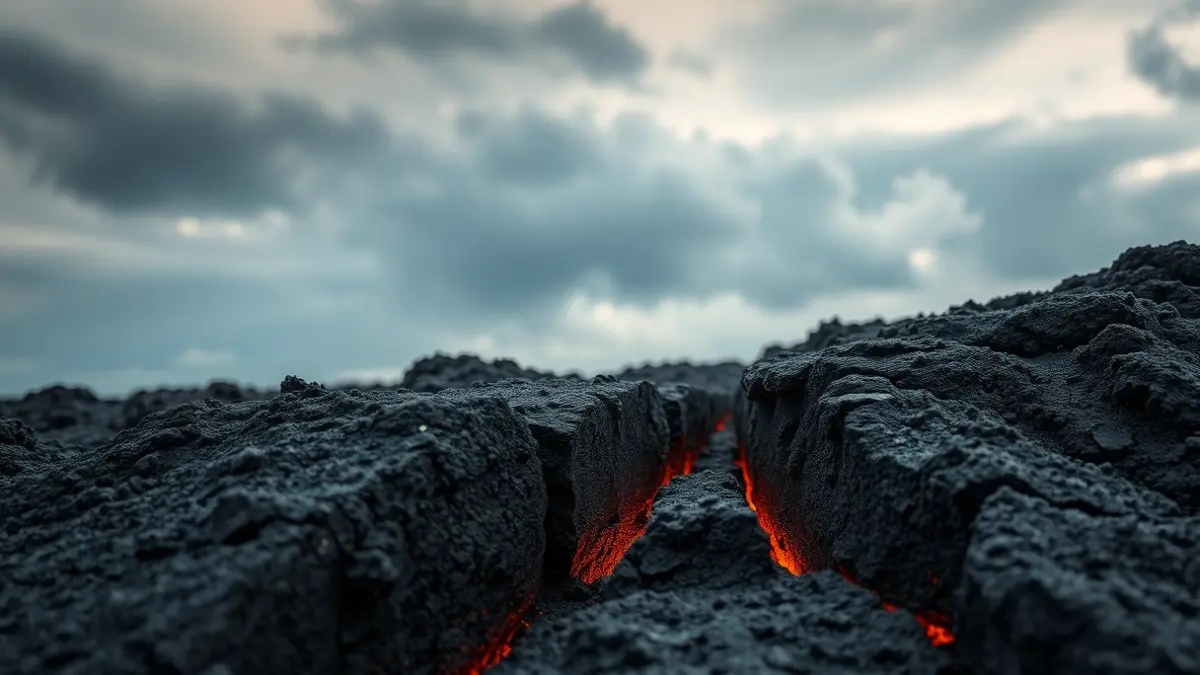
The research, conducted on the island of São Jorge in the Azores, proposes a new explanation for the pre-eruptive behavior of volcanoes. This finding, which included contributions from CSIC scientists, suggests that faults are capable of “stealing” gases from magma, preventing its rapid ascent and, therefore, an eruption.
The case of São Jorge in 2022, where a magmatic intrusion did not culminate in an eruption despite intense seismicity, served as the basis for this study. Magma rapidly ascended from 20 kilometers deep to within 1,600 meters of the surface, but its trajectory was mostly “silent,” making eruption prediction difficult.
“"The magma moved rapidly through the crust, but much of its path was silent, making it difficult at the time to predict whether an eruption would occur."
The key was found in the island's geological fault system, specifically the Pico do Carvão fault. The magma's ascent through this 55-kilometer long by 8-kilometer wide structure caused the magma to lose gas and buoyancy due to the fault's permeability. These gases escaped and expanded, causing earthquakes at a distance from the magmatic ascent point.
This discovery, published in Nature Communications, confirms that faults can not only guide magma but also halt it. Although Canary Islands do not have large faults like those in the Azores, much of this knowledge is transferable. Researchers emphasize the importance of not equating seismicity with magma position, a crucial aspect for volcanic monitoring in the archipelago.