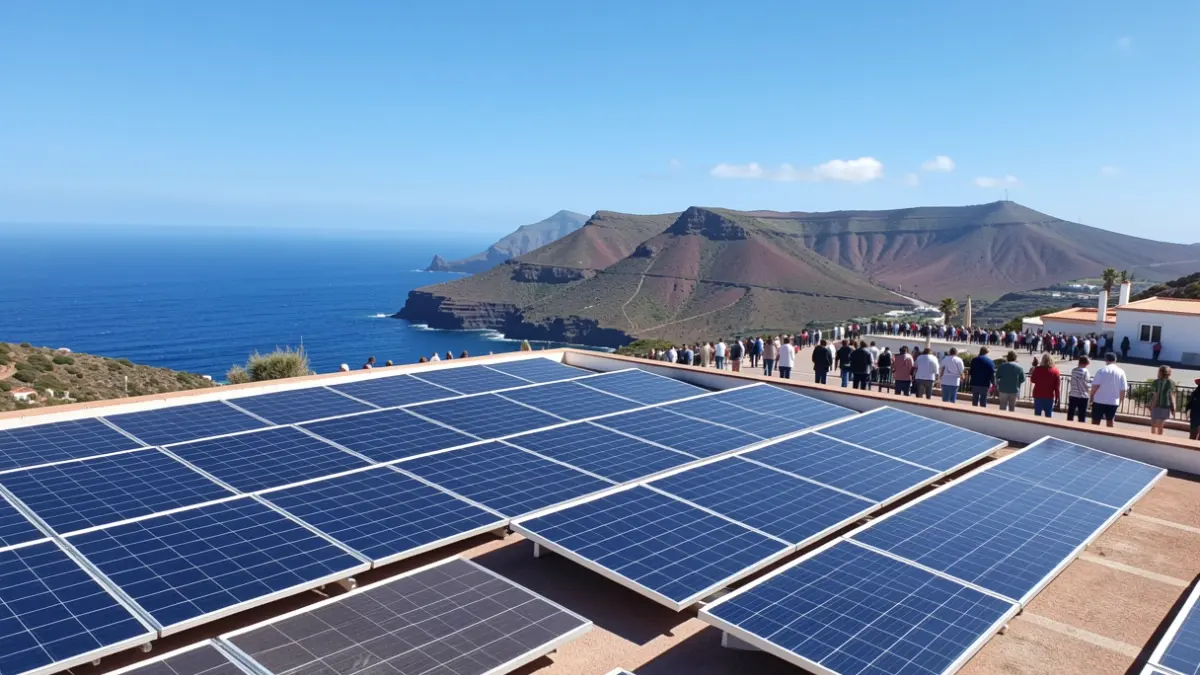
The implementation of solar panels has seen unprecedented growth in the Canary Islands, reaching record figures. The archipelago currently boasts 24,991 self-consumption installations, a sixteenfold increase compared to just three years ago. This surge is attributed to increased awareness of energy savings and sustainability, simplified administrative procedures, and improved regulations.
The total power capacity of self-consumption installations in the islands now reaches 260 megawatts, approximately 3% of the total contracted power by the electricity company's customers. Individual installations remain the most common, accounting for 93% of the total. However, collective self-consumption has doubled its presence in the past year, growing from 865 to 1,756 shared installations.
Tax deductions on personal income tax for energy efficiency improvements can cover up to 60% of the investment made.
The high solar radiation in the Canary Islands makes the territory one of the most suitable locations in Spain for self-consumption. The profitability of these installations is enhanced by various available public aids, including subsidies funded by European funds and personal income tax deductions, which can cover up to 60% of the investment. Experts note significant savings on electricity bills, particularly for households with high consumption. Collective self-consumption further facilitates access to clean energy in residential buildings by allowing cost-sharing.
By province, Santa Cruz de Tenerife leads in collective installations with 900, closely followed by Las Palmas with 846. For individual installations, the province of Las Palmas has 12,346, while Santa Cruz de Tenerife records 10,899.