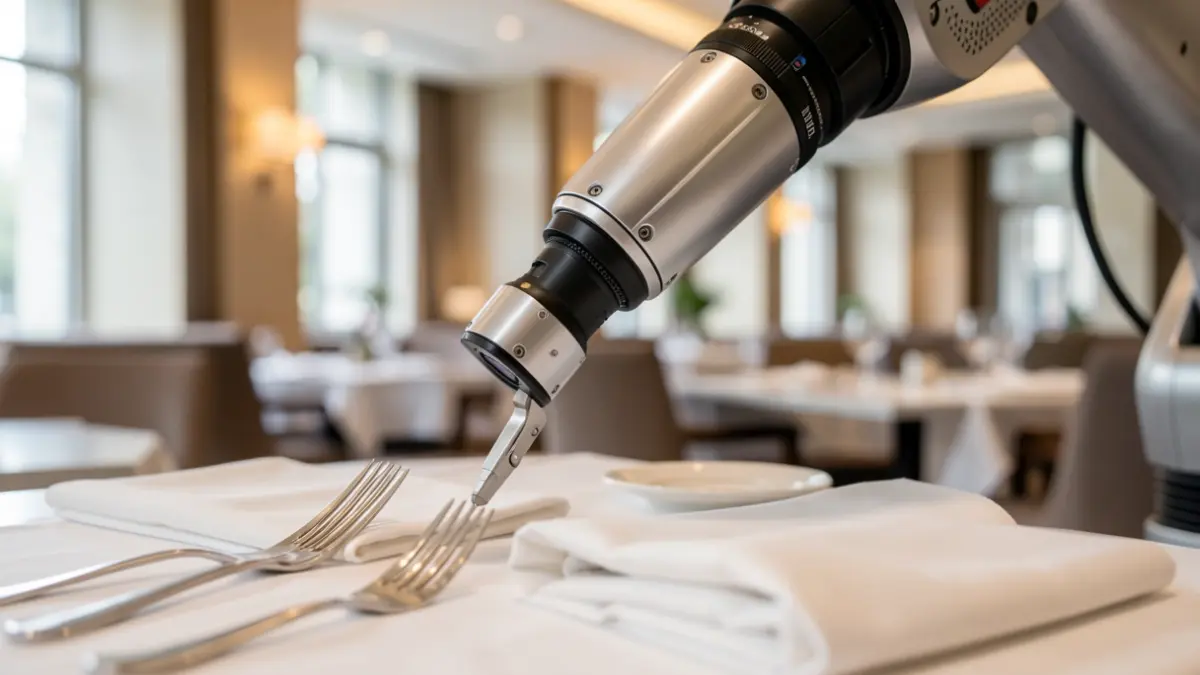
Dr. Santiago Melián, a researcher at the Institute of Tourism and Sustainable Economic Development (TIDES), has published an opinion article in the newspaper La Provincia examining the implications of robotics for employment within the hotel sector. Titled «Robots Yes, People Too», Melián addresses the growing debate surrounding automation in tourism and hospitality, suggesting that the adoption of new technologies does not necessarily lead to a widespread replacement of workers.
The analysis is based on recent research that assessed the automation potential of various tasks and roles in four and five-star beach hotels. A key conclusion from the study is the necessity of analyzing automation at the level of specific tasks, rather than treating occupations as uniform units. The research examined 202 tasks across different hotel professional profiles, identifying the challenges that certain characteristics of these activities pose for automation.
Among the most significant obstacles identified are manual dexterity, adaptation to changing environments, tasks performed in confined or awkward positions, and social skills crucial for customer service, negotiation, and interpreting reactions. The results indicate that over 90% of the analyzed tasks face a moderate to severe bottleneck for automation. These limitations vary by role: while areas like kitchen and maintenance present predominantly physical and manipulative challenges, social skills are paramount in roles related to reception and customer service.
The article raises the question of which tasks are automatable, which will continue to require human intervention, and how work can be reorganized for effective collaboration between people and technology. Dr. Melián points out that automation can improve working conditions by reducing repetitive tasks, allowing professionals to focus on activities demanding human capabilities. The analysis also underscores the importance of redesigning job roles alongside technological integration.