The Canarian hotel company thus joins an international coalition driven by the United Nations, which aims to decarbonize the global tourism sector. The Glasgow Declaration calls for halving emissions by 2030 and achieving Net Zero before 2050. Lopesan, however, has decided to anticipate these deadlines, immediately publishing its Climate Action Plan 2030.
The Corporate Director of Sustainability at Lopesan Hotel Group, Pablo Lorenzo, highlighted the ambition of this plan, which sets the goal of achieving Net Zero for operational emissions (Scope 1 and 2) by 2027, significantly ahead of the alliance's target. Furthermore, they commit to reducing the value chain footprint (Scope 3) by fifty percent by the end of the decade.
The Climate Action Plan 2030, available on the company's website, is based on five action axes: measure, decarbonize, regenerate, collaborate, and finance. The organization has already certified a seventy-four percent reduction in its operational emissions between 2021 and 2024, decreasing from 11,199.09 to 2,839.64 tons of CO2 equivalent.
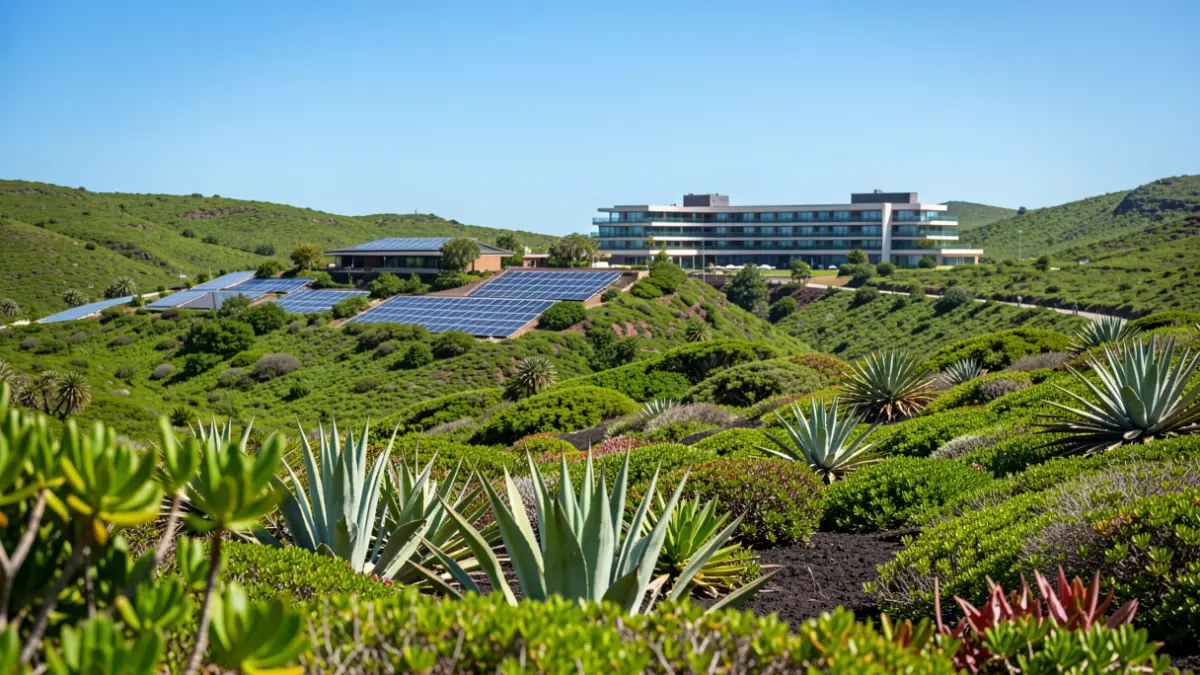
Lopesan is implementing significant technological investments, such as replacing propane boilers with high-temperature heat pumps in hotels like the Lopesan Costa Meloneras Resort and the Lopesan Baobab Resort. It is also promoting photovoltaic solar energy generation with plants like Lopesan III and IV, particularly in Gran Canaria, which is becoming a laboratory for optimizing energy efficiency solutions.
The strategy is complemented by waste minimization and requiring suppliers to certify their product footprint under the ISO 14067 standard. With an eye on 2028 and reporting under the European CSRD directive, Lopesan Hotel Group reaffirms its purpose to inspire sustainable travel, considering environmental protection as a central axis for the resilience of its projects.