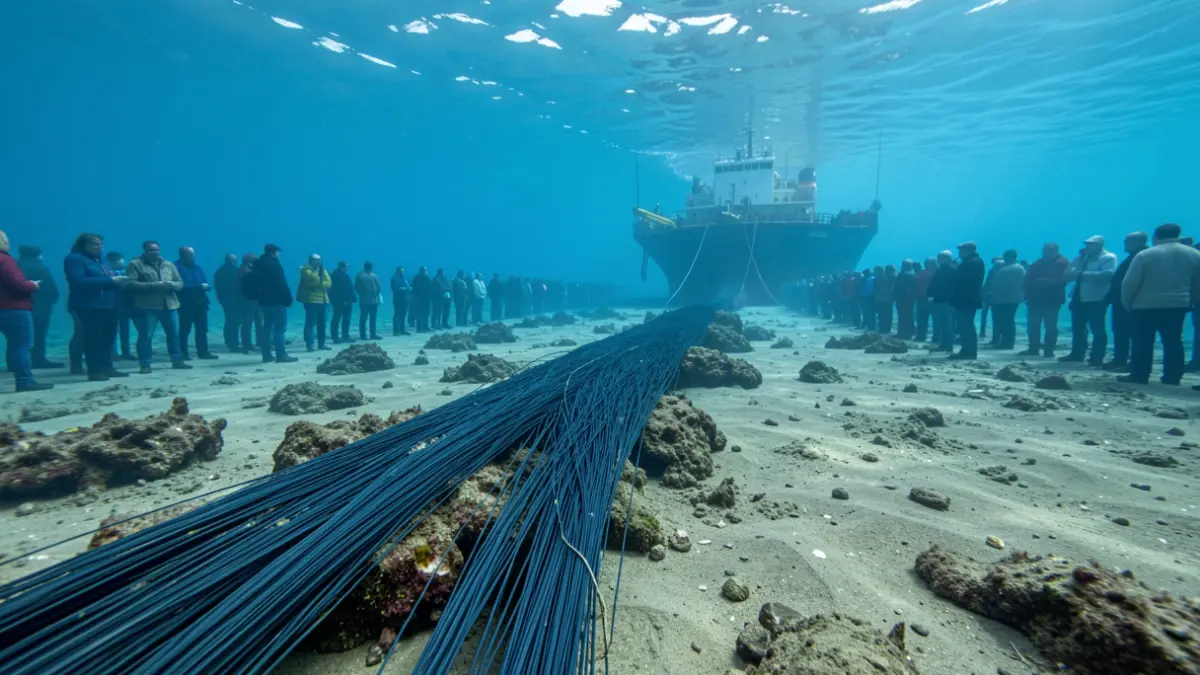
Operators and machinery have been observed at Playa de Guacimeta, in Playa Honda, connecting cabling with a ship anchored near the coast. Municipal sources from the San Bartolomé City Council have confirmed that this pertains to the terrestrial fiber optic connection linking the new Canalink submarine cable, which reaches Playa Honda and communicates with the center of Arrecife.
The installation involves setting up a landing pit for the submarine cable, a CLS technical station in Playa Honda, and extending the fiber through existing conduits and some new sections.
The primary objective of this initiative is to establish a new telecommunications infrastructure connecting Lanzarote with Fuerteventura and Gran Canaria via submarine cable. This will significantly increase the capacity, security, and redundancy of communications, ensuring that if one route fails, an alternative exists to prevent service interruptions.
The complete system is estimated to have an approximate capacity of 60 Terabits/s and is primarily designed to serve telecommunications operators.
In essence, this new cabling represents an underwater 'digital highway' reaching Playa Honda and connecting to Lanzarote's telecommunications network by land.