
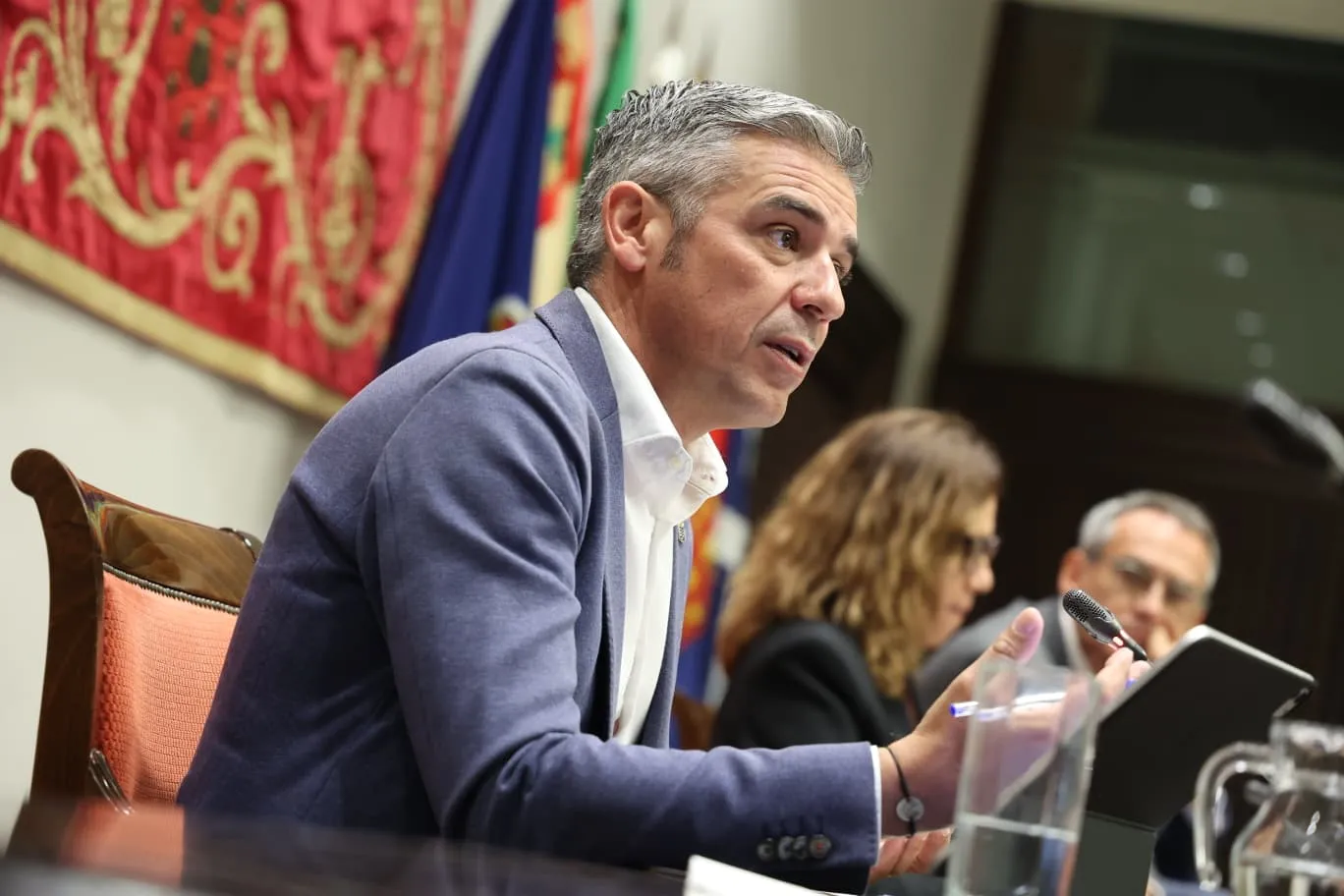
This was highlighted today, Thursday 26 November, by the Councillor for Agriculture, Livestock, Fisheries and Food Sovereignty, Narvay Quintero, during his intervention in the Parliament of the Canary Islands, in response to a question in a parliamentary committee. The department head explained that one of the main objectives of the ICIA is to orient scientific research towards the real needs of farmers and livestock farmers, so that advances developed by the Institute translate into solutions for the main challenges of the primary sector.
In this regard, Quintero highlighted the opening of a new channel of direct collaboration with the sector through agreements with nine fruit and vegetable producer organisations, as well as the Institute's participation in ten competitive projects at the national and European level. Additionally, there is permanent cooperation with the island councils and other entities.
Among the main lines of work of the ICIA, the member of the Canary Executive highlighted actions aimed at preserving the viticultural heritage of the archipelago. The Institute has a vine collection started in the 1980s, integrated by more than 128 entries between varieties and clones, and has managed to recover 19 minor varieties through its plant health programme. These include Verdello de El Hierro, Marmajuelo, Gual, Vijariego blanco and negro, Malvasía aromática, Baboso negro and Listán prieto.
The cleaned plant material is currently in customs procedures for transfer to the Canary Islands, where it will be preserved in the new mother plant greenhouse in Isamar, in Valle de Guerra (Tenerife), with operations expected to begin in December. The organisation continues to work on cleaning other varieties to reach a total of 33, which will contribute to preserving the genetic richness of Canarian viticulture and will facilitate producers' access to plant material in optimal sanitary conditions.
Likewise, Quintero valued the research developed around the tropical pineapple of El Hierro, a crop of special economic relevance for the island. Between 2023 and 2025, the ICIA directed three sub-projects, with joint funding of 333,450 euros, focused on the selection and multiplication of plant material of the Roja Española variety, biological control of scale insects, and improvement of soil health. Among the main results of this work is the identification of native parasitoids that open new avenues to combat this pest through biological control methods.
Regarding water resource management, the department head referred to the results of the European LIFE Nieblas project, which incorporates a fog water collection system designed by the ICIA and which has allowed 75,000 litres of water to be obtained in Gran Canaria for the irrigation of 15 hectares and the planting of 8,500 trees. This initiative, already completed, has achieved significant international projection, with milestones such as its presentation in the United States, where it aroused the interest of Scientific American magazine, or the visit to the Canary Islands of a scientific and business delegation from Korea interested in learning about this technology.
During his intervention, Quintero announced that the ICIA plans to call for nine new research staff positions before the end of 2026, with the expectation that they will be filled by the end of 2027. These additions will allow the needs arising from retirements to be met and strengthen the organisation's capacity to address new lines of research. Looking ahead to the 2027-2029 period, the regional department plans to continue public-private collaboration with fruit and vegetable producer organisations, expand the ICIA's participation in competitive national and European projects, and redefine its strategic research lines in collaboration with the next Advisory Council of the Institute.
“"It is not about researching more for the sake of researching. It is about ensuring that each project has utility, that each scientific advance can become an improvement for the farmer or livestock farmer"