The European aerospace sector, led by the European Space Agency (ESA) and consortia such as Airbus, ArianeGroup, and Thales Alenia Space, stands out for its capabilities in satellites, navigation, and Earth observation. Spain, with a robust industry and the recent creation of the Spanish Space Agency (AEE) in 2023, plays a significant role in this ecosystem.
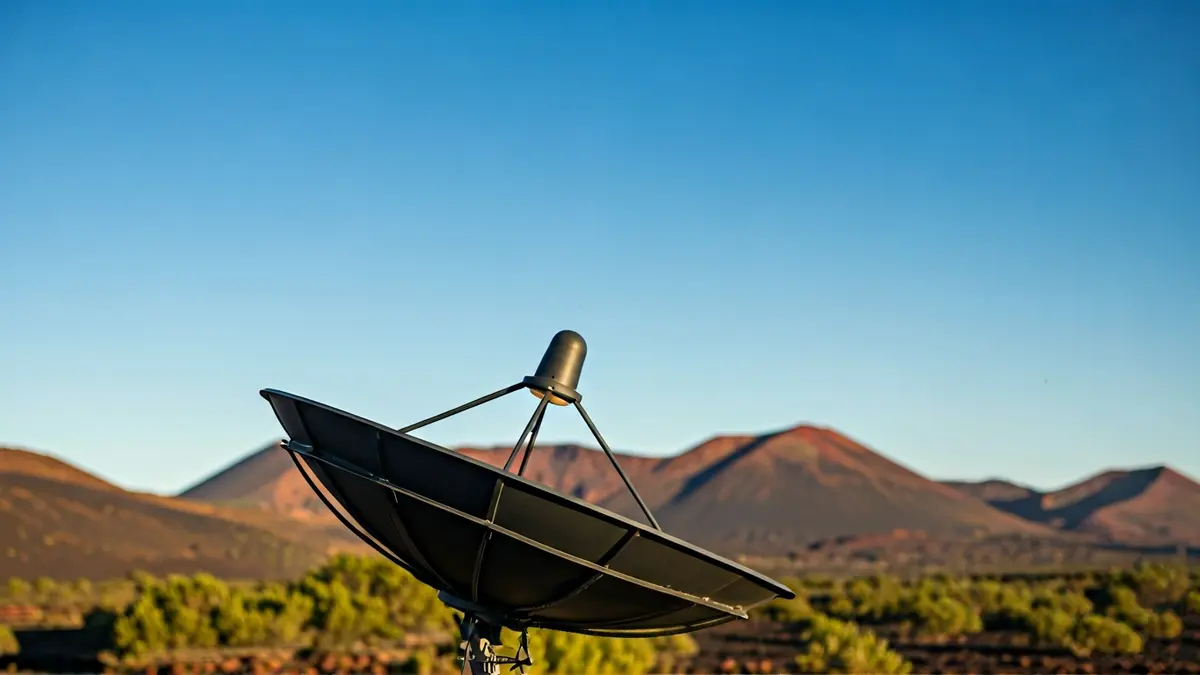
In this context, the Canary Islands, and particularly Gran Canaria, offer a unique position. The island hosts world-renowned centers such as the Institute of Astrophysics of Canarias (IAC) and the Canary Islands Space Centre in Maspalomas. The latter, with a history that includes collaboration with NASA on the Mercury, Gemini, and Apollo programs, has once again played an important role in the Artemis II lunar exploration program and currently operates with INTA and ESA for satellite tracking.
Despite its historical and current importance, the Canary Islands Space Centre has, at times, been overlooked. Recently, on Constitution Day, the Government Delegation in the Canary Islands recognized the IAC for its 40th anniversary, but not the Canary Islands Space Centre, which was celebrating its 50th anniversary, not counting the 15 years under NASA's direction. There is untapped potential in its connection with the local ecosystem and the island's businesses.
Gran Canaria's geostrategic location, coupled with its natural climate and sky conditions, makes it a privileged place for satellite operations, communications, and launch logistics. The island seeks to strengthen Spanish and European aerospace policies, aligning with the Canarian Aerospace Strategy and with the support of the Cabildo de Gran Canaria to transform these strengths into business and research projects.
Local talent is a fundamental pillar for this development. The University of Las Palmas de Gran Canaria offers STEM degrees and has research institutes such as IUMA, SIANI, IDETIC, and IOCAG, with approximately 250 researchers dedicated to aerospace sector applications. Additionally, initiatives are being promoted, such as the construction of a center with laboratories and clean rooms at the ULPGC Technology Park, areas for satellite tracking antennas, and a bid for an ESA incubator.
The construction of the Temisas station in Agüimes, which will include a state-of-the-art radio telescope and an atomic clock, will strengthen the island's capabilities in geodynamics and space observation. This is complemented by competitive tax advantages, such as deductions of up to 75% in R&D and a reduced corporate tax rate of 4% through the Canary Islands Special Zone (ZEC), consolidating Gran Canaria as an attractive destination for investment in the aerospace sector.