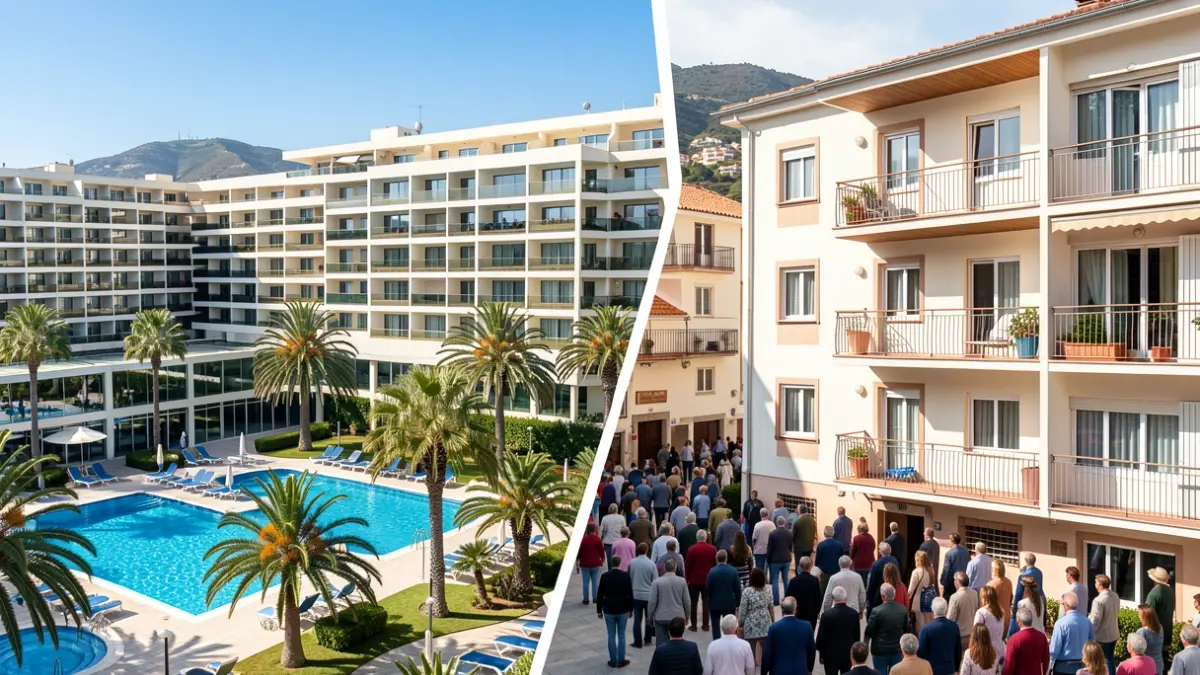
The lack of affordable housing near workplaces has become a significant obstacle for the tourism sector in the Canary Islands, particularly on islands like Fuerteventura and Lanzarote. Hotels and restaurants have long warned that this situation hinders the hiring and retention of employees.
In response, an urban planning project in Tarajalejo, municipality of Tuineje, proposes an unprecedented transformation: converting land previously designated for hotel use into residential land. The objective is to build homes specifically for the personnel working in the area's tourism sector.
The Plenary of Tuineje approved the Urban Environment Action Program, promoted by New Fit Canarias, on July 21st. Following its publication in the Official Gazette of the Canary Islands (BOC), the project now enters a one-month public information period before its potential final approval. The initiative has been in processing since 2025.
The Tarajalejo area already hosts a tourist complex with 278 accommodation units and undeveloped hotel plots. The proposal maintains three tourist plots but reserves 4,110.88 square meters in the northern section for residential use. This new land, with a primary use of collective housing, would allow for a maximum occupancy of 50% and up to three stories (12 meters) in height.
The document emphasizes that the lack of accommodation for workers severely hinders stable hiring, as many employees cannot reside near their workplaces. The documentation even refers to an "extreme housing emergency," noting a continuous staff turnover that impedes the creation of stable employment in the municipality.
Tourism business associations in Fuerteventura and Lanzarote have identified housing as one of the main obstacles to finding workers, alongside transportation and qualifications. Housing pressure has extended beyond traditional tourist enclaves, leading some hotels to block rooms or purchase properties for their staff, and even reduce operations due to insufficient personnel.
The Tarajalejo plan aims to address this issue by integrating housing as a necessary element for the functioning of tourism itself. In addition to the residential plot, the project includes green areas, parking, and the consolidation of central plots for a hotel complex, with the overall goal of regenerating an incomplete development.