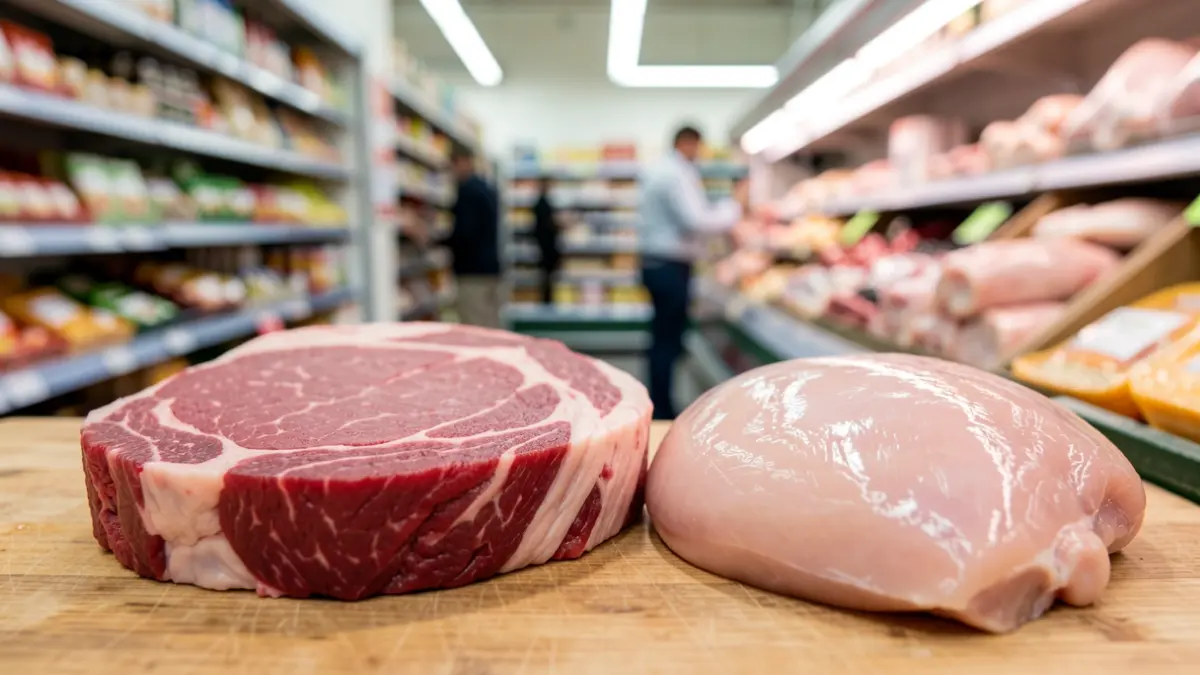
The sale of beef and chicken from Brazil in Canary Islands supermarkets will end on September 3rd. This measure, stemming from compliance with phytosanitary regulations under the agreement between the European Union and Mercosur, will necessitate a restructuring of the food supply and is expected to raise prices for the archipelago's consumers.
This restriction impacts a significant portion of the supply, as Brazilian shipments accounted for approximately 50% of imported meat. Non-compliance with EU standards, particularly regarding antibiotic use, has forced the halt of these sales in Europe.
“"Yes, there will be an increase in the price of meat and chicken, but we expect it to be moderate"
The primary sector views this decision favorably. The Minister of Agriculture, Livestock, Fisheries, and Food Sovereignty of the Government of the Canary Islands, Narvay Quintero, described it as "an essential step to eradicate the unfair competition" faced by local farmers, highlighting the inconsistency of closing Canarian farms for regulatory breaches while allowing foreign products without similar controls.
Theo Hernando, Secretary General of the Association of Farmers and Ranchers of the Canary Islands (ASAGA), echoed the importance of "mirror clauses" to ensure equal conditions. He warned about the indiscriminate use of antibiotics in Brazilian livestock farming, a practice banned in the EU due to the risk of developing antibiotic resistance and causing health complications.
Historically, the Canary Islands have consumed large volumes of these imports, benefiting from the Special Supply Regime (REA) and the POSEI program, which allowed Latin American goods to enter without tariffs.
Despite the removal of half of the imported meat, Hernando expressed confidence in the supply, stating that operators have secured alternative sources from the Iberian Peninsula, the EU, and other Latin American countries that meet the standards. He acknowledged that the adjustment will lead to price increases, as South American meat was very cheap, but assured that "there will be no shortage".
“"There will be no shortage because there are many other countries from which to bring meat"
The agricultural spokesperson explained that the final cost increase will be moderate, as poultry and pork are staple products with contained base prices. He emphasized that ensuring food quality and health guarantees involves structural costs.
The current situation highlights the archipelago's high external dependence, with a meat self-sufficiency level between 30% and 40%. The Canary Islands only achieve self-sufficiency in tropical products like bananas, avocados, and mangoes.
Increasing domestic production is challenging due to territorial limitations, bureaucracy, land scarcity, and restrictive legislation for farmers.
Separately, the potato campaign in the Canary Islands shows high quality despite initial sowing delays and smaller sizes due to the Guatemalan moth. The agricultural organization anticipates a positive commercial balance and encourages the consumption of local produce to offset meat market adjustments.