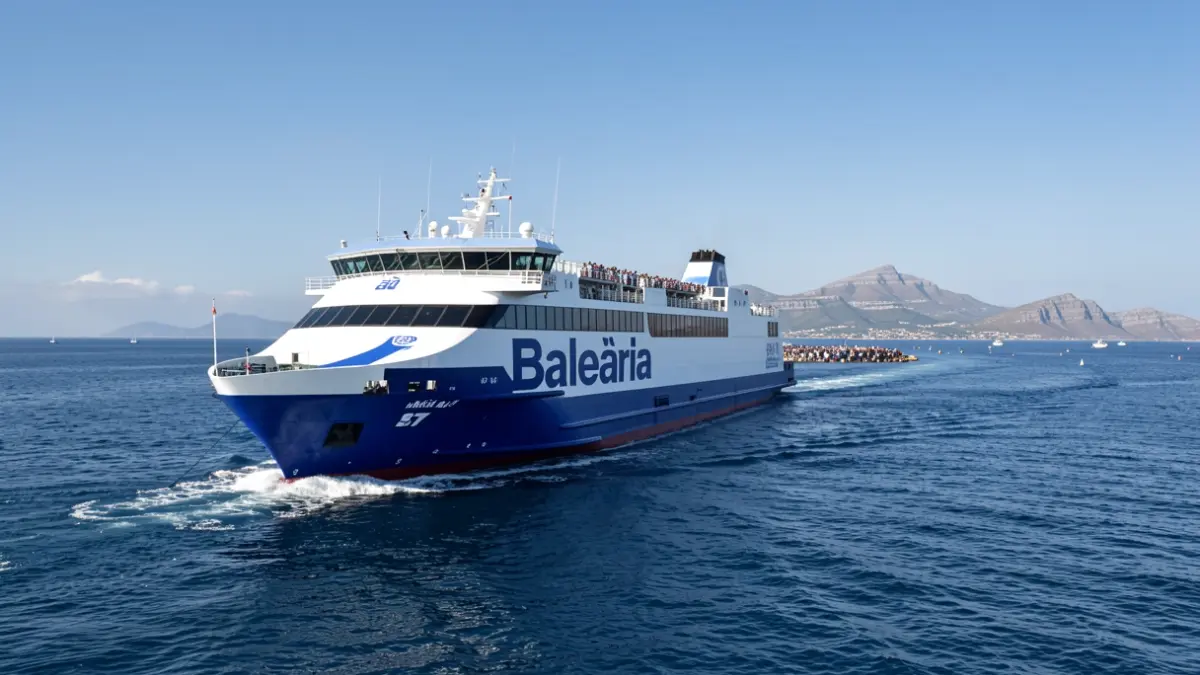
Adolfo Utor, president of Baleària, visited Canary Islands to oversee the reorganization of the new entity Baleària Canarias, established after the acquisition of Armas-Trasmediterránea. The new company, with Canary Islands businessmen holding a 30% stake, faces a "difficult task" in its first year to revive the company and compete equally with Fred Olsen, which has gained market share.
Utor describes the situation inherited from Armas as a cost-reduction strategy by investment funds, leading to asset sales and the neglect of key areas like fleet renewal, maintenance, and customer service. "We are the ones arriving now, and all this needs to be done," he stated, announcing an investment of 45 million euros in existing vessels, in addition to new acquisitions.
This operation, according to Utor, allows Baleària to "gain size" and consolidate traffic across all islands, becoming a "national company serving the entire territory." Projected revenue exceeds 1 billion euros, with 4,500 employees and 50 ships, enabling competition with major European operators like MSC (via GNV) and Grimaldi.
The Baleària president appeals for the "patience and understanding" of the Canary Islanders, acknowledging that reorganization and improvements require time and that "it's impossible for there not to be failures at the beginning." He highlights the team's effort and the hiring of local staff, aiming to "restore pride of belonging" among employees.
Regarding the fleet, Baleària has reinforced routes and services, introducing the new sustainable vessel 'Mercedes Pinto'. Utor points out the inconsistency of investing in less polluting technologies without fiscal incentives in the Canary Islands, complicating the sustainability and competitiveness equation.
Concerning the Armas brand, its change was decided due to its deterioration. "The workers themselves asked us to," Utor affirmed, defending that Baleària is characterized by its customer focus and investment in innovation and sustainability.
Utor also addressed criticism about the foreign flag on some vessels, explaining it's a necessity to find crew due to a shortage of qualified personnel and that labor rights remain the same. "We haven't changed any flags and we're not cutting costs with a Cypriot flag," he stated, calling some social media criticisms "malpractice" and "directed."
Finally, Utor dissociates the operation from political influence, calling it a "commercial relationship" and a "very high effort" to revive a "declining" company. The primary goal is to improve maritime services and contribute to the development of the Canary Islands through profitability.