The commitment to battery energy storage is expanding to the north of Gran Canaria. Two projects in the municipalities of Guía and San Mateo will mobilize over 11.2 million euros. These new facilities add to previous initiatives in the south of the island, aiming to enhance the archipelago's energy autonomy.
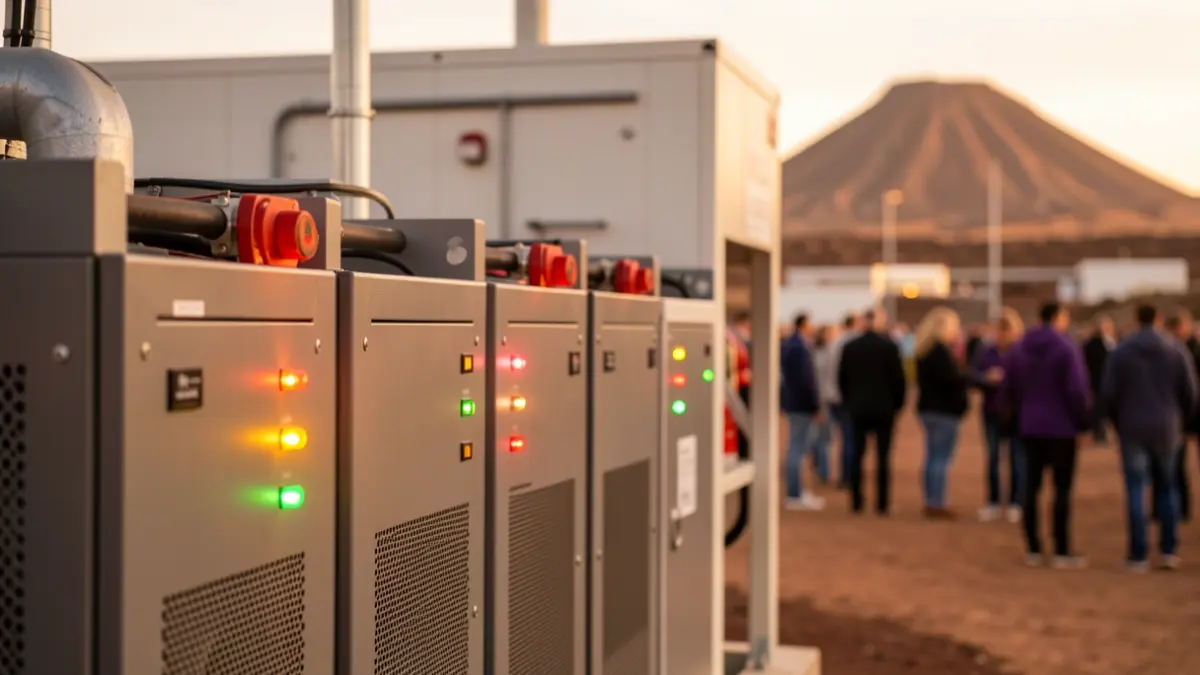
In Guía, the Galician company Despro Renovables España is promoting the BESS Solajero project. Located on a nearly one-hectare plot in the Llano Alegre industrial zone, it will feature an independent battery system with a storage capacity of 30 MWh and an installed power of 7.50 MW. The energy will be fed into the grid of Red Eléctrica up to the substation in the upper area of San Juan. The budget for this installation, which includes six battery container units with LFP (lithium-iron-phosphate) technology, exceeds 3.9 million euros.
Meanwhile, in San Mateo, a Sevillian company is developing two similar centers. BESS Sirius IV San Mateo, with an installed power of 8.78 MW and four hours of storage capacity, will be implemented on three rustic plots in Las Cabrejas. The infrastructure, composed of latest-generation lithium-ion batteries, will have a total capacity of 40.12 MWh distributed across eight containers. The estimated investment for this project is around 3.9 million euros.
Additionally, the StandAlone BESS Sirius V San Mateo project will allow energy absorption during low demand and its discharge during peak consumption. This system will have a total capacity of 10.03 MWh and a nominal installed power of 1.53 MW, integrating two container units with a budget of nearly 1.4 million euros. The energy configuration guarantees a minimum autonomy of four hours.
Both projects in San Mateo have been submitted by the General Directorate of Energy of the Government of the Canary Islands for administrative authorization, marking a step forward in the island's energy infrastructure.