
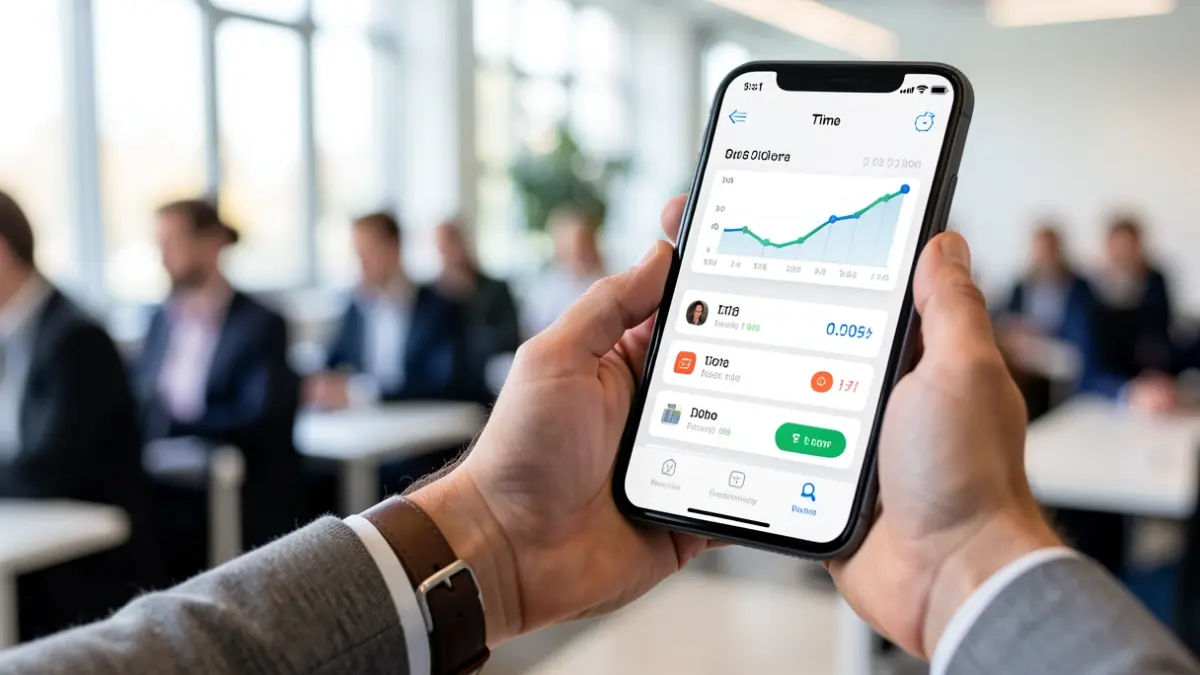
Time tracking is a mandatory requirement for most workers in the Canary Islands, allowing companies to monitor working hours. While systems have evolved technologically, some methods have raised concerns due to potential privacy violations. Labor lawyer Juanma Lorente has pointed out that using personal mobile applications for clocking in is a questionable and not always advisable practice.
Lorente explains that, although this situation is frequently observed, companies cannot compel employees to use their private devices for clocking in and out. According to the expert, this practice shifts a responsibility that should be borne by the company onto the employee. Therefore, if a company wishes to implement a mobile clocking system, it must provide the necessary means, such as a company phone for this purpose.
This interpretation, the lawyer emphasizes, is not a personal opinion but is based on administrative and judicial rulings that support data protection and labor rights. Some companies have already faced significant fines, exceeding 200,000 euros, for maintaining these clocking systems with personal devices. Furthermore, some employees have obtained financial compensation after taking legal action.
The lawyer's criticism also extends to other time-tracking systems, such as those employing biometric data (facial recognition or fingerprints). Lorente warns that these methods, except in highly exceptional cases, should not be mandatory, especially when less invasive alternatives exist. He believes many employees are unaware of their rights and end up accepting procedures that could be legally questionable. He suggests that the most appropriate systems involve a personal code or a simple app tap.