
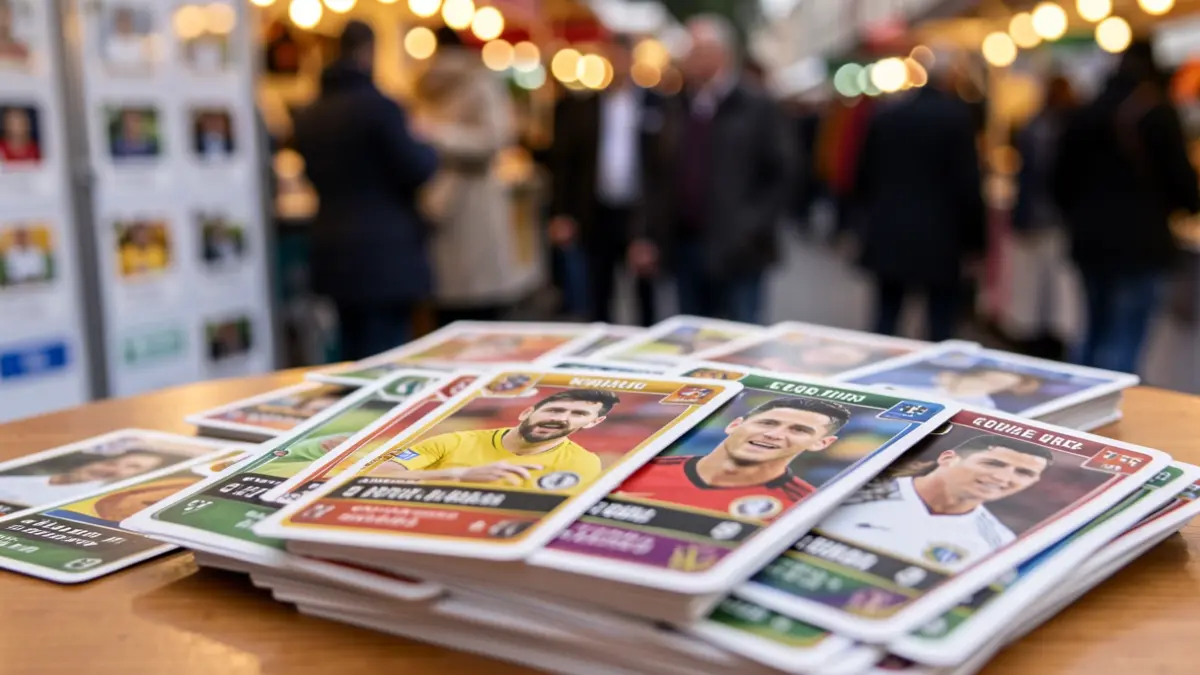
The fervor for the Football World Cup is not only felt in stadiums but also manifests on online second-hand sales platforms. The search for stickers of stars like Lionel Messi or Cristiano Ronaldo has significantly increased, leading many collectors to question the tax implications of these transactions.
Tax experts from TaxDown remind us that items sold on second-hand platforms are considered patrimonial assets. Therefore, tax declaration is only necessary if a capital gain is generated. This occurs when a sticker or album is sold for a price higher than its original purchase price.
The Spanish Tax Agency (Agencia Tributaria) stipulates that if there is a gain, the difference between the selling price and the purchase price must be declared, deducting associated expenses such as shipping if borne by the seller. If an item is sold for less than its cost, which is common with regular stickers, there is no obligation to declare it.
Selling platforms recommend keeping purchase receipts or screenshots. These documents are crucial to demonstrate, in case of a tax inspection, that the sale was made at a loss and no profit was obtained.
In cases where a valuable sticker has been sold for a profit, the gain is taxed in the savings tax base. Gains up to 6,000 euros are taxed at 19%, a bracket that would cover most collectors. For higher amounts, tax rates progressively increase up to 30%.
It is important to note that if the activity of buying and selling stickers becomes massive, constant, and professional, ceasing to be occasional and instead generating a monthly income, the Tax Agency might consider it an economic activity. In such a scenario, registering as self-employed would be mandatory.
The business volume in this market has surged with the World Cup tournament. A study by price comparison site idealo indicates a significant increase in searches for World Cup-related items. Lionel Messi leads the interest with a 122% rise in searches on Wallapop, followed closely by Cristiano Ronaldo (94%) and Pedri (92%). The physical Panini album has also seen its interest grow by 59%.
The phenomenon transcends borders. According to Kike Aganzo, communication manager at idealo, the strong presence of Latin American communities in Spain has boosted the valuation and search for official team jerseys from countries like Argentina, Colombia, and Brazil. Cristina Gómez, external communication manager at Wallapop, states that the platform acts as a thermometer for consumer trends, a thermometer that the Tax Agency will closely monitor.