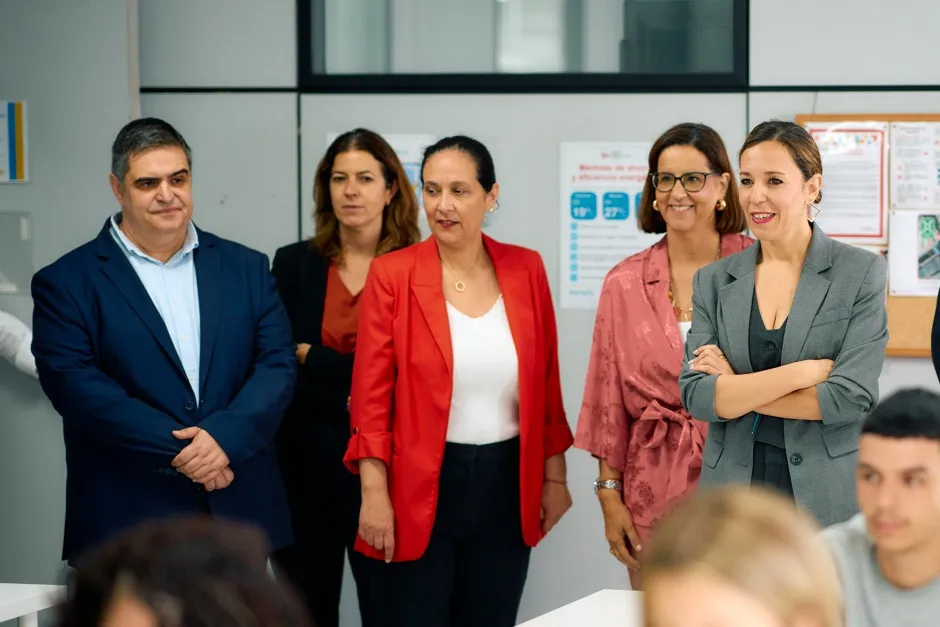
This advanced technological tool, to be installed on the Teatinos campus, will be the central hub of a new multi-omics platform managed by the Central Services for Research Support (SCAI) of the UMA, which celebrates its 30th anniversary this year. Its implementation aims to offer comprehensive service to the institution's researchers and other key entities such as the Andalusian Health Service (SAS), IBIMA Bionand Platform, the Medical Health Research Center (CIMES), and the Cancer Research and Advanced Therapies Center (CITAC).
“"This new technology will put Andalusia 'on the sequencing map'."
The acquisition of this equipment, valued at ten million euros, was made possible by SCAI's successful participation in a state funding call. This achievement will allow researchers to gain a comprehensive understanding of biological processes in living organisms and delve into the genetic particularities of each individual.
Since its creation in the 1990s as a 'proto-service', SCAI has evolved into a national benchmark, equipped with a broad portfolio of 758 scientific-technical tests and trials. Currently, it has 72 technicians, 62 percent of whom hold doctorates, and over 400 infrastructures and scientific equipment, performing an average of 180,000 annual tests.
In addition to its leadership in genomic sequencing, SCAI is a pioneer in X-ray diffraction (DRX) and houses Málaga's only 'clean room', a high-precision laboratory for controlled environments. Its capabilities extend to various areas such as Life Sciences, Chemical Analysis, Materials Characterization, Radioactive Installation, and Microscopy, even collaborating in fields like Archaeometry and Paleontology to date ancient artifacts and study prehistoric climates.
“"The great asset of the Central Services for Research Support is its technicians. They are not ordinary technicians who merely use equipment; they are highly qualified professionals who speak the same language as the researcher."