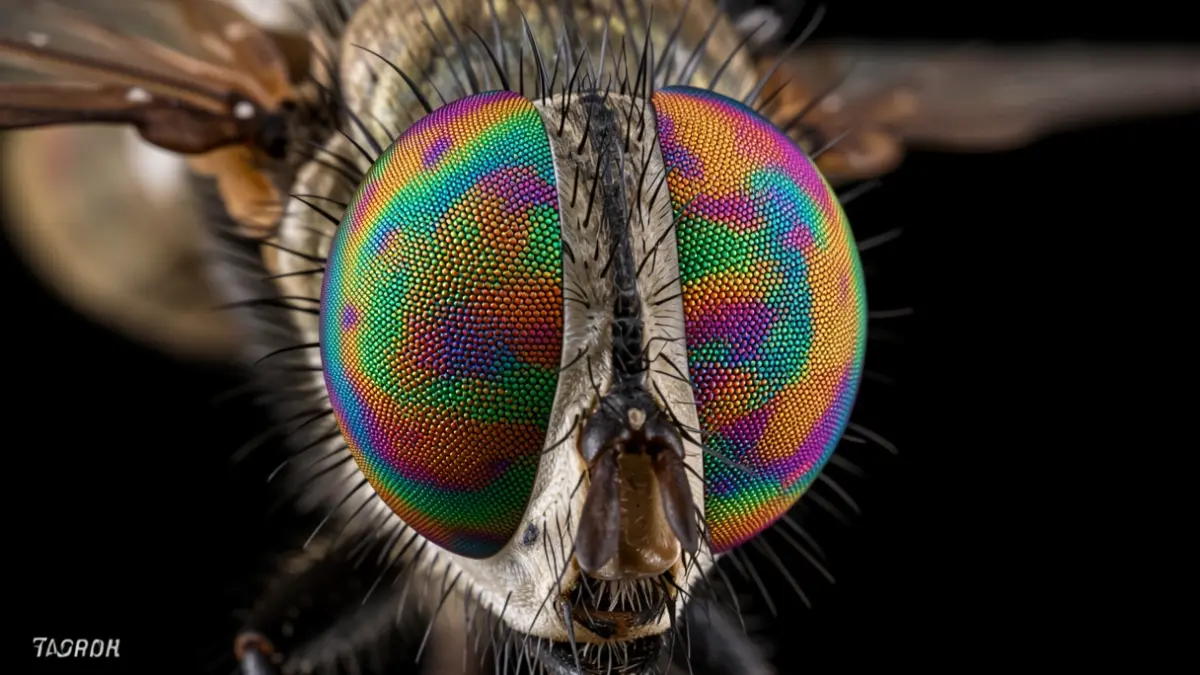
A team from the Andalusian Center for Developmental Biology (CABD), a joint center of the Spanish National Research Council (CSIC), the Pablo de Olavide University (UPO), and the Regional Government of Andalusia, has compared the mechanisms controlling eye formation in two fly species: the vinegar fly (Drosophila melanogaster) and the marmalade hoverfly (Epysirphus balteatus). The research reveals the existence of a common gene core, but with significant variations in the genomic elements controlling their expression over 90 million years of evolution.
Fernando Casares, a CSIC researcher at CABD and senior author of the study, explains that the 'tools' for building eyes have been conserved, but the 'instructions' for their use have changed considerably. "This indicates that the conservation of function does not require the exact same regulatory architecture," he notes. This phenomenon, termed 'regulatory fluidity,' could be key to evolution.
The research, published in PLOS Genetics, enhances understanding of the compound eye, which is present in most insects and crustaceans. It also sheds light on how evolution modifies the construction mechanisms of complex organs and the rules governing embryonic development.
Until now, Drosophila served as the primary model for studying the compound eye. By comparing it with Episyrphus, whose evolutionary lineage diverged 90 million years ago, scientists have confirmed they share a common genetic core. Specifically, a central set of 106 genes associated with eye development has been identified, including 22 transcription factors.
Tomás Navarro, the study's first author, highlights that the research has nearly tenfold increased the number of known essential genes for compound eye formation. "We have reconstructed the gene regulatory network of the eye for each species, allowing for a greater understanding of the mechanisms by which nature generates the diverse forms and functions of organs," he adds.
'Regulatory fluidity' demonstrates that nature can drastically reconfigure an organism's internal genetic circuitry without altering the final anatomical outcome. This means that the functional conservation of an organ does not require exact structural conservation; the connectivity of key regulators can vary significantly without losing the main logic.
Casares concludes that the evolution of complex organs is better understood by examining not only which genes are present but also how they are connected and how that connectivity changes over time.