
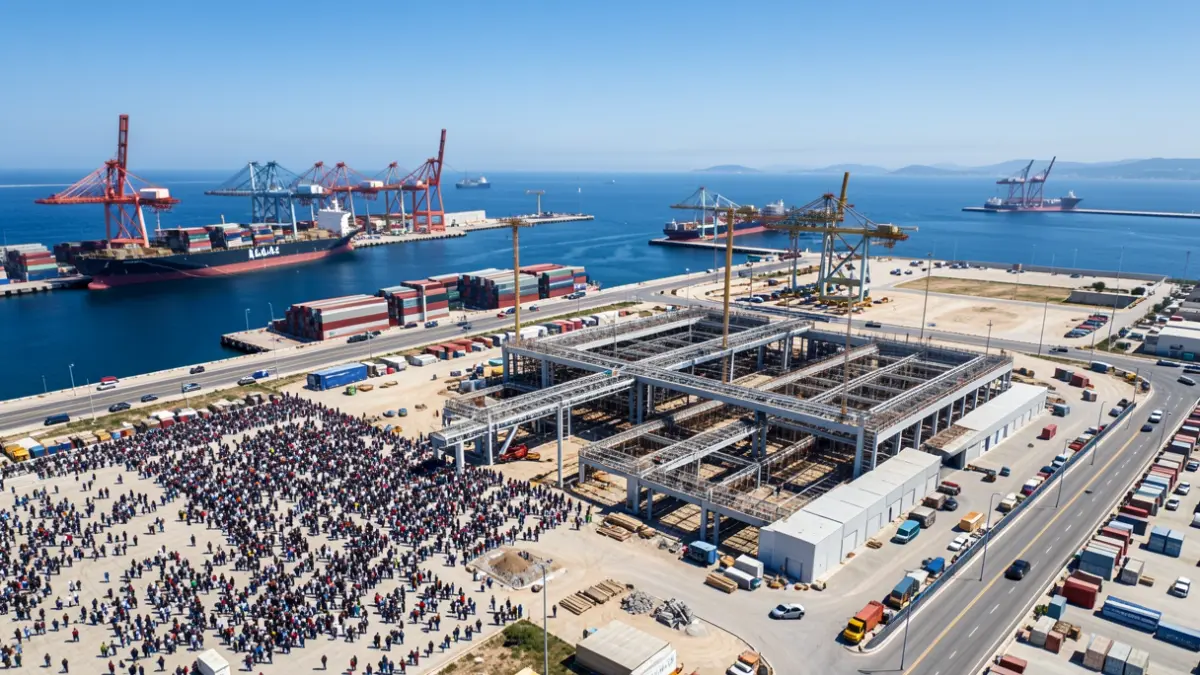
The Huelva Port Authority has approved the administrative concession for the construction and operation of this new logistics infrastructure. The terminal, which will occupy 50,000 square meters in the Outer Port, is designed as a platform for the reception, storage, and re-shipment of liquid products, liquefied or compressed gases, and raw materials linked to the decarbonization of the economy.
This strategic establishment completes Tepsa Iberia's logistics network in Spain, which already has a presence in the ports of Barcelona, Tarragona, Bilbao, and Valencia. The new terminal in Huelva will expand its services towards the Atlantic, capitalizing on the growing demand for renewable fuels and new energy molecules.
Tepsa Iberia's managing director, Nuria Blasco, highlights Huelva as a strategic enclave due to its connection with the coasts and the flows between the Mediterranean, America, and Asia. She points out that the Port of Huelva offers favorable conditions as there is currently no independent terminal specializing in these types of goods, thus meeting a growing market need.
The future facility will be developed in two phases and will include 32 atmospheric tanks, containment bunds, advanced safety systems, pumping and distribution networks, a tanker truck loading bay, and administrative buildings. It will function as a logistics platform without industrial transformation, receiving goods by sea and re-shipping them via various transport modes.
The terminal is projected to handle a minimum volume of 270,000 tons annually once the project is fully completed. The company estimates a period of approximately three years for permits and construction, aiming to commence commercial operations in 2029, aligning the terminal's growth with market development.
This initiative aligns with the Port of Huelva's strategy to consolidate itself as a major energy, industrial, and logistics hub in Southern Europe, diversifying its offerings and attracting new investments related to decarbonization.