
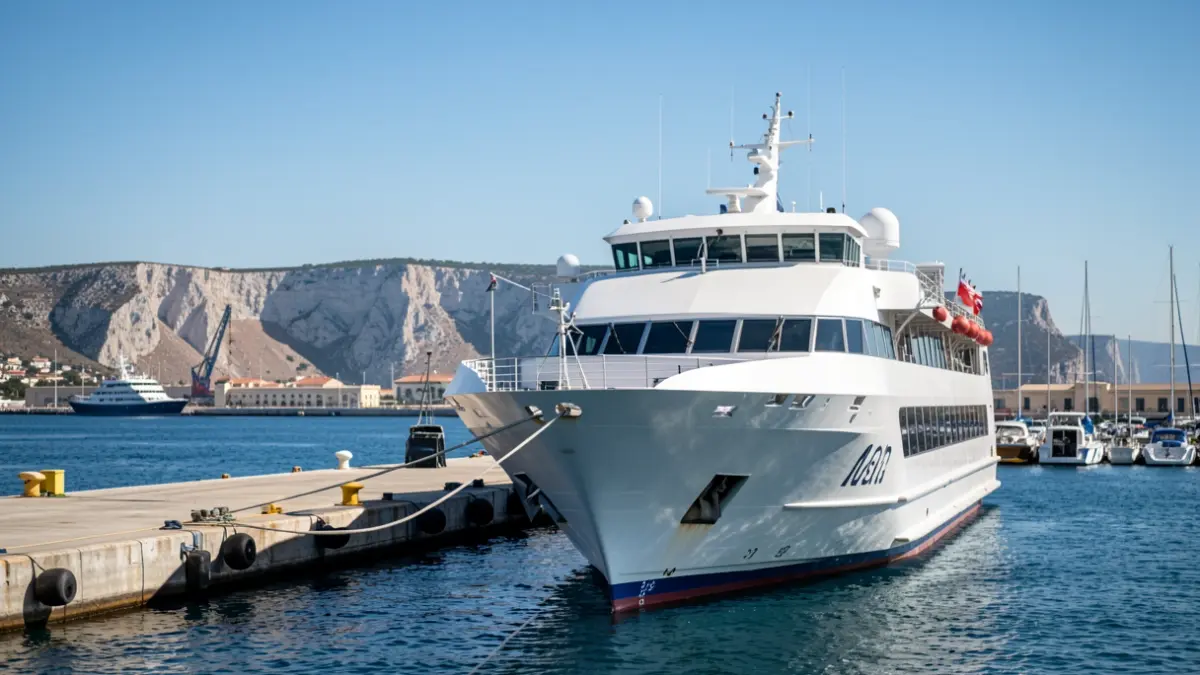
The North African country is working on procedures to grant new concessions for the Algeciras-Tánger Med and Tarifa-Tánger Ciudad maritime routes. These international routes, shared between Spain and Morocco, are of significant interest to major shipping companies.
On the Algeciras-Tánger Med line, the new license will replace the slot left vacant by the shipping company Intershipping after its bankruptcy. Currently, Africa Morocco Link (AML) is the sole operator on this route from the North African side. Industry sources indicate that La Méridionale, a ferry operator from the CMA CGM group, is among the pre-selected shipping companies for this tender. Other companies covering this connection include Baleària, Armas Trasmediterránea, and DFDS, the latter awaiting approval from the National Markets and Competition Commission to acquire part of Armas' business.
Regarding the Tarifa-Tánger Ciudad route, Morocco has put the second berth out to tender. Baleària has been operating the third berth since last year. The license currently under tender belongs to Africa Morocco Link, which took over the route after Intershipping in 2024 and has significant European capital through Stena Line's 49% ownership.
The tender for the Tarifa-Tánger Ciudad route is expected to attract considerable interest from major international shipping companies, given the strategic importance of the Strait of Gibraltar, especially with the 2030 World Cup in view. Nordic company DFDS, which acquired FRS Iberia Maroc in early 2024, could be a contender, likely in partnership with a local entity, as the shipping company operating the berth corresponding to the North African country must have a majority of Moroccan capital.
At present, the specific technical criteria that the Moroccan government will apply in the selection process are unknown. However, the awarded shipping company will utilize the electrical connections at the Tarifa quay to reduce emissions during port calls.
According to a 1979 agreement between Spain and Morocco, each country is entitled to carry out at least 40% of passenger and freight transport, aiming for an equitable distribution. Spain, as part of the EU, allows any EU shipping company to participate in its tenders. Both countries regulate their licenses autonomously while maintaining fluid communication.