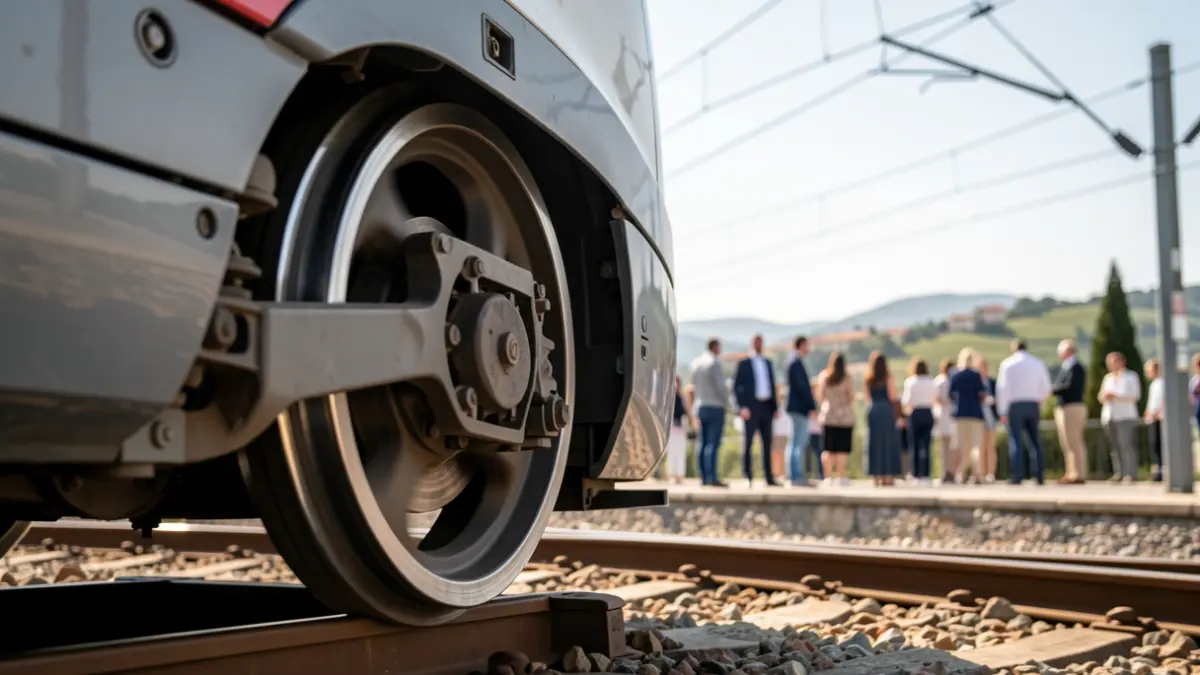
Although not widely known, the commuter train line from Málaga to Fuengirola has been a pioneer in Europe for innovative technologies. Since 2012, a regenerative braking system was installed at the traction substation in Arroyo de la Miel (La Comba), which harnesses the energy generated during braking to return it to the electrical substation.
According to Adif data, since its implementation, the recovered energy amounts to 6,265,580 kWh, representing 18.25% of the total energy consumed at the substation. This system not only reduces the energy needs of rail transport but also allows energy to be fed back into the general distribution grid, thereby decreasing consumption and carbon dioxide emissions.
This reversible substation, which allows the passage from direct current to alternating current, is a pioneering project in Europe for 3,000-volt DC railway systems. The R&D project Inverfer, driven by Adif, aimed to design and implement a braking energy recovery system for reuse, generating savings and reducing emissions.
The prototype was installed in 2012 at kilometer 18.650 of the Málaga-Fuengirola line. After receiving authorization from the Ministry for Ecological Transition, energy compensation for returning energy to the grid began on November 1, 2014. The system consists of a dual converter connected to the catenary which, upon detecting regenerative braking from trains, converts the recovered energy into high-quality alternating current to feed into the general grid.
The system is transparent in its operation and can be isolated in case of failure without interrupting service. Furthermore, it can be used during peak demand periods by returning energy to the catenary and is unaffected by short circuits on it.