
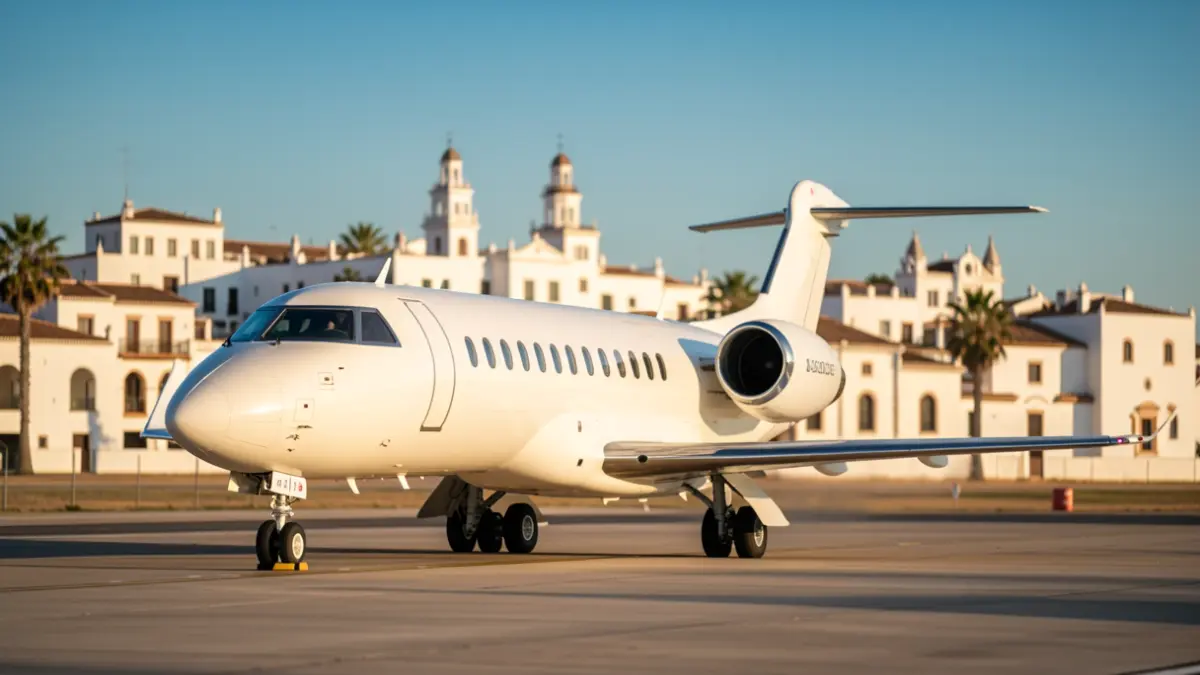
The Málaga-Costa del Sol Airport has established itself as an international hub for private aviation, showing stable and de-seasonalized growth. In 2025, approximately 6,500 aircraft movements are estimated, generating an annual economic impact of around 1.1 billion euros for Andalusia. Carlos Matallana, director in Spain for the Swiss company Lunajets, emphasizes Málaga's potential as a strategic destination, driven by luxury residential tourism and business.
Málaga is not only a corporate aviation hub nationally but also internationally, notable for its low seasonality. It is estimated that in 2025, it will have registered around 6,500 private jet movements, with a 3% annual growth. Unlike other airports, the Costa del Sol's airport network has adopted a collaborative approach, efficiently managing business and vacation flights. Gibraltar airport serves as an alternative for the western area, while Seville and Jerez cater to other segments.
The estimated economic value of this traffic for Andalusia is around 1.1 billion euros annually, of which 350 million are linked to the luxury real estate sector. Málaga competes with destinations such as Nice, Cannes, and Ibiza, offering advantages like lower relative costs, security, climate, and the possibility of year-round residency.
The predominant passenger profile consists of couples in their fifties, although this demographic rejuvenates during the summer, with families becoming more prevalent. 70% of flights originate from abroad, particularly the Balearic Islands, and 65% of trips are for vacation purposes, with a strong inclination towards second homes. Málaga's success lies in its diversified offering, extending beyond the beach to include technology centers, gastronomy, and cultural events.
In terms of infrastructure, the airport is well-equipped, although a shortage of aircraft parking space has been noted at the Executive Terminal during peak season. The impact on employment and other economic sectors is significant, as private aviation passengers typically have high purchasing power and consume quality services in hospitality, retail, and real estate.
The average daily spending of a private jet passenger in Spain exceeds 2,000 euros, double that of a conventional premium tourist. The correlation between the luxury real estate boom and private aviation is consequential: the real estate market has driven aviation, not the other way around. The evolution of GDP per capita and air demand show similar patterns over time.
Regarding sustainability, private aviation accounts for only 0.04% of global CO₂ emissions, far below other industries. Lunajets promotes sustainability by optimizing flights and using efficient aircraft. The company also emphasizes the moral and social sustainability of the sector, with qualified personnel and favorable working conditions.
Málaga has the potential to become a leading hub in Europe, provided it continues to develop as both a tourist and corporate destination. Creating a secure, frictionless ecosystem with fiscal incentives and appropriate regulation is key. Future trends point towards contained growth, the entry of new local clients, and integration with urban mobility and eVTOL for short-haul journeys.