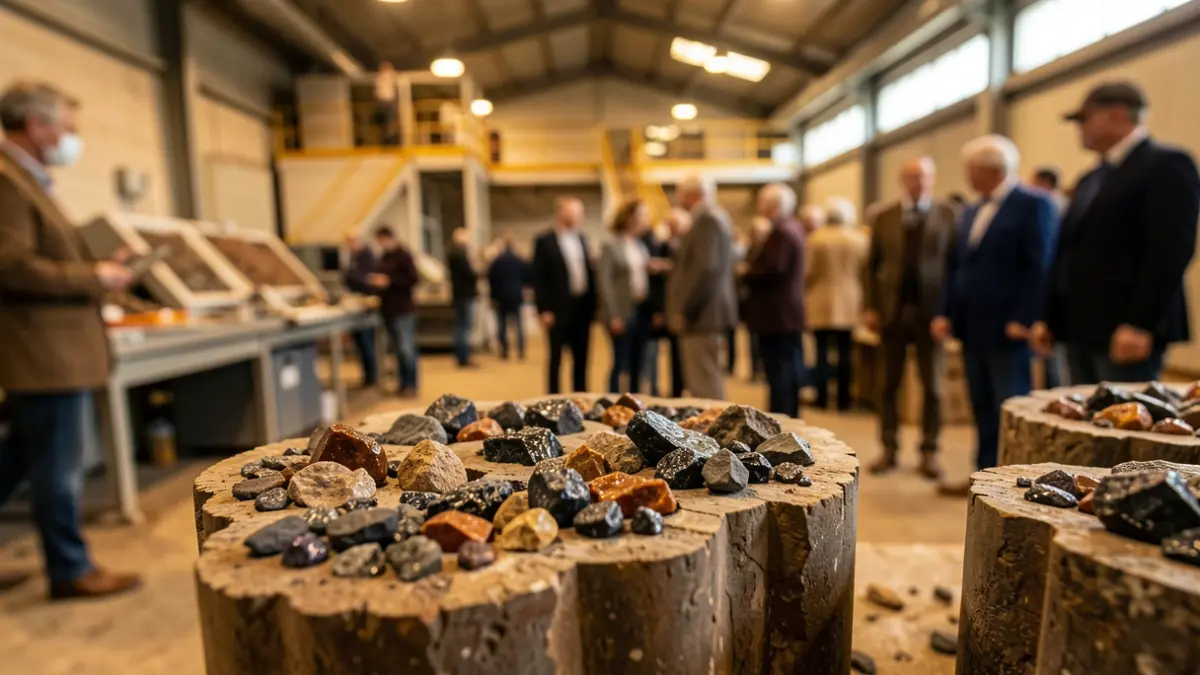
The Junta de Andalucía maintains six active mining research permits in the province of Jaén, focusing on the exploration of critical minerals and rare earths. These findings promise exceptional European-level richness, according to the Ministry of Industry. This initiative is part of a broader effort that has led the autonomous community to register a total of 73 mining research permits across 80 municipalities.
One of the highlighted projects in Jaén is Orion, driven by the Australian company Osmond Resources. Recent exploration campaigns have yielded results that will support the first Mineral Resource Estimation and allow for the expansion of the area with potential for future developments. The company aims to be the European Union's leading producer of rare earths, titanium, zirconium, and hafnium, relying on the EU's regulatory push for critical raw materials.
At the Andalusian level, Huelva leads with 38 research permits, followed by Seville (twelve), Córdoba (eight), Almería and Jaén (six each), and Cádiz, Granada, and Málaga (one each). This distribution is partly explained by the significance of the Iberian Pyrite Belt. However, the Orion Project in Jaén stands out for the quality and purity of its rare earth reserves.
Research permits involve geological analysis, geophysical techniques, and drilling to characterize deposits. The Minister of University, Industry, Energy, and Innovation, Jorge Paradela, stated that Andalusia is consolidating itself as a key mining power, aiming for projects to generate industrial development, skilled employment, and strategic autonomy for the EU.
The presence of critical raw materials such as copper, magnesium, bismuth, arsenic, lithium, cobalt, and nickel, essential for batteries and energy storage, as well as rare earths for wind turbines and high-precision electronics, is being investigated. The Ministry is also promoting research in 457 areas of expired mining rights, following a decade without public tenders.
This strategy aligns with the Strategy for Sustainable Mining in Andalusia 2030 and European policies. Andalusia accounts for approximately 90% of the value of Spanish metallic mining, with an annual production exceeding 1.2 billion euros and around 8,000 jobs. Projects like CirCular-Atlantic Copper in Huelva and the Cobre Las Cruces plant in Seville are considered strategic for the EU.