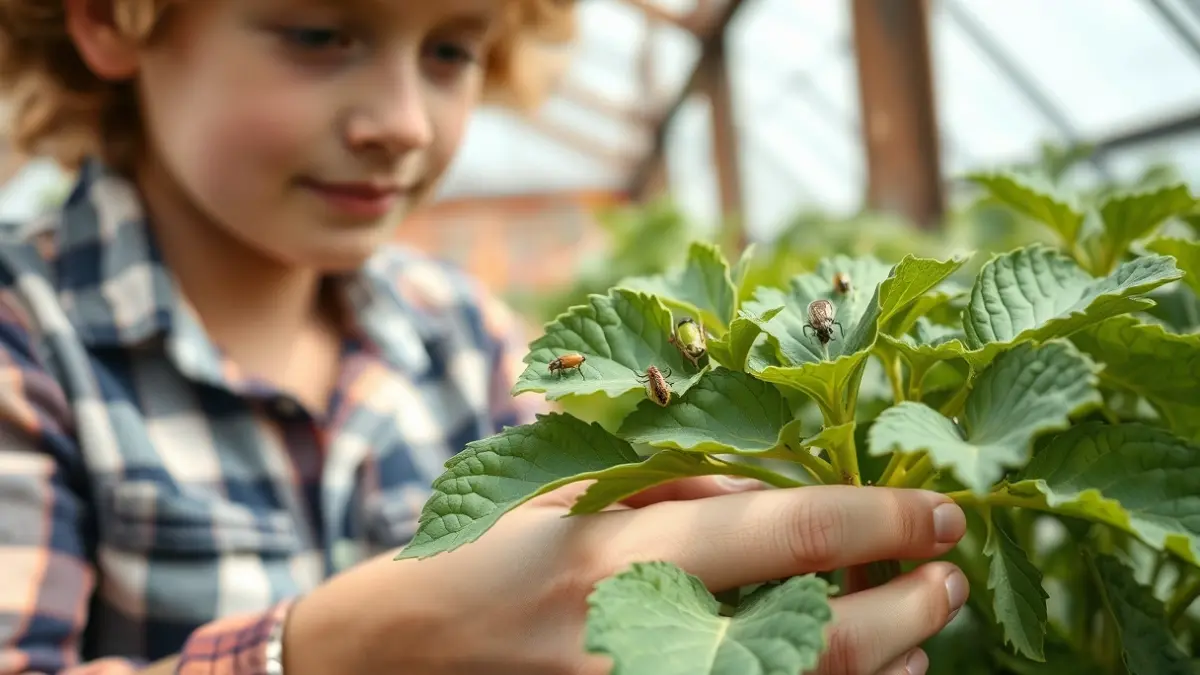
The initiative, aimed at a group of young farmers associated with ASAJA, took place at the IFAPA center in La Mojonera. Its primary objective was the transfer of knowledge and experiences regarding sustainable agricultural practices, with a particular emphasis on biological control, both commercial and conservation-based, which are crucial elements for more efficient and environmentally friendly agriculture.
During the workshop, participants had the opportunity to tour the facilities and experimental fields of IFAPA in La Mojonera. There, they could observe firsthand various integrated pest management strategies, the use of auxiliary fauna, and the relevance of functional biodiversity in agricultural systems. Additionally, a detailed visualization of pests and their natural enemies was carried out using stereoscopic microscopes.
The program included specific content such as the evolution of biological pest control in the province of Almería, the main research lines of IFAPA, and the current situation of thrips species in greenhouses, as well as biological control measures applied in the 24-25 campaign against Thrips parvispinus. A dialogue space was also created where young farmers shared their concerns, challenges, and opportunities in the sector, highlighting the importance of continuous training and the adoption of new technologies.
The activity, which featured the collaboration of Agrobio in supplying insects, also included a practical workshop on building insect hotels and the explanation of a real case study on biodiversity management in greenhouse environments. This initiative is part of the IFAPA project “Emerging and re-emerging pests in protected horticulture,” a research line co-financed with FEDER European funds, focusing on the taxonomic and molecular identification of pest populations and their specific natural enemies.