
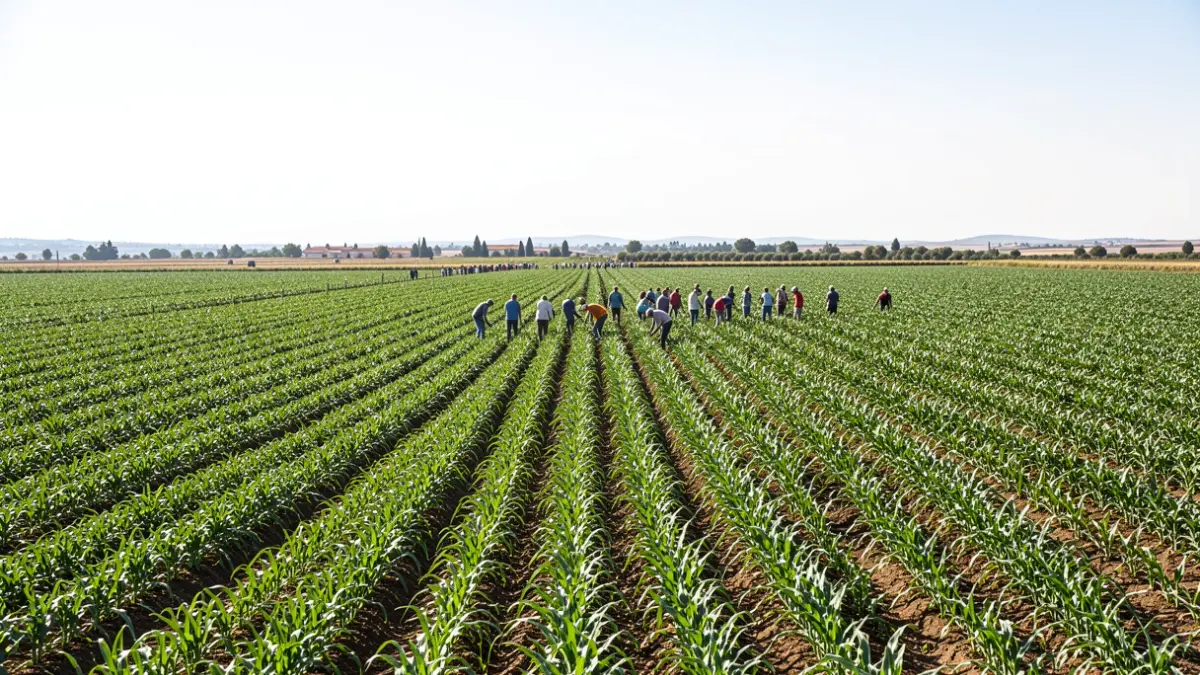
The Government's sub-delegate in Huelva, María José Rico, described the campaign's outcome as "positive," highlighting the success of the model supported by the red fruit sector. "Huelva is the Spain Brand for red fruits, but it is also for the Gecco program, as 85% of contracts are made here," stated Rico, placing other provinces like Lleida (4%) and Albacete (2%) far behind.
Hiring at the origin has grown significantly, with 4,255 additional workers compared to the previous year, exceeding 22,000 individuals. Morocco remains the primary country of origin, providing around 15,000 people, mostly women who return annually. Workers from Guatemala, Honduras, Paraguay, Mauritania, Colombia, Senegal, and Ecuador have also joined.
The Government is considering the inclusion of new countries such as Mali and Egypt into the program, aiming to expand a model that Rico defines as "orderly and safe." Many of these workers already hold permanent seasonal employment status, providing them with a four-year labor guarantee.
In addition to Gecco contracts, approximately 3,000 additional workers, mainly from Mali and Senegal, are employed in the province through an alliance with Asaja-Huelva and Freshuelva within the framework of international protection. This brings the total number of foreign workers linked to Huelva's agricultural campaign to nearly 28,000 people.
The sub-delegate believes this workforce is crucial for the sector, which has faced adverse weather conditions. Strawberry production decreased by approximately 3%, but this was offset by growth in blueberries and raspberries.
Given the growth in origin-based hiring, the Government and the sector are already negotiating an increase in the contingent for the 2026-2027 campaign, although the exact number of additional workers has not yet been finalized.
Despite the model's 26 years of operation, Rico acknowledges areas for improvement, particularly concerning the habitability conditions of temporary worker accommodations. Reports are being promoted to ensure that farms provide decent, ventilated spaces, even if shared.
Efforts are also underway to streamline worker travel, especially for those from Morocco, through coordination with the Government Sub-delegation in Cádiz and the Port Authority of Algeciras to reduce waiting times at Tarifa.
Pre-departure training in origin countries regarding rights and obligations is highlighted by Rico, alongside initiatives like Wafira I, Wafira II, and Cosechando Oportunidades, which aim to equip female workers with skills for future business ventures in their home countries.
Separately from origin hiring, the extraordinary migrant regularization process concluded on June 30th with 10,359 applications in Huelva. Rico stated that the procedure proceeded without issues and will allow individuals already residing and working in the province to gain legal employment status, "ceasing to be invisible."
By nationality, Colombians (24%) lead regularization requests, followed by Moroccans (21%), Venezuelans (9%), and Senegalese (8%). Rico links this process to a decrease in irregular immigration exceeding 36%, advocating for origin hiring, regularization, and integration as pillars of migration policy.