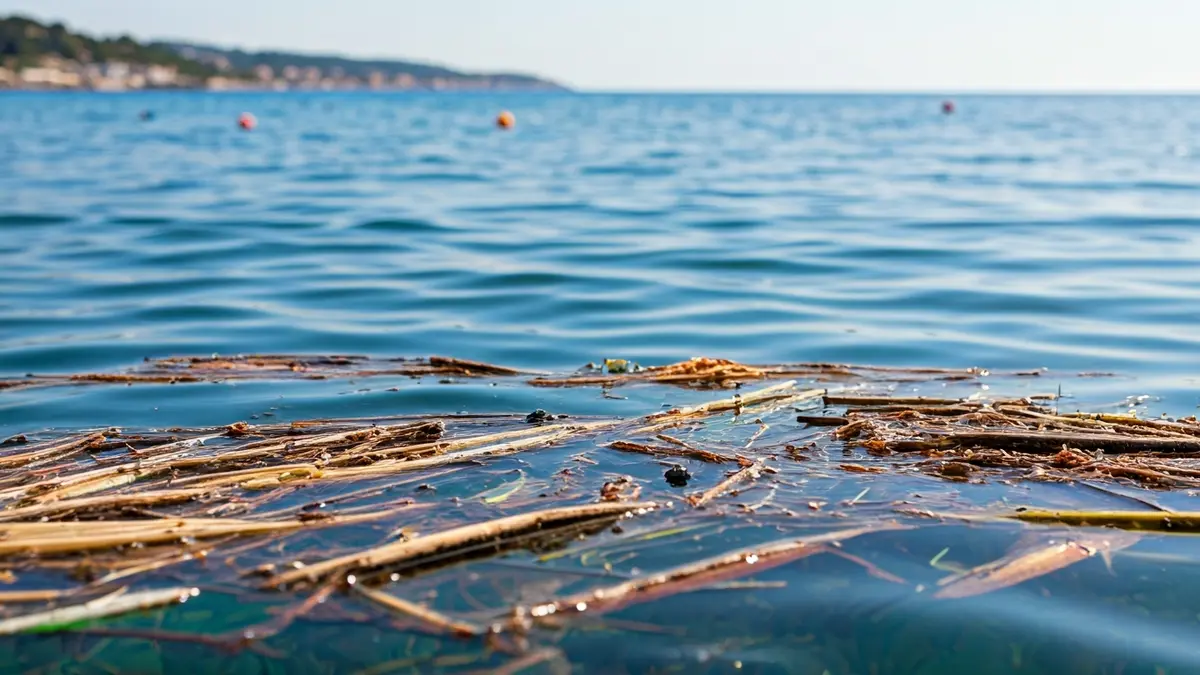
The research group Structure and Dynamics of Aquatic Ecosystems at the University of Cadiz has implemented a pioneering methodology for detecting and monitoring waste in the Mediterranean Sea. This technique analyzes how extreme weather events, particularly torrential rains, carry large volumes of debris into the sea, forming accumulations known as windrows.
The study reveals that the entry of plastics into the sea is strongly linked to episodes of heavy rainfall and increased river flow. Experts quantified the entry of 50 tons of waste over a 90-day period, reinforcing the classification of the Mediterranean as one of the main global waste accumulation zones, a fact already highlighted in previous research by the same team.
“"Short rivers and urban areas respond almost immediately, while waste discharge pulses from large rivers like the Rhône show a two to three-day delay relative to the peak rainfall."
The predictive tool, currently under development, aims to anticipate the arrival of these residues on beaches days in advance after a storm is detected. This will optimize cleanup tasks and activate environmental containment measures more efficiently. The marine litter windrows, described in the study Storyline of an event of marine litter input and windrow formation in the Northwestern Mediterranean Sea, published in the journal Marine Pollution Bulletin, are filaments several meters wide that can extend over 20 kilometers, containing plastics, plant debris, pollen, and marine mucilage.
The researchers applied the ‘storyline’ methodology for the first time in oceanography, a technique used in climatology to make extreme events more understandable. This approach allowed for the reconstruction of the complete sequence of a pollution event, from storm formation to the dispersion of waste in the open sea. During the study, it was observed that debris could disperse up to 300 kilometers from the coast, and days later, some of it returned to the beaches.
Of the 50 tons of waste that entered the sea in 90 days, 26 tons (52%) consisted of floating material. Of this, approximately 32% would progressively sink, while the remaining 68% would end up on beaches. The other 24 tons were deposited directly on the seabed near the coast, as detailed by Cózar.
The primary goal of this research is to establish the correlation between climatic, hydrological, and oceanographic phenomena to prevent irreversible environmental consequences. Experts have confirmed that events of this magnitude occur, on average, every two to three years in the Mediterranean, and a single intense episode can significantly alter accumulation patterns.
The next step for the research team, which has received funding from the Ministry of University, Research and Innovation of the Junta de Andalucía and the European Space Agency, is to automate the download and analysis of satellite images to generate early warnings and provide real-time information to administrations, anticipating the arrival of waste on specific beaches.