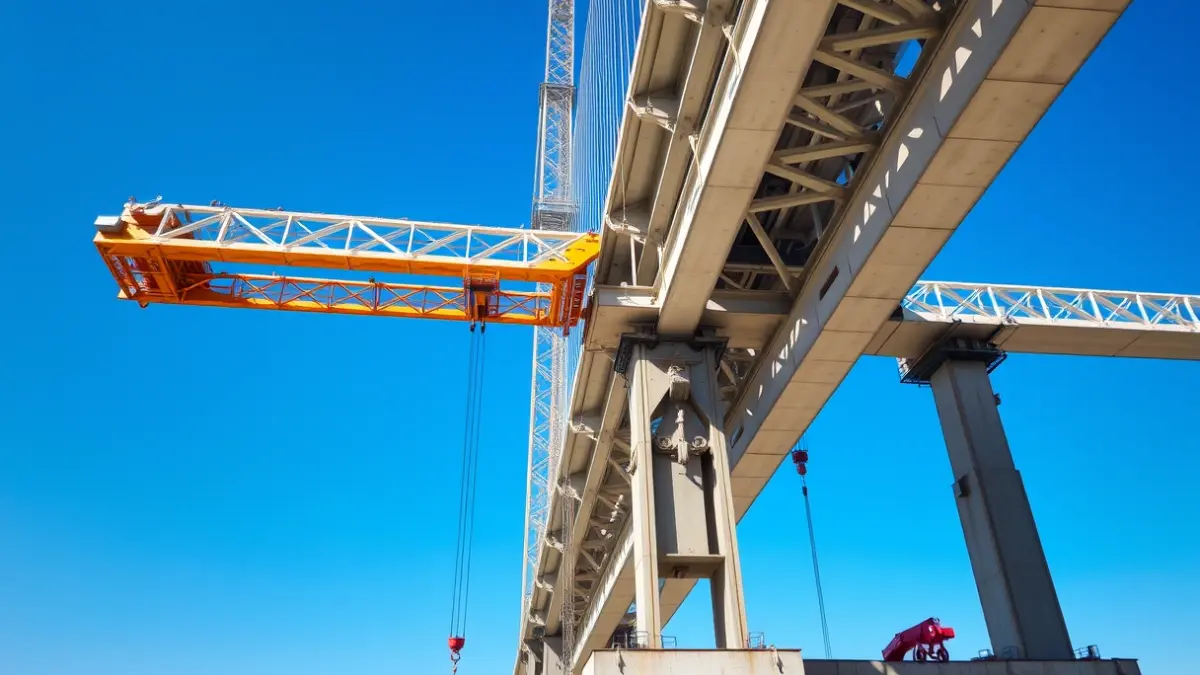
This infrastructure, an integral part of the strategic Mediterranean Corridor, has reached a significant milestone with the finalization of its weathering steel deck, designed for high resistance to oxidation and weather conditions. The viaduct, approximately 900 meters long and featuring 17 spans, stands 18 meters high to allow for the passage of the Mediterranean Highway (A7) and the local road A-1103.
Sources from Adif Alta Velocidad have highlighted the unique construction method used for the deck. This system involves assembling the structure in sections near the viaduct, then horizontally displacing it using hydraulic jacks to its final position atop the supporting pillars. The entire process was executed in six phases, each spanning approximately 150 meters.
Construction began with the on-site welding of segments (dovelas), metallic structural pieces weighing around 100 tons each. Once the concrete slab was in place, these groups of segments were launched using a system of hydraulic jacks and steel cables anchored to vertical metallic beams. This method was repeated until all planned phases were completed.
This progress coincides with another recent achievement in the Murcia-Almería AVE project: the commencement of load tests with trucks on the railway platform section in the Totana (Murcia) area. Both operations are spearheaded by Adif, an entity under the Ministry of Transport and Sustainable Mobility, and represent a critical step in connecting both cities, with an estimated total investment of 3.6 billion euros.