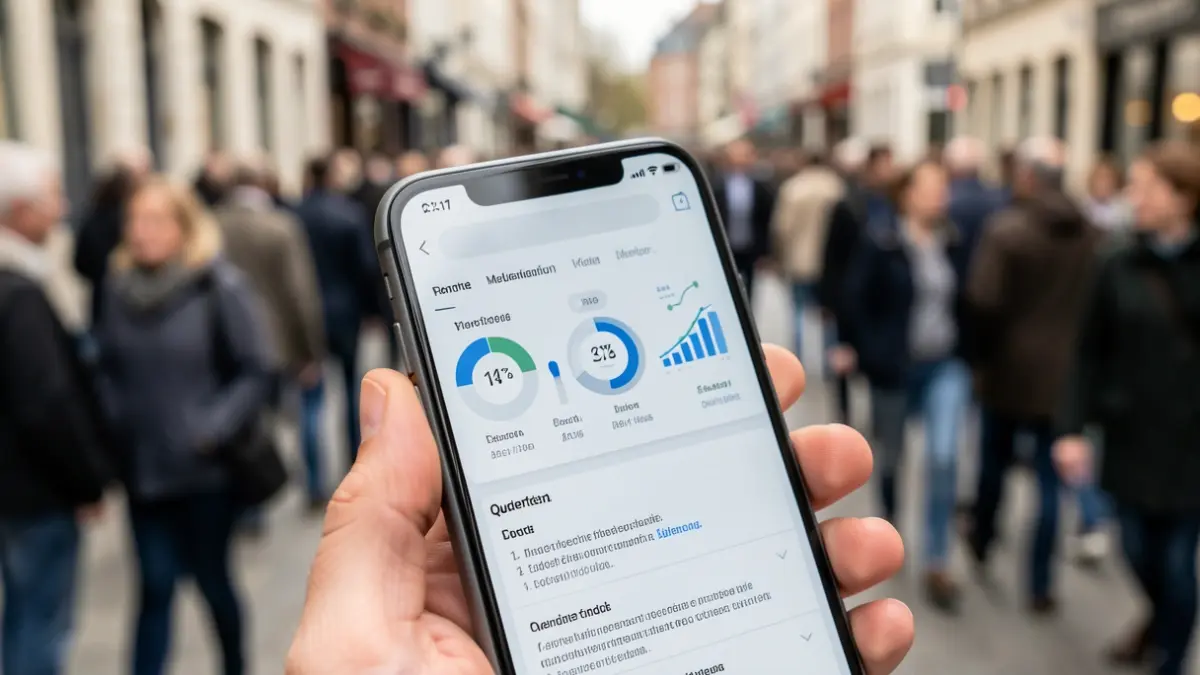
A pilot study led by Sabina Asensio-Cuesta and Elies Fuster-García, researchers from the BDSLab group at the ITACA Institute of the UPV, in collaboration with the Hospital Provincial de Castellón and the Hospital Dr. Peset in Valencia, provides initial evidence of the feasibility of Lalaby-Glio for monitoring patient-reported quality of life in people with glioblastoma during treatment.
The app showed favourable results in a pilot study involving four patients, although the findings will need to be confirmed in larger studies. During follow-up, 168 questionnaires and daily logs were completed, with an average usage time of 1.8 minutes a day. Patients rated its ease of use at 3.7 out of 5.
The disease and its treatments can have a considerable impact on daily life, so understanding how each patient is feeling is essential. The study, published in JMIR Formative Research, recorded changes in symptoms, difficulties in carrying out everyday activities, and quality of life. Lalaby-Glio combined a daily five-question questionnaire with two weekly quality-of-life questionnaires: one general and one specific to brain tumours.
The app also automatically collected phone data, including distance travelled, movement, steps, call activity, light, and sound. Researchers from the BDSLab-ITACA group explored the relationship between these data and patient-reported quality of life to assess whether they could complement the questionnaire responses.
The analysis identified preliminary associations with movement and calls. However, these relationships do not establish causality or enable quality of life to be predicted. Given the small number of participants, they serve to generate hypotheses that will need to be assessed in further research, according to Juan Miguel García-Gómez, an ITACA researcher who took part in the study.
Ease of use was also assessed in an additional sample of 103 healthy adults. The 46 participants who installed the app achieved an average score of 72.9 out of 100 on a standardised usability scale, above the usual benchmark. These results provide further information about the interface, although they should be distinguished from those obtained in patients.
The study opens up a promising avenue for integrating questionnaires and data collected via mobile phones into patient monitoring during treatment. However, further validation in larger cohorts will be needed to confirm these results and identify which digital data provide reliable information that complements patients’ own reports. This approach is also being extended to other oncology settings, and we are currently applying it with promising results in a pilot study involving patients with lung cancer, in collaboration with the Hospital Dr. Peset in Valencia, concludes Dr Sabina Asensio-Cuesta.
The Lalaby project has been funded through projects CIAICO/2022/064 (GVA) and PID2023-149558OB-I00, the latter funded by MICIU/AEI/10.13039/501100011033 and by the European Regional Development Fund (ERDF), EU.