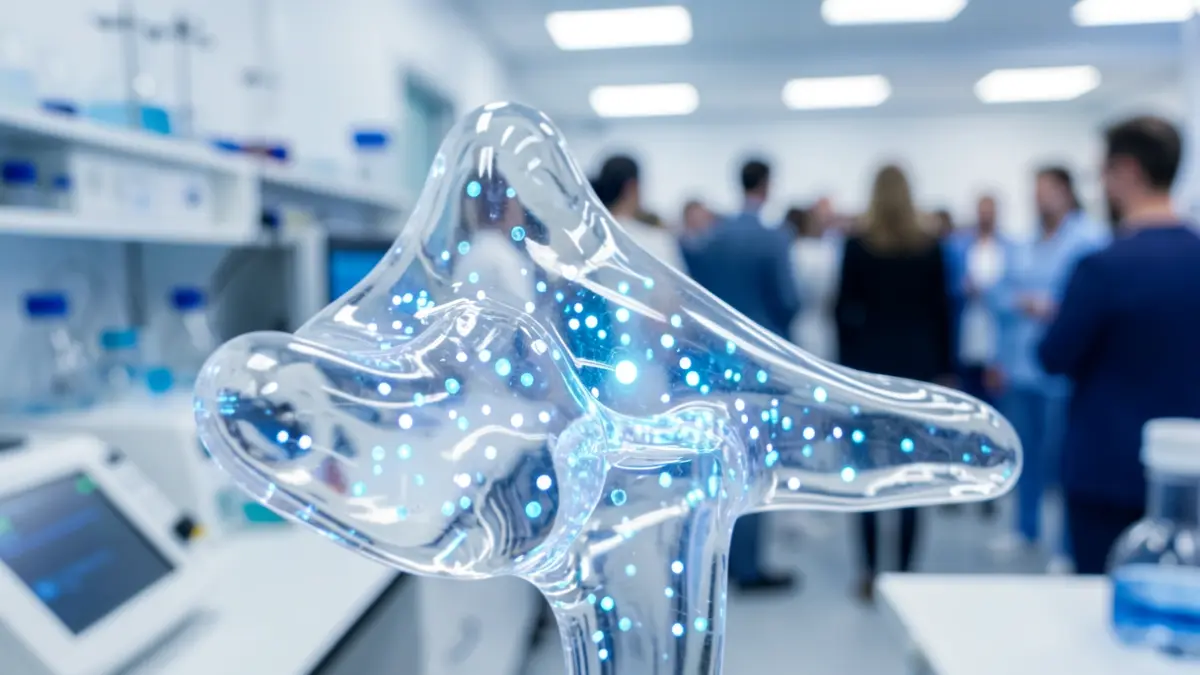
The main objective of Hydroheal is to offer a faster, safer, and less invasive solution for treating bone fractures, reducing current complications such as rejection or infections and promoting bone tissue regeneration. The project brings together 13 partners from 7 European countries.
This new smart hydrogel will focus on treating vertebral and alveolar fractures, particularly those resulting from trauma, osteoporosis, or cancer. Its application will be simple: it will be injected directly into the affected area.
“"Bone fractures today represent one of the biggest health challenges in Europe. They severely affect the quality of life for millions of people each year and test healthcare systems. Current treatments can lead to complications like rejection or infections and do not facilitate bone regeneration, which is precisely what we aim to avoid with our project: offering personalized and less invasive solutions that promote faster and safer recovery."
The hydrogels will be loaded with smart particles containing drugs for bone regeneration and antibacterial agents to prevent infections. The project also incorporates artificial intelligence and digital modeling tools to test its efficacy before in vitro and in vivo trials.
Currently, the team is working on the first phase of hydrogel formulation, which will subsequently be evaluated to validate its safety and efficacy before moving to larger-scale production. The project, funded by the European Commission with nearly 6.5 million euros, began in June 2025 and will conclude in 2029. It involves universities and research centres from the United Kingdom, Italy, Ireland, Spain, Cyprus, and Portugal.