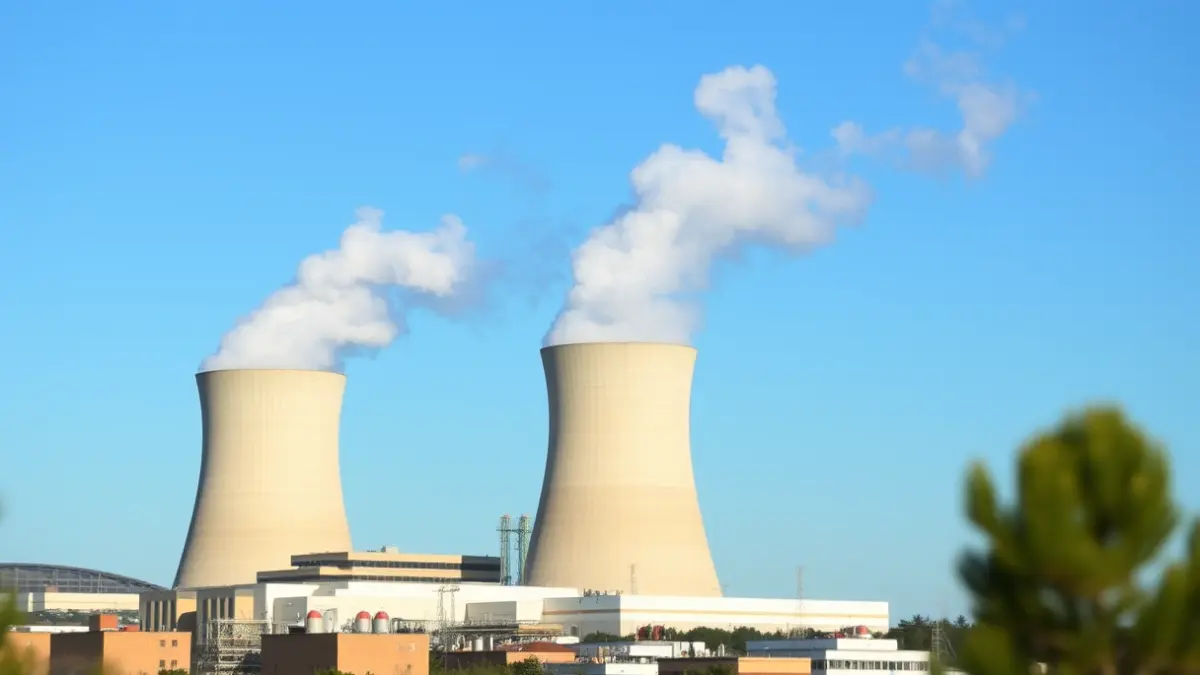
The closure of the Cofrentes nuclear power plant, agreed upon in 2019, is approaching, but the energy context has changed dramatically. Events such as the invasion of Ukraine, last April's blackout, and the Iran war have highlighted the fragility of the energy system, fueling a debate on the need to keep the plant operational.
Although green energy already accounts for almost half of the generation capacity, Valencian renewable production was 22.4% last year. The Cofrentes plant generated 50.8% of the energy produced in the territory and 40% of the electricity consumed in the Valencian Community, demonstrating its key role in the energy mix.
“"The extension cannot become an ideological debate; rather, it must be a strategic decision for the country."
The Valencia Chamber of Commerce and the Valencian Business Confederation (CEV) advocate for the continuation of Cofrentes to reindustrialize the economy and attract investments. They warn that the closure would have a direct impact on more than 12,200 electro-intensive manufacturing companies and could indirectly affect over 235,000 workers.
Experts and business leaders, including the vice president of a major Valencian renewable energy company, consider it a mistake to maintain the closure schedule. They argue that Spain is not prepared to forgo the security that nuclear power provides to the system, and that premature closure would increase price volatility and gas dependence.
The debate also has a political dimension. While left-wing parties and the Spanish Government (with nuances) advocate for maintaining the closure, the PP and Vox openly defend extending the plant's operational life. Mobilization to demand the extension of Cofrentes began in October 2024.