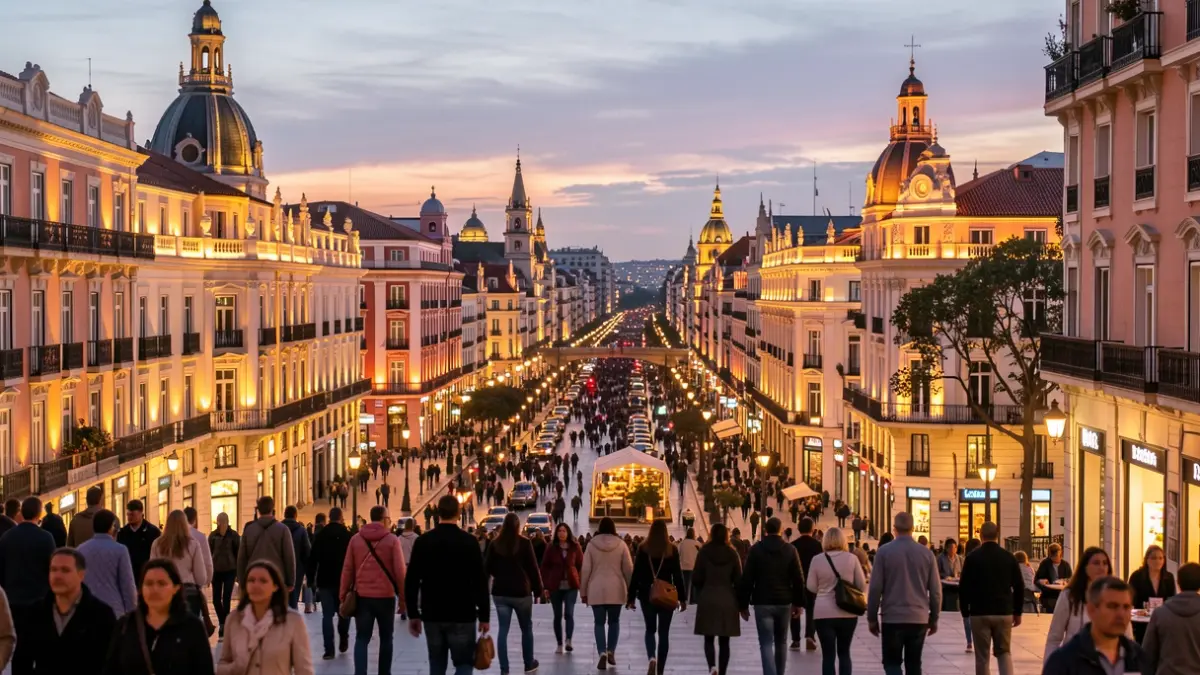
This optimistic projection is based on data recorded during the first seven months of the year. During this period, international tourist arrivals in the region saw a significant increase of 9.6%, while total spending surpassed €11.6 billion, representing a 10.7% rise compared to the same period in 2025.
Preliminary data for the summer season also indicates a very positive balance. Between June and August, Madrid's hotels hosted approximately 3.4 million travelers, an increase of 1.8% from the previous year. Notably, 55% of these guests were from other countries, with particularly strong growth from key source markets such as the United States—the region's primary market—and Hispanoamerican countries.
August, traditionally a month with lower tourist influx in the capital, concluded with a 6.9% increase in visitor numbers compared to the same month in 2025. Concurrently, international tourist spending in June and July exceeded €3.4 billion, showing a year-on-year rise of 6.8%.
The hosting of world-class events solidifies the region's position as a preferred destination for organizing large-scale events. The economic impact from these events is projected to reach €3 billion this year.
The Spanish Formula 1 Grand Prix, for instance, generated an average hotel occupancy of 85%, peaking at nearly 90% on Saturday, and had a significant effect on the hospitality sector. Madrid's organizational capacity will be further bolstered by attracting future competitions such as the NFL, and in the near future, the 2027 Champions League Final, EuroBasket 2029, and the 2030 Football World Cup.
This sporting offering is complemented by a rich calendar of cultural and musical events, including the residency of Shakira. This event is expected to attract around 600,000 spectators, generating an economic impact close to €150 million, particularly in accommodation, dining, transportation, retail, and leisure sectors.
The tourism sector is a fundamental pillar of Madrid's economy, supporting over 300,000 jobs. According to the IMPACTUR study, tourism's contribution to the regional economy reached a record €28.569 billion in 2025, equivalent to 8.7% of the regional Gross Domestic Product (GDP), a 7% increase from the previous year.
Collectively, culture, tourism, and sports now account for 15% of the Community of Madrid's Gross Domestic Product (GDP). Activities related to sports, recreation, and entertainment attract 14.5% of foreign investment entering the region, second only to wholesale trade (20.7%). Madrid also leads in attracting these funds nationally, with €5.6 billion, representing 45.3% of the total Spanish figure.
To extend the benefits of tourism growth throughout the territory, the regional government will implement the Madrid Destino Rural strategy. This initiative aims to promote agritourism, active tourism, and wellness through experiences designed to stimulate local economies, encourage population retention, and ensure municipalities directly benefit from this activity.
Tourist Innovation Centers will serve as the central axis of this territorial management model, covering areas such as the Sierra Norte, Sierra Oeste, Sierra de Guadarrama, and Las Vegas-Alcarria madrileña. These centers will be housed in rehabilitated and adapted buildings, bringing together specialized technicians, residents, and local businesses to develop responsible tourism offerings aligned with each region's resources.
Currently, 156 out of Madrid's 179 municipalities offer tourist accommodations. In 18% of these locations, tourism directly generates over 10% of local employment. The regional government will also enhance the promotion of established tourism products, such as the World Heritage Cities or the Villas de Madrid, along with routes aimed at seniors, including two itineraries in the Sierra Oeste. These actions aim to support the economic recovery of areas affected by the major wildfire last summer.