
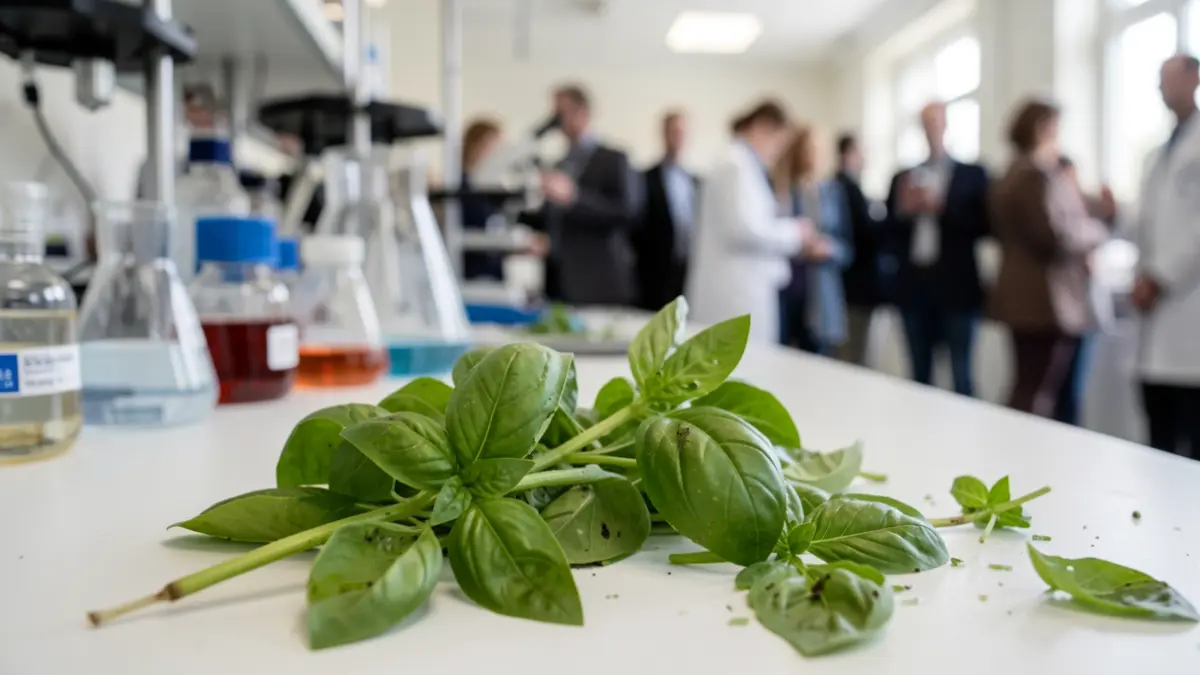
The Agri-Resval project, led by Néboda Farms and involving the AgroBioTech for Health group from UVigo, Feuga, and Nueva Pescanova, has revalued vertical farming waste, specifically basil (Ocimum basilicum), to produce natural antioxidants. These compounds can inhibit lipid oxidation in frozen fish and seafood, such as shrimp, extending their shelf life and minimizing food waste.
The final workshop, held at Feuga's headquarters in Compostela, presented the results. The AgroBioTech for Health group focused on converting the plant waste into an applicable antioxidant formulation. They used basil cultivated by Néboda Farms using vertical hydroponics, utilizing leaves, stems, and roots that do not meet commercial standards. Researchers confirmed that expectations were met, obtaining natural antioxidants effective in protecting cooked Vannamei shrimp against lipid oxidation.
Rosmarinic acid stands out as the compound of greatest industrial interest due to its high antioxidant efficacy and good sensory acceptance. It represents a natural alternative for extending shrimp shelf life, reducing waste, and meeting consumer demand for products with natural ingredients and cleaner labels.
Previous work between Néboda Farms and the AgroBioTech for Health group facilitated this initiative. The UVigo group studied how nutrients and light spectrum affect basil's antioxidant content, designed a sustainable extraction protocol, and characterized the plant extracts. They also validated the Agri-Resval formulations in the laboratory, assessing lipid oxidation in cooked shrimp samples treated with basil extracts.
Under laboratory conditions, the basil extract reduced the generation of oxidation products in shrimp by approximately 70%. Treatment with pure rosmarinic acid showed promising results, maintaining excellent sensory evaluation after nine months of frozen storage, with higher acceptance than the standard untreated product.
Looking ahead, optimizing the extraction and concentration of rosmarinic acid could increase its proportion in the extracts, combining the advantages of a natural ingredient with high efficacy in extending the shelf life of cooked frozen shrimp. Identifying the root as a promising source of this compound opens new opportunities for crop valorization and the development of high-value natural ingredients.