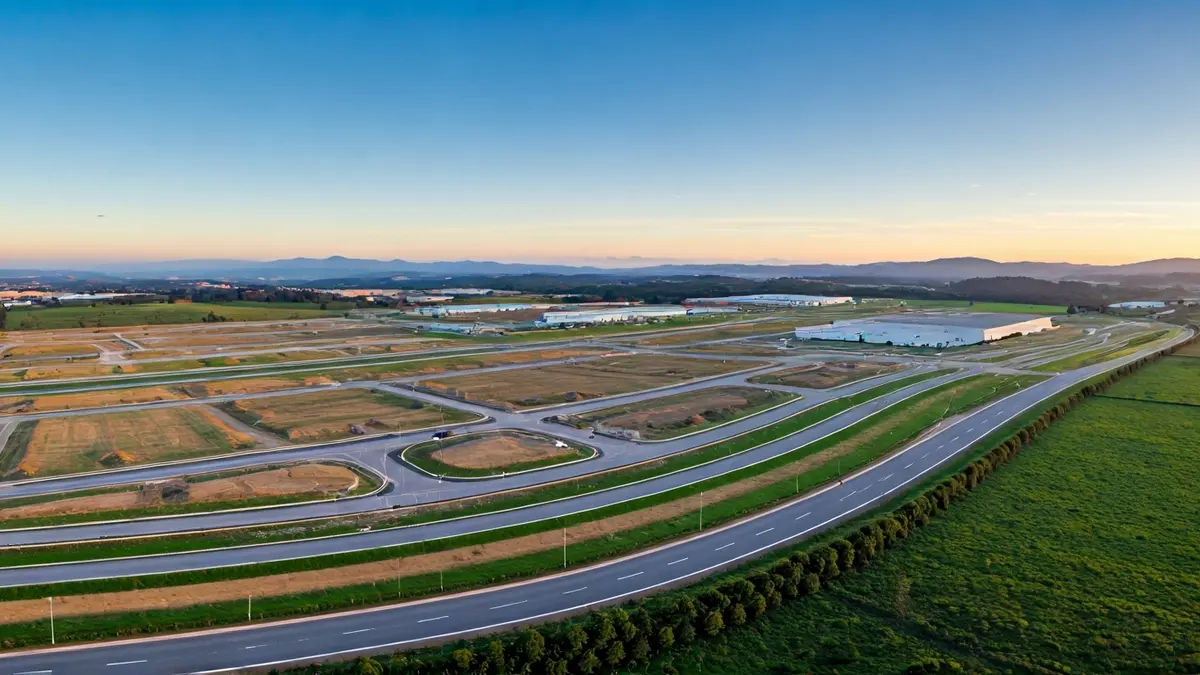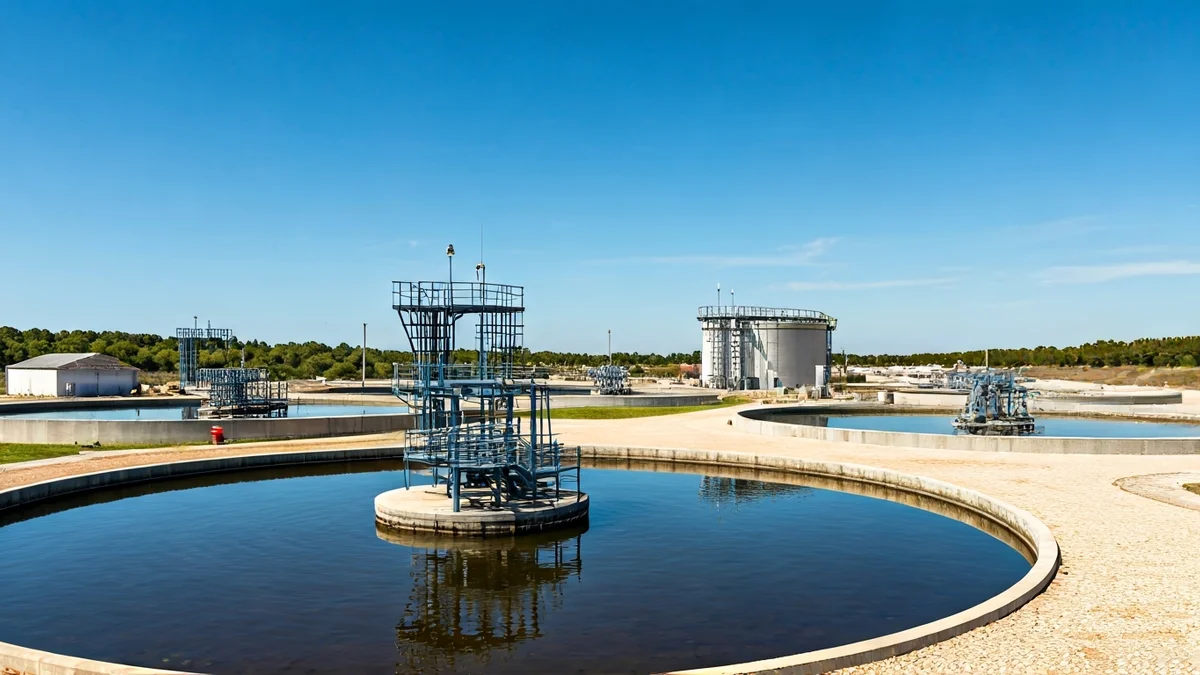
After more than a decade of demands, construction of the Sagunto wastewater treatment plant has begun, coinciding with the development of Volkswagen's gigafactory. Initial works, including clearing and excavation of topsoil on a nearby plot, mark the effective start of this crucial project for the region.
This new infrastructure, with a total cost of 50.77 million euros, is designed to treat wastewater for 285,000 people, nearly triple the current capacity. Its strategic location, at the eastern end of Parc Sagunt II and north of the Camí Vell de la Mar, will allow it to serve both the industrial park, where Volkswagen's gigafactory driven by Power Co is being installed, and the municipalities of Sagunto, Estivella, Albalat dels Tarongers, Gilet, and Petrés.
The project will not only improve the response capacity of the existing sanitation system but will also transform the current treatment plant, built in 1979 and expanded in 1993, into a Wastewater Pumping Station (EBAR) equipped with a storm tank. Furthermore, the new plant will incorporate tertiary treatment, a long-standing demand from sectors such as the irrigation community and the Sagunto city council.
“"This measure will not only guarantee a higher quality of water discharged into the Marjal dels Moros environment but will also allow water reuse, contributing to reducing pressure on water resources in the area for both the agricultural and business sectors, which are undergoing full development in the area."
The action, funded by EPSAR, the Third Vice-Presidency, and the Ministry of Environment, Infrastructure, Territory and Recovery, with funds from the ERDF Program of the Valencian Community 2021-2027, will also contribute to improving the course of the Palància river. This investment, executed by the UTE formed by Ferrovial, Cadagua, and Ocide, aligns with key planning instruments in water, energy, and climate change, including the National Integrated Energy and Climate Plan 2021-2030 and the Júcar Hydrological Plan 2022-2027.