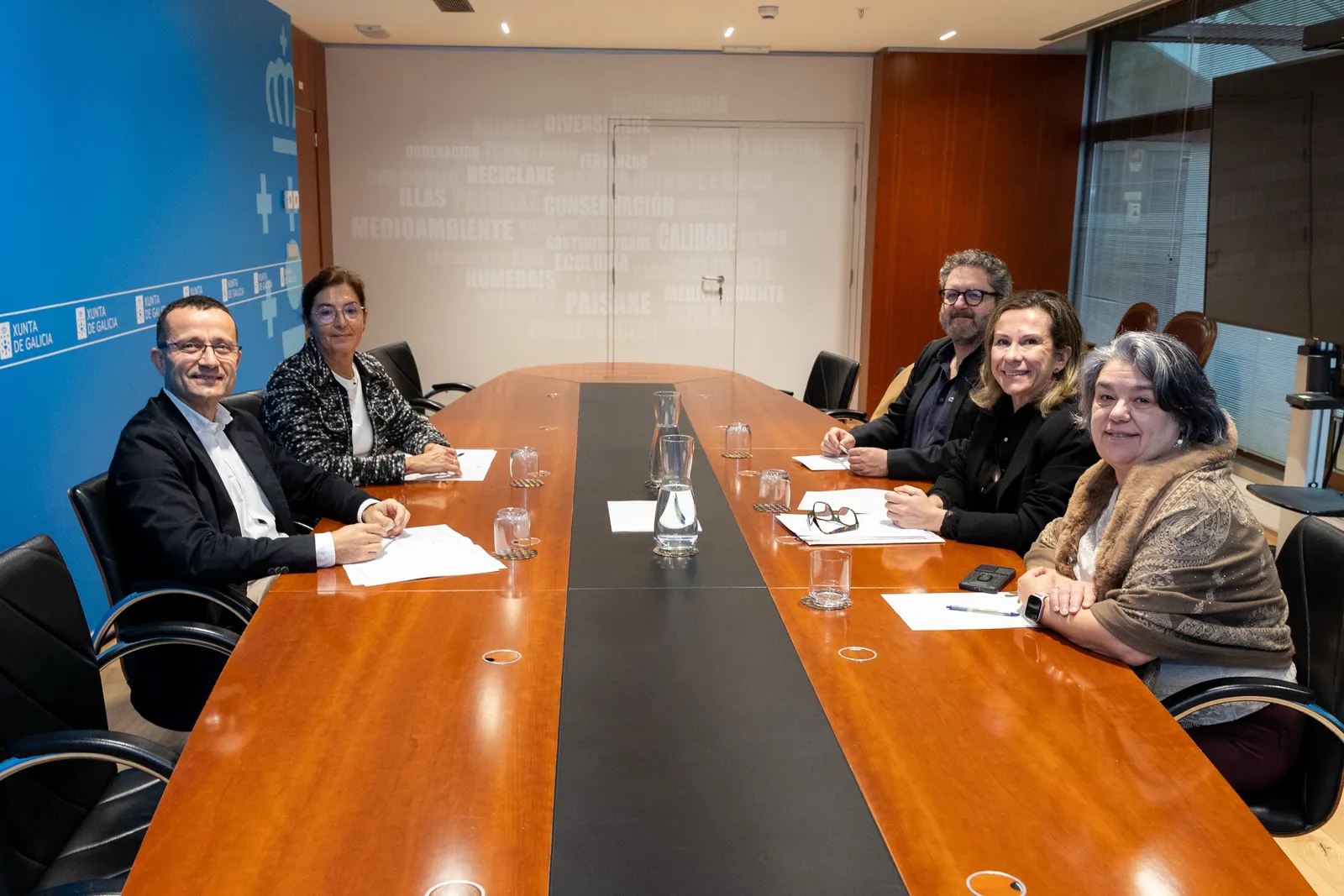
The presentation took place at the European Investment Bank (EIB) headquarters as part of the Forest Bioeconomy Investment Accelerator (FBIA), a joint initiative with the European Forest Institute (EFI). The objective is to explore new financing mechanisms to deploy a multifunctional management model for municipal forests, capable of combining ecosystem conservation, fire prevention and economic activity generation.
The project covers the counties of Pallars Sobirà, Alta Ribagorça and Aran, which concentrate 238,000 hectares of forest area, of which 181,000 are municipally owned. The initiative aims to recover economic activity linked to this natural heritage through active and planned management, contributing to reducing fire risk and strengthening ecosystem resilience against climate change.
“"It started with two mountain counties. Today there are three, and the door is open. For an investor this means one thing: the territory has already reached an agreement"
The proposed model foresees the creation of a public-private consortium to coordinate forest management and channel public funding, and an operating company to attract private investment. It also includes the development of a forest biopolygon to select, classify and market wood, as well as develop new value chains linked to biomass and biochar.
The deployment of Pirineus Local Forest involves a global estimated investment of 34 million euros over ten years. The Lleida Provincial Council has committed an contribution of 3 million euros for the preparation of forest management plans, distributed as one million euros in 2027 and two million in 2028. Seven impact investment funds have agreed to join the project's investment council.
The roadmap foresees constituting the consortium and the operating company during 2027, as well as developing a pilot test on 1,000 hectares of forest area to validate the model's functioning before expanding its deployment from 2028. The presentation also served to propose to the EIB the need to identify adapted financial instruments and advance in the regulation of carbon and biodiversity credits.