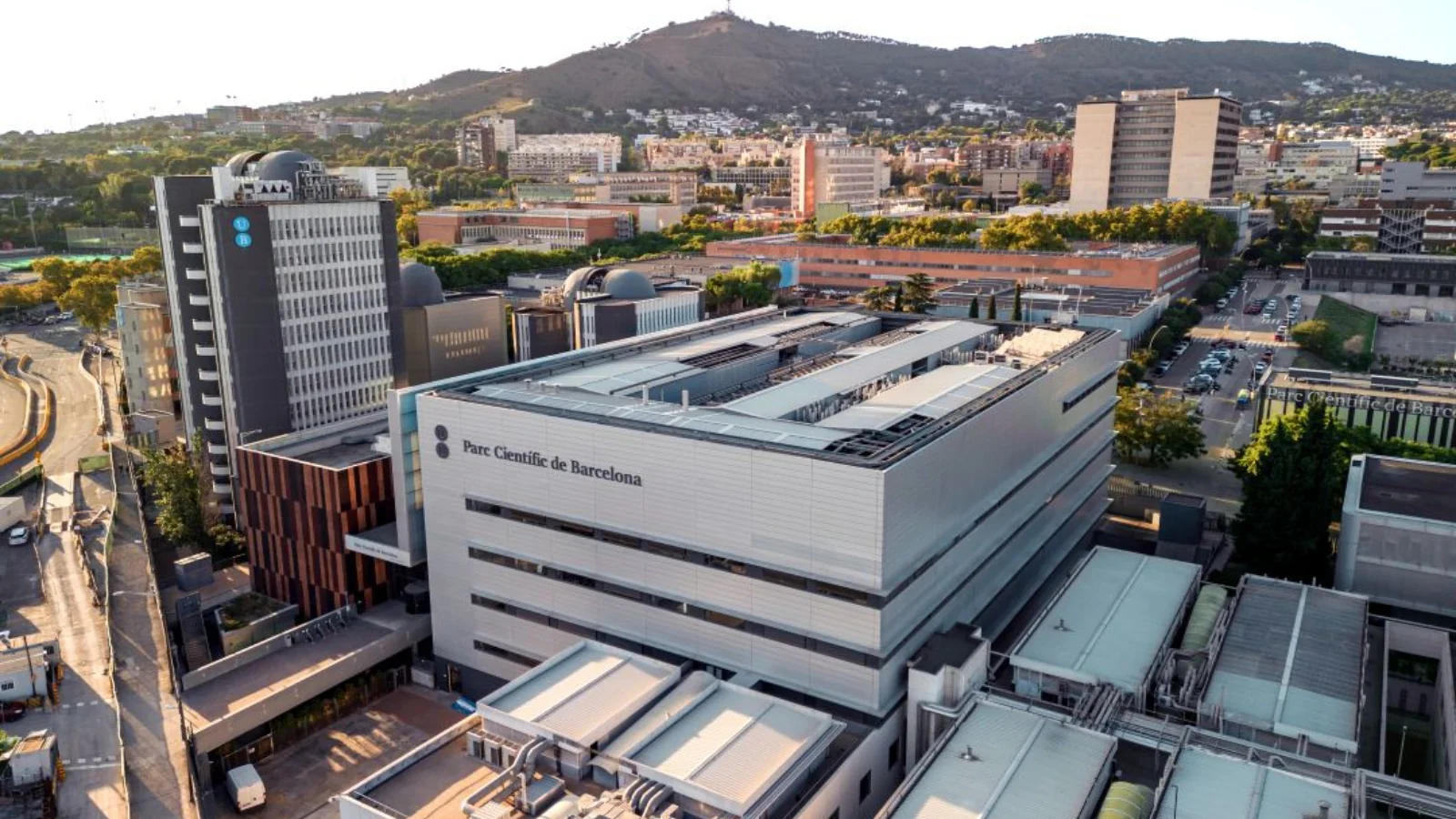
Overall, the funding secured by the entire PCB-UB community (public research centres and private companies) has grown by 50.5% in 2025, increasing from 209.3 million euros in 2024 to 315 million euros this year, thanks to the record investment secured by companies (229.7 million euros).
"The strength of PCB-UB lies in its ability to foster an environment where public research and private initiative coexist, collaborate, and mutually reinforce each other. The incorporation of new centres and the growth of those already part of our community consolidate this model and expand opportunities for collaboration and knowledge transfer. Achieving a new funding peak, with private contributions now representing nearly 20% of the total, highlights the capacity of public research to attract resources and generate value for society," states Maria Terrades, director of PCB-UB.
"Universities are a strategic national infrastructure. We not only produce science but also innovation, citizenship, critical thinking, and hope. Scientific networks and infrastructures are engines of the future. The 21st century is defined by knowledge, and in this scenario, universities neither want nor can be passive observers. The University of Barcelona, as one of Europe's leading intellectual engines, must not only generate excellent knowledge but also be capable of transforming that knowledge into progress. To achieve this, cross-cutting structures like PCB-UB play an essential role," explains Joan Guàrdia, rector of the University of Barcelona (UB).
Public support, the engine of research, with stable private funding
The Barcelona Institute for Research in Biomedicine (IRB Barcelona) leads the funding, with 41.1 million euros (nearly half of the total), of which 32.8 million are public and 8.3 million are private. In turn, the Institute for Bioengineering of Catalonia (IBEC) has secured 19.3 million euros, comprising public funds (16.4 M€) and private funds (2.9 M€).
The National Centre for Genomic Analysis (CNAG) has also raised 14.1 million euros, with 10 million coming from public funds and 4.1 million euros from private capital. The Institute of Molecular Biology of Barcelona (IBMB-CSIC) has achieved 5 million euros (93% public funding). For its part, the five new groups from the Barcelona Institute for Global Health (ISGlobal), newly incorporated into the Park, have added 1 million euros, of which 750,000 euros are from public funds and 260,000 euros are from private sources.
In addition to these institutes, there are units and groups from the University of Barcelona (UB) that conduct research in various fields of knowledge. Firstly, Creatio UB—the centre for the production and validation of advanced therapies—has secured 1.6 million euros, of which 890,000 euros are public and 720,000 euros are private.
The Technological Unit of the Institute of Cosmos Sciences (ICCUB-Tech) has obtained 160,000 euros in private funding, while the Institute of Biomedicine of the University of Barcelona (IBUB) has secured 262,500 euros, entirely public. The RMN of Biomolecules research group at UB, specialising in nuclear magnetic resonance, has raised 85,000 euros (82% public).
Collectively, the centres and units have incorporated 62 new scientific equipment items in 2025 at their facilities in PCB-UB. Mention should also be made of the UB Scientific-Technical Centre (CitecUB), which has obtained 2.5 million euros in public grants to renovate and expand its scientific-technical equipment with seven new items, forming the basis on which the rest of the groups work. Among the new scientific infrastructures incorporated in 2025 is its new state-of-the-art electron microscopy equipment, a singular scientific and technical infrastructure (ICTS) inaugurated in early 2025 by the President of the Generalitat, Salvador Illa, funded by the European Regional Development Fund (ERDF) under the ERDF Operational Programme of Catalonia.
Strengthening the research ecosystem with new biomedical research entities
2025 has also been the year of the arrival of the Barcelona Institute for Global Health (ISGlobal) and the incorporation of the Fraunhofer Center for Applied Theragnostics (Fraunhofer CAT) into the PCB-UB facilities.
In late 2025, ISGlobal moved some of its laboratories to PCB-UB, where five research groups from the Malaria and Neglected Parasitic Diseases Programme are based. The institution's arrival was the result of a collaboration agreement signed in 2024 to host several units from research centres linked to the Hospital Clínic de Barcelona at the Park. Among these is the August Pi i Sunyer Biomedical Research Institute (IDIBAPS), which completed its move in early 2026.
For its part, Fraunhofer CAT, linked to Fraunhofer Spain Research—a state foundation for applied research affiliated with the German Fraunhofer-Gesellschaft—joined the Park in 2025 through IBEC and now has over 50 professionals.
Technology transfer, increasingly present in research activity
The Park's public centres have licensed 11 new technologies in 2025, a figure that surpasses the previous year's tenth for the first time and makes transfer one of the most visible aspects of the year. ICCUB-Tech leads the count with four licences; followed by IBEC with three, and ISGlobal groups with two; IRB Barcelona and IBMB-CSIC each have one.
Technology transfer has also been bolstered by the protection of research results, with 22 new patent applications, notably seven from ISGlobal, six from IBEC, and four from ICCUB-Tech.
In addition to all this, the creation of PulSensing Technologies stands out, a new spin-off driven by ICCUB-Tech. The company has developed ASIC chip technology aimed at improving image diagnostics in techniques such as PET scans, to facilitate early cancer detection.
This boost occurs within a context of sustained scientific production, with 577 publications and participation in 651 national and European collaborative projects, in an ecosystem where public research coexists with companies.