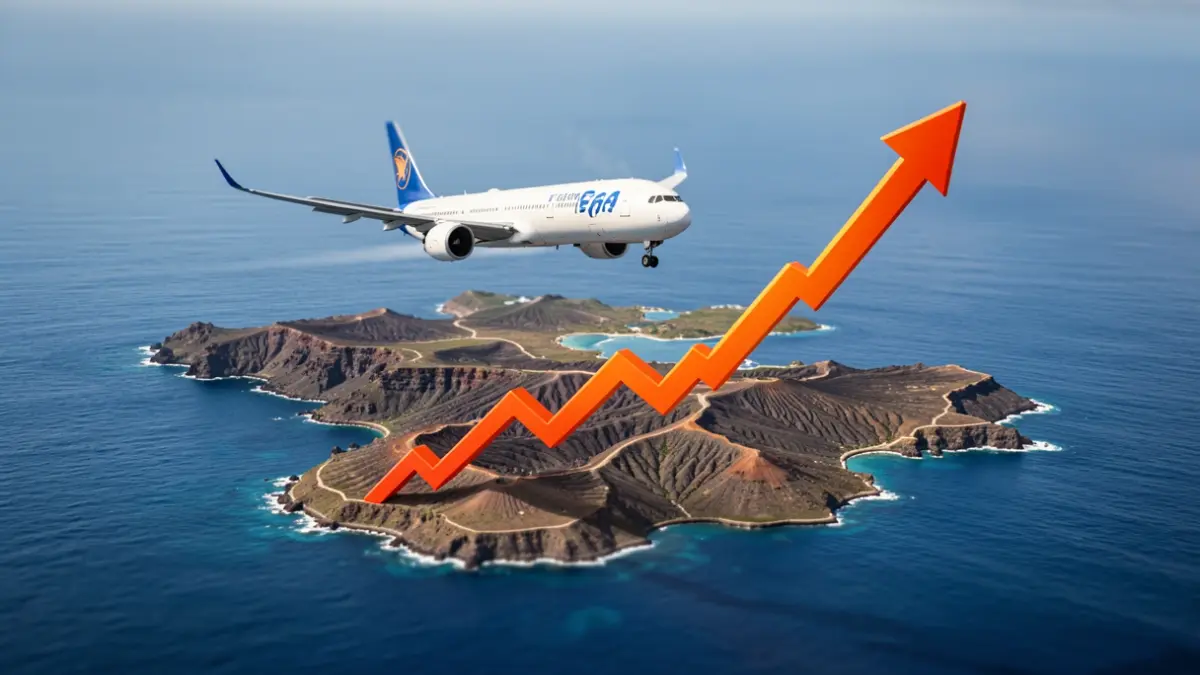
The conflict in the Middle East is already impacting the Canary Islands' tourism sector. Starting next month, tour package costs to the archipelago are expected to rise by up to 9% due to the increase in kerosene prices, the essential fuel for aircraft carrying most tourists. This surge, attributed to tensions between the United States, Israel, and regional countries, could have more severe consequences if it leads to a fuel shortage.
The business alliance Excelcan highlighted this situation in a report detailing a favorable scenario with a fare increase of 7.5% to 9%. Kerosene, which has doubled in price since the conflict began, accounts for 27% of the total cost of tour packages. Despite rising operational expenses, tourism companies are confident in their capacity to absorb these increases without fully passing them on to consumers.
“"The airplane might earn a little less, the tour operator also pays a little less, and the hotelier too, so a slightly lower margin can compensate. What I mean is that in the base scenario, with expensive kerosene, we believe we have the capacity to absorb the cost increases."
The sector's primary concern is a potential kerosene shortage, particularly sensitive due to the closure of the Strait of Hormuz. While Spain has reserves, key emitting countries like the United Kingdom and Germany could be more affected. Canary Islands tourism business leaders consider this scenario unlikely but warn it could make the islands a lower priority destination for airlines due to increased fuel investment required for flights.
Despite these forecasts, figures from the first quarter of 2026 show positive hotel profitability. Companies were more profitable than in the previous year, even with a drop in overnight stays and occupancy (74.63%). Revenue per available room (RevPAR) increased by 6.31%, reaching 123.29 euros. Total revenue from tourist accommodation amounted to 1.749 billion euros, a 6.10% increase compared to 2025, with Tenerife and Gran Canaria accounting for the largest share.
The supply of hotel beds also saw a slight increase, totaling 372,831 places. However, the vacation rental segment has seen its capacity reduced by 9% following the approval of a new regulation law, with a decrease of 17,665 places compared to 2025, particularly noticeable in Tenerife.