
The Provincial Confederation of Employers of Santa Cruz de Tenerife, CEOE Tenerife, has stated that the Canary Islands are experiencing positive economic development. However, it warns that the region must undertake structural reforms to consolidate its competitiveness and transform current growth into a “more solid, productive, and resilient” model.
According to the 'Canary Islands Macroeconomic Indicators' report for June 2026, the islands' gross domestic product (GDP) grew by 3% in real terms during the first quarter of the year. Employment increased by 3.6%, and the number of unemployed individuals decreased by 14.8%, bringing the unemployment rate to 11.4%.
Social Security affiliation also shows positive trends, and foreign investment has seen an increase of over 137%. These figures, according to the business organization, reflect the Canary Islands' economy's capacity to generate activity and employment despite the international context marked by geopolitical uncertainty and the slowdown in some European markets.
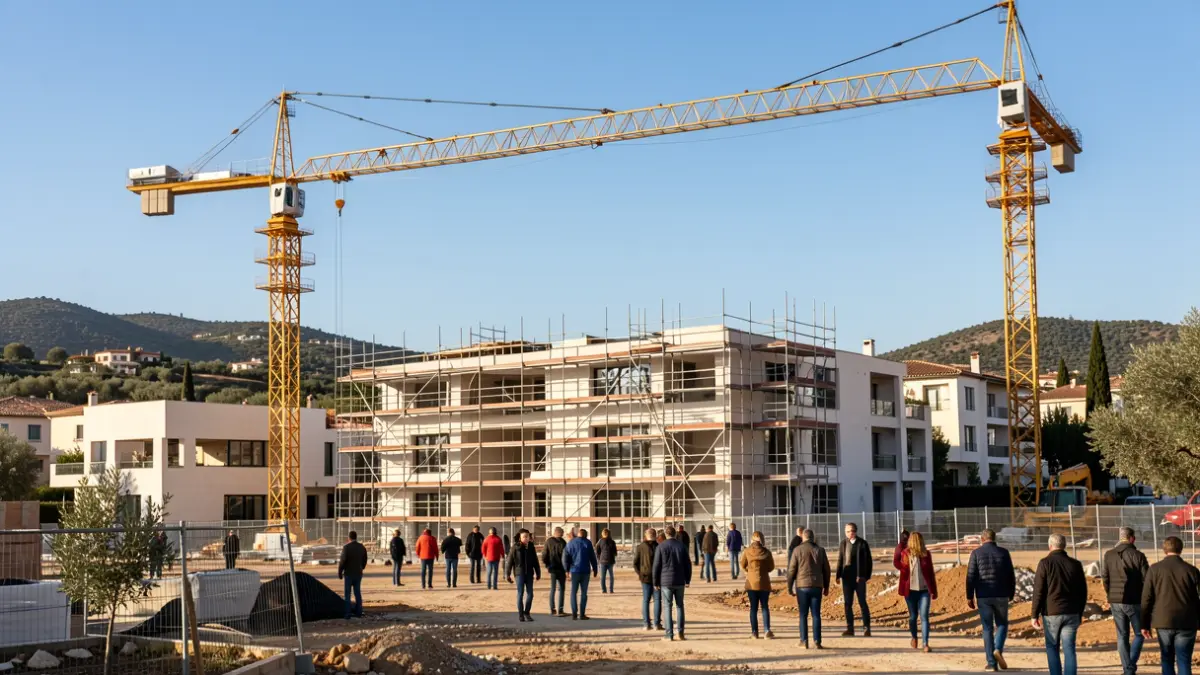
Nevertheless, CEOE Tenerife warns of persistent significant structural weaknesses that limit the archipelago's competitiveness. Among these is the issue of housing access, where the average price rose by 11.6% year-on-year, while supply remains insufficient to meet demand. The employers' association points out that there are over 200,000 vacant homes and more than 30,000 unsold new homes in the archipelago, suggesting the problem lies in access rather than a lack of available supply. This situation poses a social problem and is beginning to hinder talent attraction and retention.
The report also indicates that productivity remains below the levels necessary to sustain more solid economic growth, highlighting the need to enhance business competitiveness through innovation and modernization.
In the external sector, the employers' association expresses concern over an accumulated drop of over 23% in exports and a coverage rate that barely reaches 20%. In their view, this demonstrates a high dependence on imported goods and the need to strengthen the export capacity of Canary Islands companies.
Regarding tourism, the report indicates that visitor spending continues to rise, although there is a slight decrease in both national and foreign tourist arrivals and average stays. Therefore, it is considered necessary to continue focusing on service quality and diversifying the tourism offer.
In light of this scenario, CEOE Tenerife proposes streamlining urban planning and administrative procedures to increase housing supply, reduce bureaucratic burdens, promote business digitalization and innovation, strengthen corporate internationalization, increase investment in training, and foster the development of sectors such as the blue economy, renewable energies, the technological industry, the digital economy, audiovisual, and aerospace.
“"The data confirm that the Canary Islands maintain “a dynamic economy with growth potential,” but it is essential to address structural reforms that allow for increased productivity, facilitate investment, expand housing supply, and improve external competitiveness."
Pedro Alfonso added that "companies are doing their part," and now it is up to the administrations to accelerate the necessary decisions for the Canary Islands to fully capitalize on their development opportunities.