
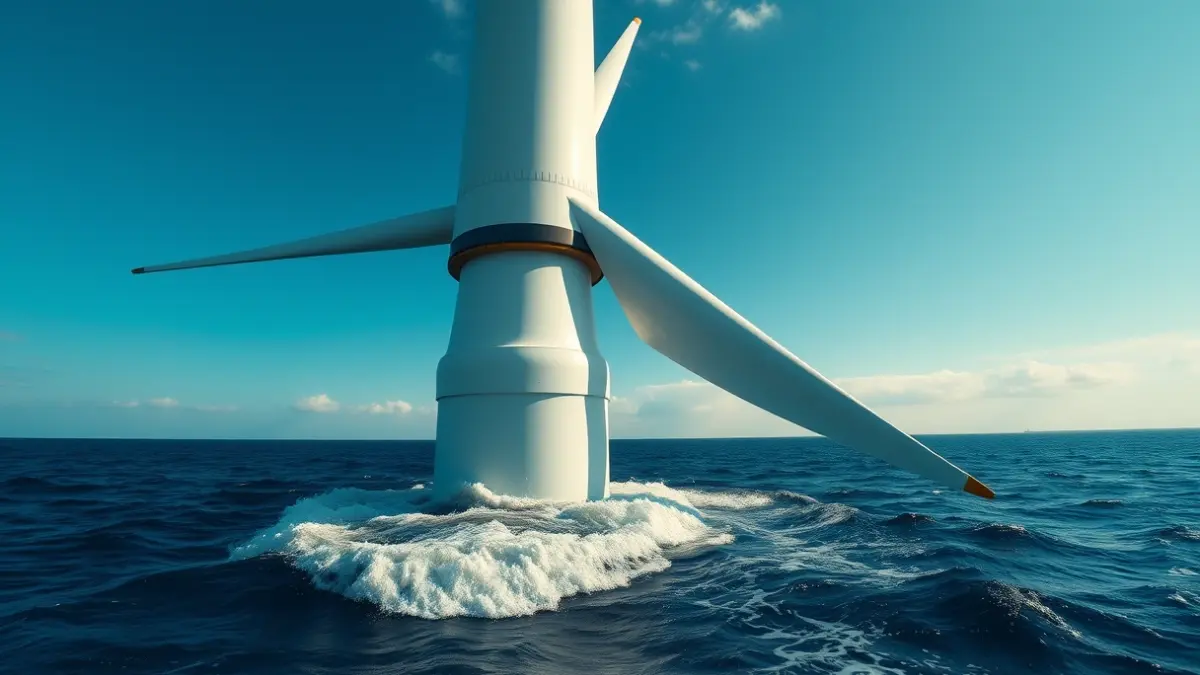
Electricity generation through offshore wind turbines utilizes the force of wind in the open sea. Marine winds, unobstructed by mountains or buildings, are stronger, more constant, and less turbulent than onshore winds, leading to higher energy production. The process involves the wind turning the turbine blades, converting kinetic energy into electrical energy via an internal generator, and then transmitting it to the terrestrial grid through submarine cables.
There are two main types of offshore wind installations based on water depth: fixed structures, cemented directly into the seabed and common in waters up to 50 meters deep, and floating platforms, anchored to the bottom with cables, which allow parks to be located in much deeper areas. Advantages of this technology include the long lifespan of equipment, reduced visual and acoustic impact in inhabited areas, and more stable and abundant energy production. However, high initial costs and potential effects on marine ecosystems, such as noise or heavy metal pollution, are some of the identified drawbacks.
Spain has established itself as a logistical hub for European offshore wind and is a technological leader in the floating modality, accumulating a significant portion of global technical solutions. The Government has set an ambitious roadmap to reach 3 GW of power by 2030. Regions such as Galicia, Andalusia, and the Canary Islands are considered strategic due to their high wind resources.
“"We have competitive infrastructures, logistical experience, and a firm commitment to sustainability."
During the Wind Europe fair, a major international sector event, representatives from the Canary Islands Government, the Port Authority of Las Palmas, and the Canary Islands Maritime Cluster inaugurated the Archipelago's stand. The Canary Islands were highlighted as the ideal location to host the first offshore wind farm off the coast of Gran Canaria. A ministerial announcement is expected soon, and it is hoped that objections raised during the prior consultation process for a pilot project will be considered. In fact, on February 27, the request for authorization and the environmental impact statement for Primavera, a planned park in Granadilla de Abona, Tenerife, were already published in the Official State Gazette.