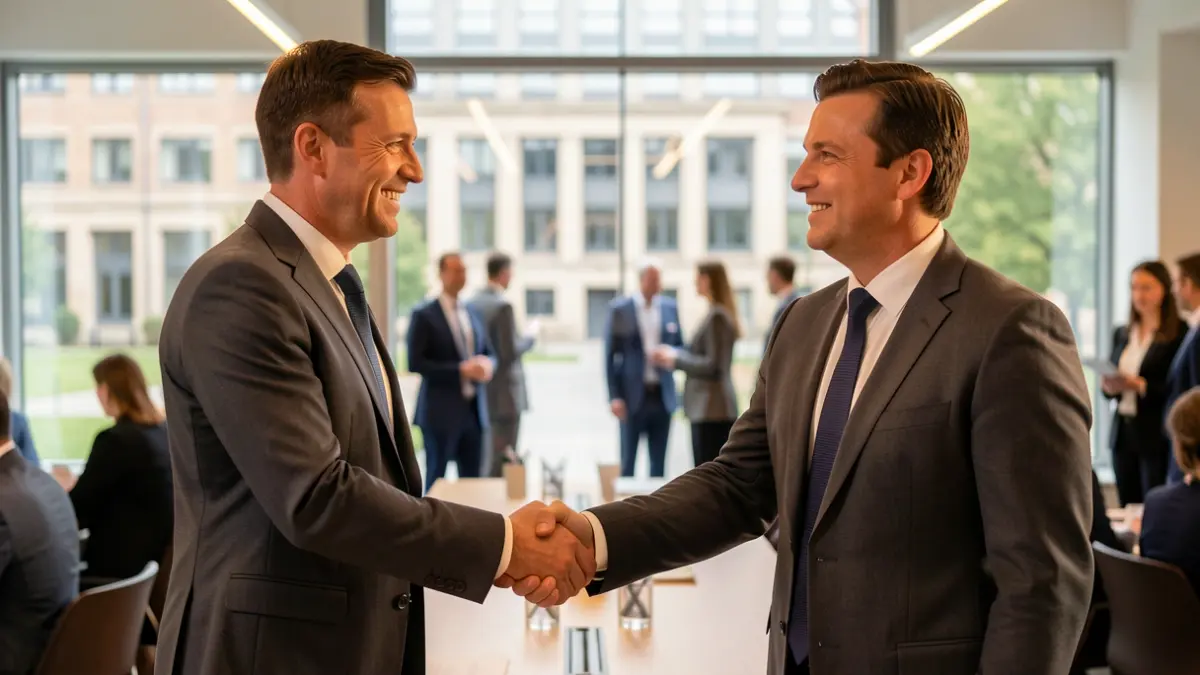
The University of Almería (UAL) has taken another step in its internationalization strategy by signing a cooperation agreement with the University of Al-Hadba, based in Mosul, Iraq. This agreement, signed by José Carlos Redondo, UAL's Vice-Rector for International Projection, and Salah I. Yahya, Vice-President of Scientific Affairs at the Iraqi institution, establishes a comprehensive program for academic and practical immersion.
The agreement stems from the positive experience of a delegation from the University of Al-Hadba upon completing a Study Abroad course offered by UAL's Faculty of Health Sciences. Initially, the collaboration will focus on the health sector, although both parties have expressed interest in extending it to other fields of knowledge.
José Carlos Redondo highlighted that the agreement "is more than just a declaration of intent" and arises from the "high satisfaction" of the Iraqi delegation, who valued the interrelation of the UAL campus with the province's hospitals. The Vice-Rector emphasized the importance of "reciprocity" and openness to "various players on the global stage," considering Iraq a strategic point for UAL's expansion.
For his part, Salah I. Yahya expressed his "happiness" and the conviction that UAL is one of the best universities to "share our knowledge." He is confident that the "sustainable agreement" will allow sending Iraqi students to UAL and that the Almería institution, with its faculty and infrastructure, will help the University of Al-Hadba to "meet international standards."
The agreement is defined as "establishing a bridge between our two cities, between our two countries, and between our students." The University of Al-Hadba offers studies in nursing, dentistry, and health technology, but considers that the "infrastructure of the University of Almería is more advanced" and that, through these programs or future Erasmus-type exchanges, its students can be trained by leveraging UAL's "good infrastructure" and "excellently equipped laboratories."
Salah I. Yahya emphasized "bilateral cooperation," hoping to receive professors and students from UAL to experience the culture of Mosul, and for Almerian professors to review their study plans. He also believes that the visit of UAL staff to the University of Al-Hadba will be an opportunity to learn about the functioning of Health Science faculties in Iraq, where they also have laboratories and "students eager to interact with international students."
The University of Al-Hadba will offer "infrastructure and accommodation" to facilitate visits, not only in Health Sciences but also in areas such as engineering and English language training. UAL will host groups of Iraqi students for a specific health design program, combining theoretical classes and practical work with a strong connection to the real professional environment.
Activities will include visits to organizations, hospitals, and clinics in Almería and its surroundings, allowing students to observe practical health applications. Professors and experts will teach courses and guide visits. The agreement, valid for four renewable years, also includes exploring teaching methodologies, joint research, organizing academic events, and disseminating educational materials.
Furthermore, cultural and historical exchange will be promoted, with UAL organizing activities to familiarize students with the heritage, history, and society of Spain, including visits to museums, historical sites, and attendance at cultural festivals.